







The leaders of the Coalition of the Willing have agreed that a multinational force earmarked for Ukraine would hold military exercises in neighbouring countries in the coming months.
The drills would take place in states bordering Ukraine to test deployment plans and show that participating nations were prepared to act by land, air and sea, French President Emmanuel Macron said.
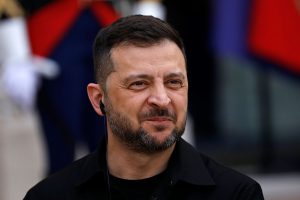
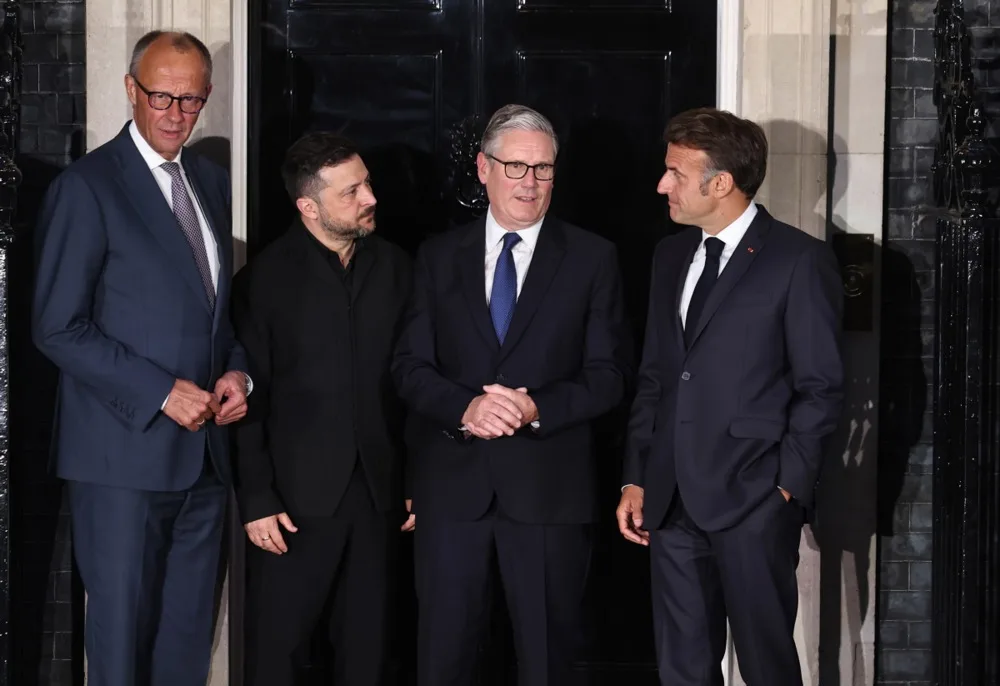
He was speaking at a press conference in Paris alongside Ukrainian President Volodymyr Zelensky, British Prime Minister Keir Starmer and German Chancellor Friedrich Merz.
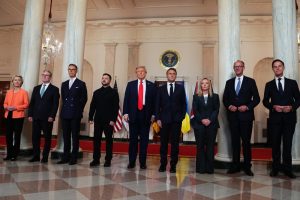
The remarks followed a fresh meeting of the coalition in the French capital, where participants welcomed US President Donald Trump’s backing for security guarantees at the NATO summit in Ankara.
The core signatories — Ukraine, France, Germany, the UK, Italy, Denmark, Sweden, the Netherlands, Norway and Spain — said in a joint declaration that the Multinational Force for Ukraine (MNF-U) was ready to operate and to help regenerate Ukrainian forces at Kyiv’s request.
They reiterated support for direct talks between the two sides and a ceasefire along the line of contact, insisting there could be no peace without Ukraine and no deal on European security without Europeans.
The signatories said they would intensify economic pressure on Russia for as long as it kept attacking Ukraine, strengthening sanctions and coordinating to prevent them being circumvented.
They added that they were ready to increase supplies of air-defence systems, interceptors and long-range weapons.
Macron also announced that France and Ukraine had agreed a roadmap for Kyiv to acquire 16 Rafale fighter jets. “The first aircraft should be flying in Ukrainian skies in 2028-2029,” he said.
Ukraine would also receive a first batch of next-generation SAMP/T air-defence batteries, along with radars and the licensed production of AASM guided bombs, Aster 30 surface-to-air missiles and Scalp cruise missiles.
European Council President António Costa said the bloc was united behind a strategy of peace through strength, built on stronger support for Ukraine and greater pressure on Russia.
He said the EU would open a further negotiating cluster on July 14, moving Ukraine a step closer to membership, and described enlargement as a key security guarantee.
The external-relations cluster would open for both Ukraine and Moldova, the second unlocked in Kyiv’s accession process, with four more still to be agreed among member states.
The multinational force remains contingent on a ceasefire with Russia that has yet to be reached.