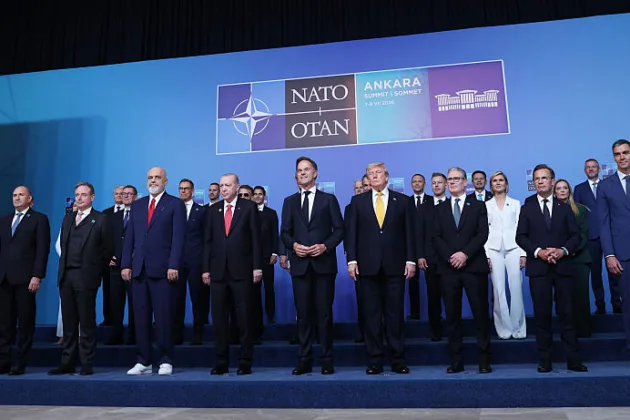










NATO Secretary General Mark Rutte has welcomed the preliminary peace agreement between the United States and Iran, arguing that it improves security for all of the alliance’s members. He has also offered NATO’s help to keep shipping moving through the Strait of Hormuz, should allies want it.
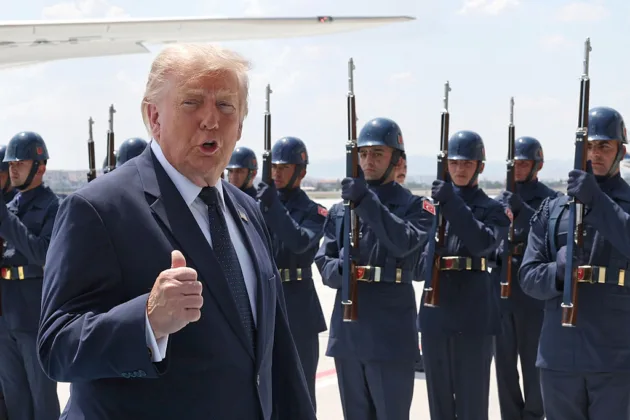
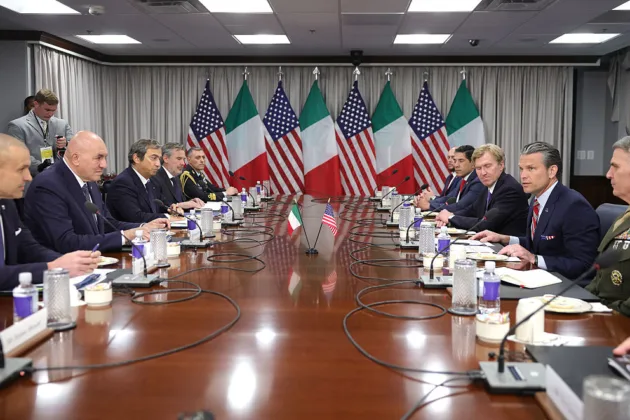
Rutte spoke on June 17 at a press conference in Brussels, a day before NATO defence ministers were due to meet at the alliance’s headquarters. He praised US President Donald Trump, crediting Washington’s action with preventing the threat of a nuclear-armed Iran and degrading its ballistic missile capability.
The agreement created an opportunity to ensure Iran never obtained a nuclear weapon, Rutte said. He argued that a further large step was still needed to restore free passage through Hormuz, which shipping companies had slowly begun to cross again.
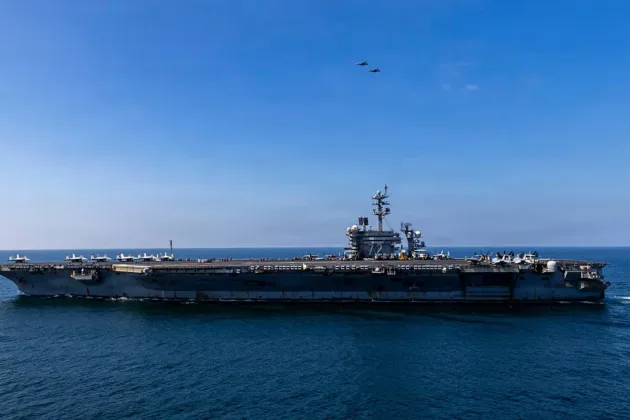
Trump announced the deal on June 14 and authorised the reopening of the strait along with the lifting of the US naval blockade of Iranian ports. “I hereby fully authorize the toll free opening of the Strait of Hormuz,” he wrote in a social media post.
Iran confirmed the text of the deal but said it would not begin implementing it until the document was signed, with a ceremony scheduled in Switzerland for June 19. Tehran’s deputy foreign minister, Kazem Gharibabadi, made the comments on state television.
The strait carries about a fifth of the world’s oil, and its near-closure during the war, alongside the blockade and attacks on Gulf energy infrastructure, had driven fuel prices sharply higher. The disruption rippled through the global economy.
Rutte pointed to an initiative led by two of NATO’s main members, the United Kingdom and France, to reopen the waterway, praising what he called a massive deployment by European allies. He highlighted their offer of mine-hunting, radar and other capabilities.
Asked whether the alliance could take part in securing the route, Rutte said NATO sat outside the effort, both legally and literally, but could take on a role if that was wanted.
The offer came after months of friction between Washington and its European allies over the Iran war, during which Trump accused NATO of failing to support the US and floated leaving the 32-member alliance. The UK has since led a coalition of more than 40 countries that signed a declaration on freedom of navigation through Hormuz.