








At least 164 people have died and 971 have been injured after two powerful earthquakes struck northern Venezuela, the country’s acting President Delcy Rodríguez has said.
The toll, raised sharply on June 25 from an earlier count of 32 dead, was expected to climb further as rescuers reached collapsed buildings. Rodríguez said at least 30 aftershocks had followed the initial quakes.
The United States Geological Survey (USGS) recorded the first tremor at magnitude 7.2 shortly after 6pm local time on June 24, on the Caribbean coast about 160 kilometres (100 miles) west of the capital, Caracas.
A stronger quake of magnitude 7.5 struck around 40 seconds later, the USGS said. It was the most powerful earthquake to hit Venezuela in more than a century.
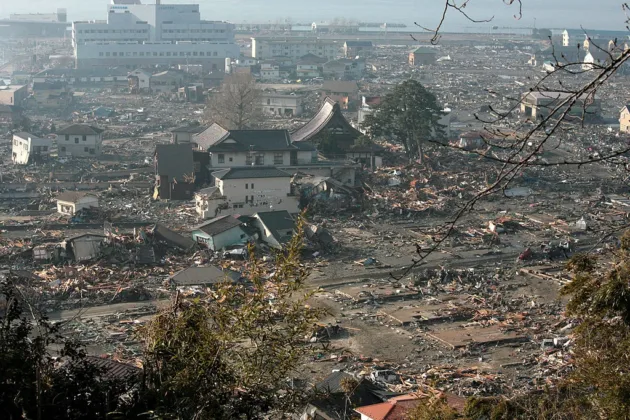
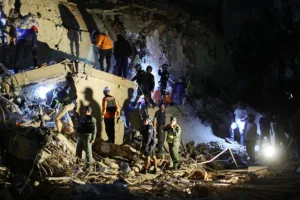
The coastal state of La Guaira, north of Caracas, was the worst affected, with dozens of buildings reduced to rubble. Rodríguez had earlier described it as a disaster zone.
The quakes struck during a public holiday, when many residents were at home. In Macuto, in La Guaira, most of an eight-storey seafront hotel collapsed.
Rodríguez declared a state of emergency, closing the main airport serving Caracas, suspending rail services and cancelling schools for several days.
She announced an initial $200 million (€176 million) reconstruction fund, drawing on resources coordinated with the International Monetary Fund (IMF), alongside a separate allocation for immediate relief.
Rodríguez has governed as acting President since the capture of former President Nicolás Maduro by United States forces in January, according to international reports.
The USGS warned that the death toll was likely to rise far higher, pointing to the scale of the destruction.
United States Secretary of State Marco Rubio said Washington was immediately deploying rescue teams and aid at President Donald Trump’s direction.
Spain offered emergency assistance through its Military Emergencies Unit and development agency, the Spanish Ministry of Foreign Affairs said.
The European Union, the largest humanitarian donor to Venezuela, has allocated more than €572 million to the crisis since 2016, according to the European Commission.
The Commission has estimated that 7.9 million people in the country needed humanitarian aid before the earthquakes, with Venezuelans forming the second-largest group of asylum seekers in the EU after Afghans.
The disaster threatened to deepen a migration crisis that has driven nearly eight million people abroad over the past decade.