
The Vatican has accused the European Union of applying international law selectively, sanctioning some military invasions while arming and funding others.
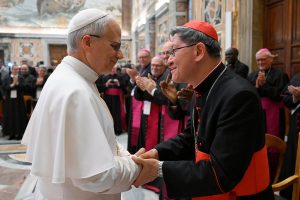
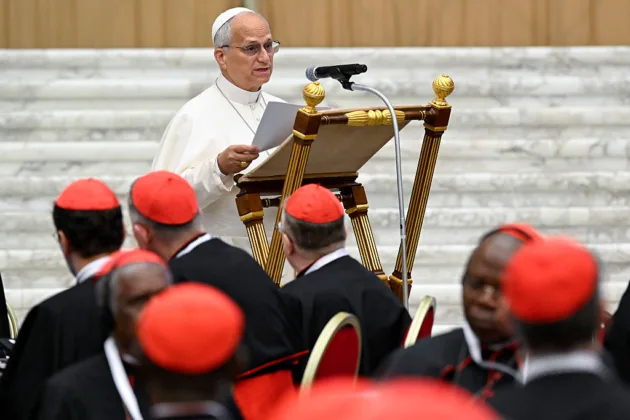
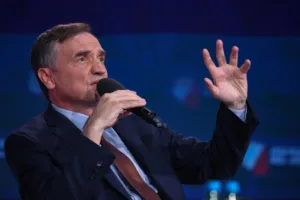
The criticism came from the Vatican’s doctrinal chief, Cardinal Víctor Manuel Fernández, during a closed-door gathering of cardinals chaired by Pope Leo XIV.
In his address, Fernández said the bloc imposed economic sanctions on one country while sending money and weapons to another, yet stayed silent over graver invasions elsewhere.
He attributed the inconsistency to political and economic interests rather than any stable framework of values.
The same logic, he argued, saw allies excused for abuses that would draw condemnation if committed by an adversary.
His remarks opened a session on war and power at the two-day consistory on June 26-27, the second of Pope Leo’s pontificate.
They drew on the Pope’s recent encyclical, Magnifica Humanitas, which branded the Church’s traditional ‘just war’ doctrine ‘outdated’ in practice.
Fernández called for a stricter reading of legitimate defence and rejected pre-emptive war, pointing to the conflicts in Gaza and southern Lebanon.
He named both Russia and the United States for invoking self-defence to justify foreign military involvement, according to a Vatican summary of the talks.
The cardinal said the doctrine had too often been manipulated to provide cover for unjust wars, helping to justify them rather than stop them.
The stance has already strained relations with Washington.
US Vice-President JD Vance, a Catholic, challenged Pope Leo after the Pope questioned whether US-Israeli strikes on Iran could meet just-war criteria.
Fernández is a close ally of the late Pope Francis whom Pope Leo kept in post, a sign of continuity at the head of the doctrinal office.
Many cardinals backed revisiting the teaching, the Vatican said, with several groups favouring a shift towards a narrower ‘right to proportional defence’.
Pope Leo closed the consistory with an appeal for peace, saying the Church would study the matter with theological and pastoral rigour.
The intervention placed the European Union at the centre of a moral argument over its foreign and security policy.
It came amid sustained Western support for Ukraine, EU sanctions on Russia and continuing divisions across the bloc over the Middle East.
Brussels has not responded publicly to the accusation.