


The last few weeks have seen relations between the New Rome and the actual Rome plummet. The trouble began when Italy blocked Washington from using Italian bases for Operation Epic Fury, and, around the same time, President Donald Trump critiqued Pope Leo XIV for his comments on the war in Iran.
At the time, Italian Prime Minister Giorgia Meloni’s office sought to clarify that the move did not mean there were issues with the Trump administration, saying, “There have been no critical issues or friction with international partners. Relations with the United States, in particular, are solid and based on full and loyal cooperation.”
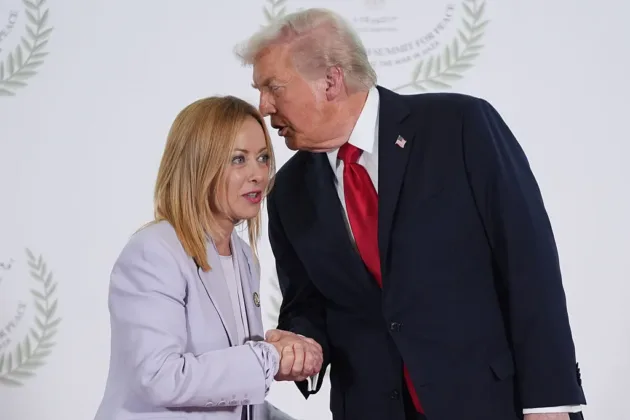
That was wishful thinking. President Trump was furious, firing off a salvo on Truth Social against Italy and Meloni, who had previously been seen as an ally. Though the two had a meeting on the side lines of the G7, which was reportedly a patch-up, video from their interactions seemed somewhat negative. This was confirmed when Trump again made comments, saying that Meloni had begged her for a photograph and he, out of “pity”, had agreed.
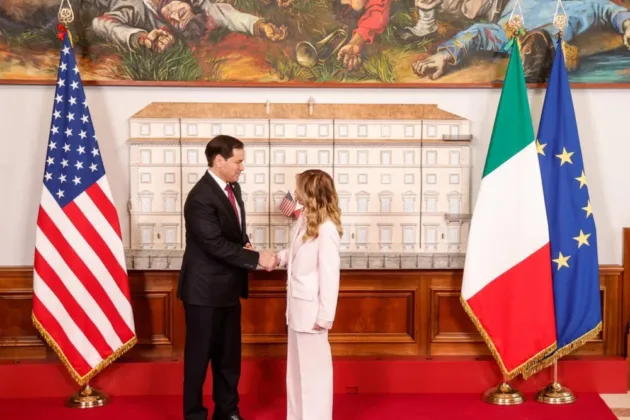
This time, Meloni fired back, blasting Trump in a video posted to social media, asking why Trump – in her view – treated allies so poorly. Her foreign minister cancelled a planned meeting with Marco Rubio in Miami. Though Rome is supposedly trying to mend the issue behind the scenes, the fracture burst into view again late last week, when NATO Secretary-General Mark Rutte claimed that Rome had in fact allowed military aircraft to take off. Meloni’s government snapped back at this, with her defence minister calling it “fallacious”. Any further responses from Trump were met with further angry responses from Meloni.
There is no record of the two having spoken since the G7, and relations still seem frayed. Many, particularly those who wish to see right-wing nationalists working together, were disheartened by the crack-up. But while the way it occurred – the president taking a pot shot on social media – was not preordained, such a crack-up was inevitable.
The reason is at the heart of why forming a “nationalist international”, in the sense that leaders worked together consistently, was always going to be impossible: Because nationalism – that is, true nationalism, devoid of any interest but one’s nation – would always drive them apart.
The North Atlantic Treaty Organisation is a permanent alliance, the sort of alliance America’s Founding Fathers warned against. Ad hoc alliances were fine to pursue, as they could change given the geopolitical situation: But permanent alliances were not in the national interest. Instead, they were in the interests of those who were predisposed toward certain allegiances. When President James Monroe was formulating the Monroe Doctrine with his cabinet, an animating issue of the day was whether to recognise Greece, which was fighting a war for independence against the Ottoman Empire. Many throughout America wished to do so, as they felt a liberal kinship with the oppressed. But Monroe, and his secretary of state, John Quincy Adams, thought otherwise, as they were concerned that recognising Greece could tie America into European disputes.
Fast-forward to today. The United States and Italy are both led by leaders of the populist-right, both of whom are arguably nationalists (though Meloni refuses to use the term for herself, seemingly for political reasons). But regardless of the word one uses, they both have brought their own national interests to the forefront.
And that would have always led to a split. Meloni’s Italy is more politically stable than in the past, thanks to her careful manoeuvring, but it is still a nation mired in serious economic problems; by the end of 2026, Italy will become the most indebted country in the Eurozone. At the same time, President Trump is demanding European countries pay more for defence.
Italy, like other European nations, including Germany, is simply incapable of paying as much as Trump demands. Her government already tried to count a bridge to Sicily as military-adjacent spending, backing down after America’s ambassador to NATO underlined that such a move would be unacceptable. But even still, a planned increase in Italy’s defence spending (a miniscule 0.71 per cent, which will bring total defence spending to 2.8 per cent of GDP) is only coming about due to an increase in, among other things, pensions and domestic police.
Washington hardly had Italy’s domestic police force in mind when demanding more defence spending, and Meloni knows it. Which may be the real reason why she is leaning into this latest Trump comment so hard: Because when the actual political crack-up occurs, likely over defence, she will have already laid the groundwork for critiquing Trump.
The American President is, after all, not all that popular in Italy – but Meloni had kept a public positive relationship with him nonetheless, as she had with former President Joe Biden. Now, however, with elections coming up possibly as early as next April and an ascendent right-wing party led by a former general, firing back loudly at Trump will pay dividends. If, before the elections, Trump critiques Italy for poor defence spending, it can then just be treated by Meloni as another simple Trump attack, something none of her voters (some who could be lost to a militaristic general) should take seriously. Plus, getting tough on Trump could also draw wavering centre-right moderates who were never particularly keen on her dalliance with the 45th and 47th president.
As for Trump? Italy is not critical for the United States. It’s a middle power which has been able to be particularly influential in Brussels the past few years because Meloni has made Italian politics relatively stable. The president loses nothing from engaging in a spat with Meloni, whom many in the American Right are already suspicious of, as she has failed to enact mass deportations and has not meaningfully increased defence spending.
So in short, both leaders get something out of this. Meloni gets to look tough before her elections, and Trump gets to make the point that he won’t be sweet-talked out of insisting that European countries pay their fair share of defence.
It’s not neat and tidy. But international politics rarely is.