










Following the shockwaves of operation Epic Fury, Washington’s sudden pivot toward a comprehensive regional agreement with Tehran has left Jerusalem itchy and uneasy. For a state built on the doctrine of absolute deterrence, the prospect of a diplomatic rapprochement between its superpower patron and its most lethal regional adversary feels almost like a threat. So it comes as no surprise that reports out of Washington confirm Benjamin Netanyahu’s administration being internally divided and considering whether Israel should cancel president Trump’s deal on the ground.
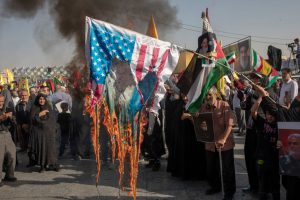
As the diplomatic ink dries, Israel stands at an extraordinarily risky crossroads. Its stubborn insistence on waging war, its increasingly trigger happy posture across multiple fronts, its problematic treatment of civilians and its latest campaign in Southern Lebanon have fundamentally damaged its image in the West. Public opinion across Europe and the USA is no longer merely critical. It has been getting increasingly by majority and acutely hostile. More and more people, otherwise supportive of Israel but suffering under inflation and insecurity, now openly accuse it of sacrificing international prosperity to satisfy its own imperatives.
The crucial question here is one of raw sustainability: Can Israel truly afford sustained global animosity directed against the Jewish nation? In an era where international institutions are already fragile, an emotional and political rift with the West would leave Jerusalem strategically isolated. Blindly insisting on a gung-ho attitude can turn Israel from a vital Western outpost into a geopolitical conundrum – to put it subtly. It will be a historical failure if Israel ends up culturally and economically cut off from the societies that championed its modern statehood and have staunchly supported its right to protect itself.
Interestingly enough, stripped of emotionalism, this US-Iran deal could actually be a blessing in disguise for the State of Israel. While the lack of a total, apocalyptic victory over Tehran is viewed by hardliners as an unsuccessful outcome, the pragmatic reality is very different. Operation Epic Fury achieved not only to deal with the Iranian nuclear threat, but also what any kind of diplomacy could not: It provided Jerusalem with the cover-fire necessary for it to open a second, simultaneous military front that effectively neutralised the immediate threat on its northern border.
This is no detail. Securing the northern frontier and pushing hostile forces back from the Galilee has been an Israeli strategic desire for over half a century. Through sheer military force – and while Iran has been unavailable to intervene – that goal has now been satisfactorily realised. Israel has therefore emerged from this war as a tactical winner, having dismantled a significant part of the frontline mechanism of its enemies. With Gaza already razed, the proxy network that once encircled the Jewish state has been heavily damaged. This buys Israel the most valuable commodity in the Middle East: Time.
Needless to reiterate, this victory extends far beyond the borders of Lebanon. For decades, the existential shadow hanging over Israel has been a nuclear-armed Arab or Islamic state. Since 1979, it has hit nuclear-related targets in France (yes, France), Egypt, Syria, Iraq and Iran. After the recent operations, Iran’s nuclear ambitions now look genuinely dead in the water. Effectively crippling and officially halting Tehran’s path to a nuclear weapon is a considerable achievement that guarantees Israel’s survival for the foreseeable future.
So, for Israel to scuttle the American deal during the next crucial weeks would be an act of strategic and historical hubris. Real statesmanship lies in knowing when to pocket your winnings and consolidate your position. By accepting the deal, Israel can lock its northern gains, secure the destruction of the Iranian nuclear threat, allow the global economy to stabilise, and take on the vital task of repairing its fractured relations with the West. Total victory is a dangerous illusion that appeals to fanatics, not wise leaders.
Securing the nation’s survival while preserving its essential alliances is the only real victory that matters for Israel. If Jerusalem continues to fight a war that its allies are desperate to end, it will find that the greatest threat to its future may not be the regime in Tehran, but its own isolation. The deal on the table offers a path toward managed stability. This presents a valuable opportunity for Israel: To rebuild its international image and legitimacy, while ensuring its long-term security in a growingly hostile, unpredictable world.