


As Britain settles in with its seventh prime minister in 10 years, following the failure, as determined by the British voters or their own parliamentary colleagues, of all seven of the prime ministers of the last 19 years, there are legitimate concerns about Great Britain’s ability to retain its status as one of the world’s serious countries. As a number of British acquaintances have said, it is getting like France and Italy in the 1950s, though with worse weather and inferior cooking. Britain has never had such a swift turnover of prime ministers and never such a slump of failed and rejected holders of that office.
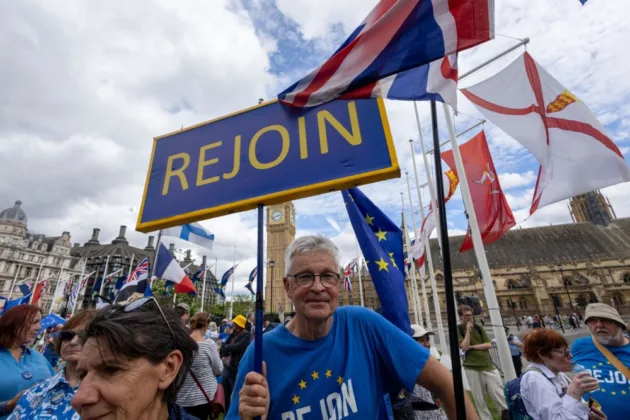
It has paid a heavy price for its ambiguity about Europe. Edward Heath (1970-1974) was anti-American and a passionate believer in Euro-integration and he secured a consensus for joining the European common market, which Britain entered on January 1, 1973. But as Brussels steadily raised its ambitions to “an ever closer union”, ending in the integration of the European Union into one great revived European superpower, its advocates sought to stand upon each other’s shoulders and revive European world leadership somewhat as it had existed up to 1914, the British voters were not consulted and Heath’s successor as Conservative leader, and its greatest prime minister since Churchill, Margaret Thatcher, didn’t buy any of it. Her response to the idea of replacing the institutions that had been more or less continuously worked out by the British since the Magna Carta of 1215, and the British relationship with the United States as exemplified by Winston Churchill and Franklin D Roosevelt and Margaret Thatcher and Ronald Reagan, by submergence in an integrated Europe was: “No. No. No.” She was speaking in the House of Commons on October 30, 1990, in reply to European Commission president Jacques Delors’ plans for the Community’s institutions.
This caused her downfall despite the great success of her government and her status as the first British leader to be elected to three consecutive majority terms, in 1979, 1983 and 1987, since before the First Reform Act of 1832. She has had her revenge. Ultimately, the United Kingdom will still have to decide whether it casts its lot with Europe after all, or returns to a closer association with the United States and the leading countries of the old Commonwealth, Canada, Australia, New Zealand and Singapore. It was little noted when prime minister Theresa May (2016-2019) visited President Trump that he said: “A free and independent Britain is a blessing to the world.” He was speaking beside her at the White House on January 27, 2017, at the first meeting he gave a foreign leader as president. The UK was offered a fast track into the North American Free Trade area, which is growing much more quickly in gross economic product and income per capita than the European Union. But May did not act upon it as she construed the vote of the British to leave the European Union as meaning continuation within it with some changes of nomenclature.
President Trump’s enthusiasm for Great Britain has not been strengthened by former prime minister Keir Starmer’s ambivalent relativistic waffling and arm-flapping moralism about America’s war with Iran, the world’s principal terrorism-supporting state and a menace to Europe’s oil supply. Trump rebuked him publicly in March, saying the British leader was “not Winston Churchill” after Britain at first declined to let American aircraft use its bases against Iran, a refusal Starmer reversed on March 1, 2026. The new Prime Minister, Andy Burnham, had a convivial telephone conversation with the US President right after his installation, Downing Street describing their 20-minute call on July 20, 2026 as “extremely warm”, but his anti-American and specifically anti-Trump comments have not gone unnoticed in Washington. This crisis of the British national direction and governmental competence takes place as all Western Europe dithers and fusses about illegal immigration and pursues an insipid foreign policy that resembles nothing so much as Anglo-French appeasement in the late 1930s. Almost the last words of King George V, not remembered as an outstanding wit, when his foreign secretary Samuel Hoare was forced to resign over concessions to Mussolini over Ethiopia were: “No more coals to Newcastle, no more Hoares to Paris.” The King made the remark to Anthony Eden, Hoare’s successor, on December 23, 1935, five days after the resignation, and Eden recorded it in his memoir Facing the Dictators.
The Trump administration is finally giving effect to foreign policy changes dictated by the satisfactory end of the Cold War and the emergence of China as America’s principal, though very underdog, rival. Russia is an emasculated skeleton of the USSR, with an army incapable of seeing off the much smaller and less well-equipped Ukrainian army. Trump has bullied the NATO Alliance, and in this area Britain has not been an offender, into paying for its own defence. By any criteria, Western Europe from Turkey to Iceland, and Canada, together are more than capable of defending themselves against Russia.
And in these changed circumstances, the United States has quite rightly disembarked from its baggage train a bunch of freeloading nominal allies who won’t even let them use their airspace while pummelling Iran, a state that is an enemy to all of the civilised world, and now esteems its allies to the extent that they pursue goals shared with the United States. By this criterion, the closest allies of the United States are now Argentina, the United Arab Emirates, Poland and Japan. Whether Europe can emerge from its torpor, cohere, end illegal immigration and revive economic growth and return to the front rank of international affairs will depend solely on them. Britain must either return to the fold of a reformed Europe, become again America’s closest and most important ally, or even try to build the senior Commonwealth, possibly including India, into a serious alliance.
The only domestic programme that will work in the UK is Thatcherism, lower taxes and public sector spending, and that is not what Burnham has prescribed. The likelihood at the moment is that the Conservatives and Reform UK may be able to elect a government in two years and address these issues, though the next general election need not be held until August 15, 2029 and Burnham has ruled out going to the country early. If Burnham can turn the United Kingdom around by what he is promising, it will be the greatest resuscitation of British fortunes since the Battle of Britain and the most surprising since the Battle of Waterloo.