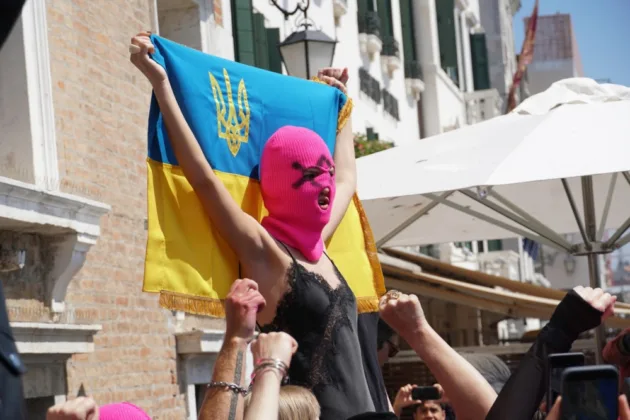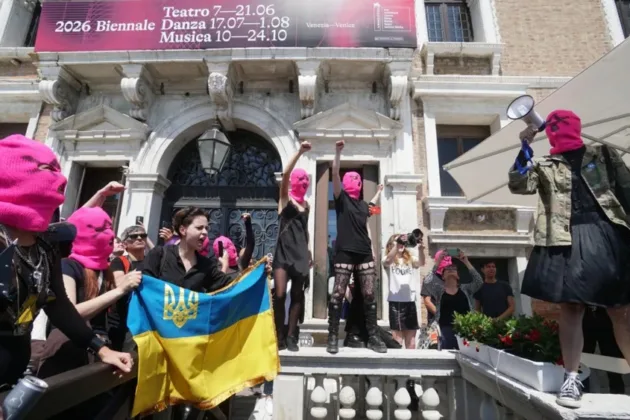






The European Commission has moved to withdraw a €2 million grant from the Venice Biennale after the Italian cultural institution allowed the Russian pavilion to return to the exhibition, raising concerns that EU funding is being used as a political instrument to influence decisions in the field of art and culture.
The decision was announced on July 11, when Henna Virkkunen, the European Commission’s Executive Vice-President for Tech Sovereignty, Security and Democracy, said in a post on X that the Commission had formally recommended the termination of EU funding allocated to the Biennale for the 2025-2028 period. The recommendation is not binding: the final decision rests with the European Education and Culture Executive Agency (EACEA), which had already indicated its support for the cut.
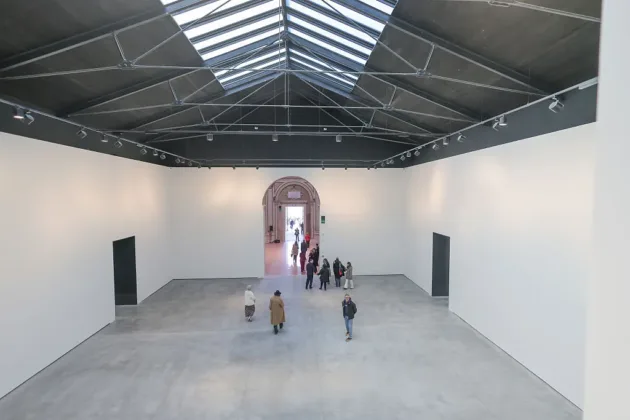
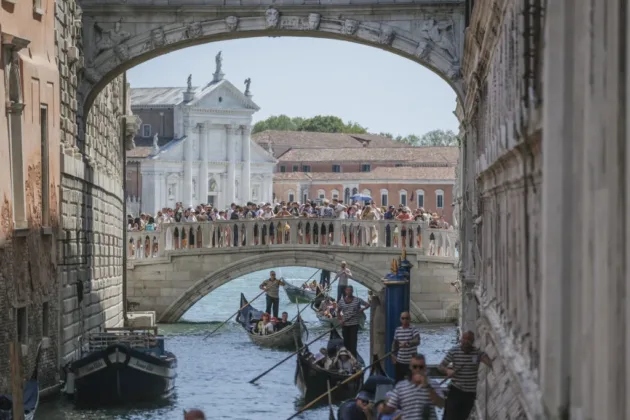
Founded in 1895, the Venice Biennale is one of the world’s oldest and most prestigious international cultural institutions. Its Art Exhibition, held every two years in Venice, brings together artists, national pavilions and curators from across the world, making it one of the most influential events in contemporary art.
While operating independently, the Biennale has historically received public funding, including EU support. Under the Creative Europe programme, it was awarded a €2 million grant for the 2025-2028 period to support its cultural activities and international cooperation projects.
The dispute began in the spring, after Biennale president Pietrangelo Buttafuoco confirmed that Russia would reopen its national pavilion at the 61st International Art Exhibition, titled In Minor Keys and running from May 9 to November 22, 2026.
The Russian pavilion had remained closed for the 2022 and 2024 editions following Russia’s full-scale invasion of Ukraine in February 2022 and the EU’s subsequent sanctions regime. In 2024 the space was loaned to Bolivia.
Brussels argued that allowing Russia’s participation was incompatible with the EU’s political response to the war in Ukraine. In March, the Commission warned that it could suspend or terminate its grant, stating that Russia’s presence at the exhibition was “not compatible with the EU’s collective response to Russia’s brutal aggression”.
After reviewing explanations provided by the Biennale, the Commission concluded that they did not address its concerns. The Biennale defended its decision by arguing that its role is not to exclude countries on political grounds but to preserve a space for artistic dialogue and international exchange. Buttafuoco said that the institution’s mission was to avoid “preventative exclusion” and that the Biennale should remain a place where different perspectives can be presented and debated rather than politically pre-judged.
Virkkunen said that European culture, when supported by taxpayers’ money, “should promote and safeguard democratic values”, adding that these values “are not respected in Russia today”.
Should the recommendation be confirmed, the Biennale would lose €2 million in EU support intended to cover activities between 2025 and 2028. The withdrawal would not prevent the exhibition from taking place, though the foundation has said the EU contribution covers only a marginal part of its programmes.
The controversy has fuelled a broader debate over the consistency of the criteria applied to national participation. Critics of the Commission’s decision have pointed out that the Biennale continues to host pavilions from countries facing international criticism over democratic standards, human rights records or involvement in conflicts, including Saudi Arabia, Azerbaijan, Syria and Somalia. They accuse Brussels of applying a double standard, arguing that penalising Russia while allowing other controversial states to participate amounts to political selectivity.