





Chinese carmaker Geely will build two electric SUVs at Ford’s factory in Valencia, Spain, under a new joint venture that will also develop a new vehicle for the European market.
The partnership, announced on Thursday, is designed to increase utilisation of Ford’s underused Almussafes plant while giving Geely a European manufacturing base. The first Geely-branded electric SUVs are expected to roll off the production line in 2028.
Ford will own 66 per cent of the joint venture, with Geely holding the remaining 33 per cent.
The venture is expected to begin operations in the first half of 2027, subject to regulatory approval. The companies also plan to jointly develop a new multi-energy crossover for Ford and a new member of the Bronco family. Ford’s Kuga production will continue uninterrupted.
“We have the ability to really load up the facility,” Ford’s European head Jim Baumbick told Reuters. “That’s the goal.”
Spanish Prime Minister Pedro Sánchez welcomed the agreement at the factory, stating that “betting on the added-value supply chain in our country, in Europe, is fundamental and a priority for the Spanish government.”
The Valencia plant currently produces only the Kuga and has been operating well below its full capacity, making the partnership important for its long-term future.
Ford said the partnership would help secure the future of the Valencia plant and create the potential for additional high-tech manufacturing jobs.
The joint venture is expected to produce five vehicles in total, combining models from both companies and bringing the plant closer to full capacity of 500,000 cars per year, far above the 100,000 assembled in 2025.
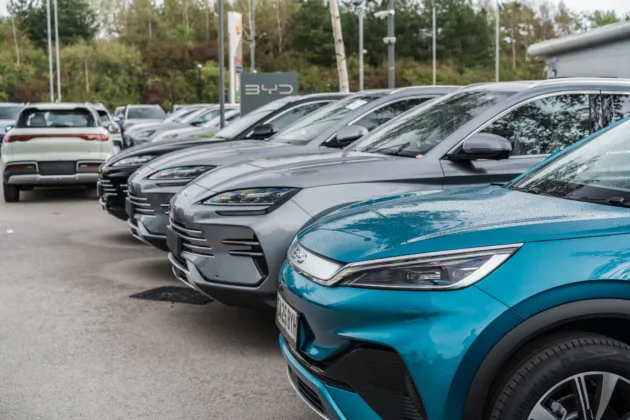
The agreement also gives Geely a manufacturing foothold inside the European Union at a time when Chinese carmakers are expanding rapidly across the European market.
Producing vehicles in Spain could help the company avoid tariffs imposed on electric vehicles imported from China and meet increasingly important European local-content requirements.
Spain is one of Europe’s major automotive manufacturing hubs, producing around 1.9 million vehicles in 2025 and hosting factories for several global carmakers.
It has also developed particularly close economic ties with China, with Chinese manufacturers increasingly investing in the country.
Chinese electric-car maker Chery, for example, began producing vehicles in Barcelona in 2025 through a joint venture with Spanish company Ebro.
The deal reflects the growing pressure on established Western carmakers as they struggle with high costs, weak demand in some markets and the transition to electric vehicles.
Chinese manufacturers, meanwhile, are increasingly seeking partnerships and production sites in Europe rather than relying exclusively on exports from China.