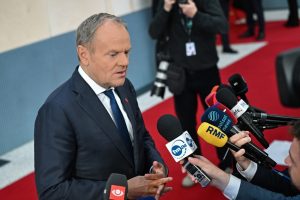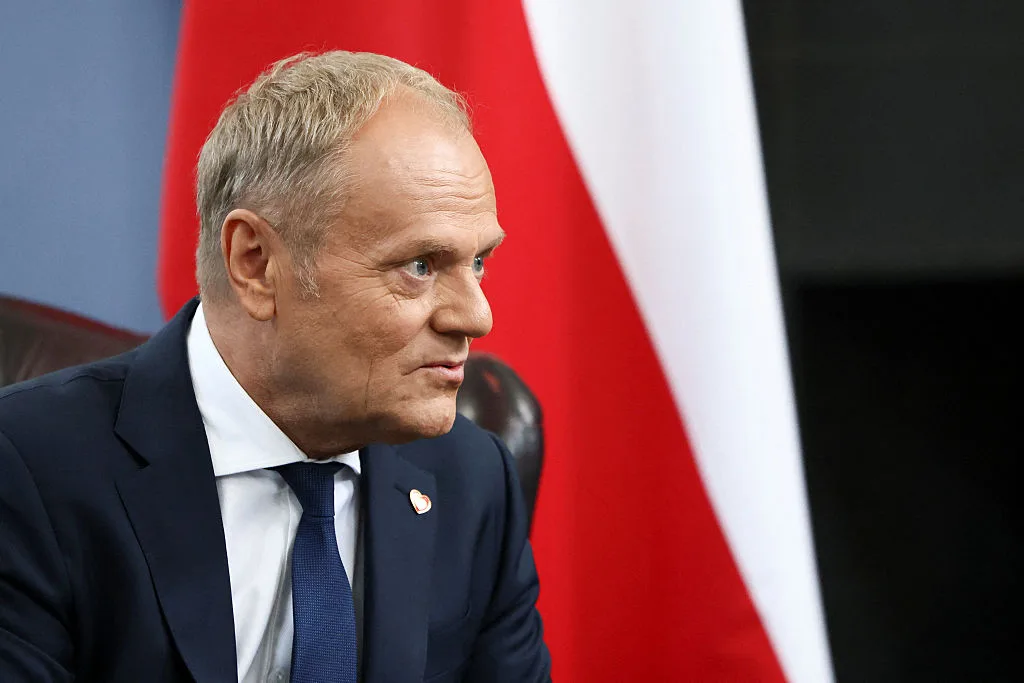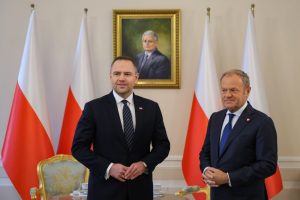



Polish security services have arrested an unnamed man as a potential assassin following an emailed death threat against Prime Minister Donald Tusk and Defence Minister Władysław Kosiniak-Kamysz which the authorities have claimed was as highly likely to be carried out.
Tusk thanked the security services for a prompt response after Interior Minister Marcin Kierwiński reported that a man had been detained.
Tusk has previously raised concerns about threats to his security, saying in 2024 that he had received threats following an assassination attempt on Slovak Prime Minister Robert Fico and in August, Polish police detained a 23-year-old man accused of calling for the assassination of senior politicians.
Adam Szłapka, a spokesperson for the Polish government, told Polish media Tusk learned about the threat first thing on Sunday morning of October 11. He said that, even if officials do occasionally get threats, this one was “exceptionally concerning.”
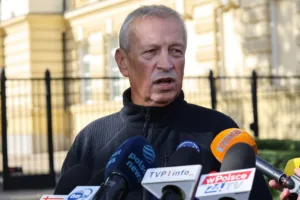
A “report about a potential assassination attempt on Prime Minister Donald Tusk, as well as on Deputy Prime Minister and defence minister Władyslaw Kosiniak-Kamysz, was relayed to the police via the State Protection Service (SOP)”, the body responsible for protecting state officials, interior spokeswoman Karolina Gałecka told the press.
Jacek Dobrzyński, spokesman for the minister coordinator of special services, said the threat arrived by email and was first received by SOP which verifies such reports before handing them to the police which is now in the process of attempting to identify the sender.
“We are talking about a high likelihood of these threats being carried out”, Dobrzyński told reporters after officials from the police, the protection service and the Internal Security Agency met in Warsaw.
Dobrzyński headed off criticism of the authorities being alarmist by arguing that officials chose to go public to head off speculation.
“We decided that we should, through you, inform Poles, society, so that this information does not circulate somewhere like a snowball and there is no speculation”, he said.
He added that the case was being taken “deadly seriously” and that threats against senior figures are rising “from month to month, from year to year”. Some turn out to be foolish jokes, but this one does not appear to be such a case.”
Dobrzyński did not divulge any details about the nature of the planned attack nor where the warnings had come from, but said that he hoped to provide further information once the police and security services had carried out further investigation.
However, as yet no details have been released regarding where and how the alleged attacks were expected to take place, who might be behind them, nor what the source of the information was.
Polish media later informed that the information the security services had obtained was from the email of a source who has had contact with “radicalized groups” from which they learned that there was a plan and preparations under way to kill the Polish PM and his deputy and defence minister Władysław Kosiniak-Kamysz. Neither the source nor the organization was named.
Pro-government liberal daily Gazeta Wyborcza has reported that an unnamed “official close to the Prime MInister” had said that the threat came from “right-wing extremists” and that the perpetrators were Poles.
Another source within the intelligence services told the same newspaper that the threat was treated more seriously than others because it contained information about addresses linked to Tusk and Kosiniak-Kamysz.
Last month, police detained a 56-year-old man in the city of Przemyśl after he posted a video on social media threatening Tusk. Earlier in September, a 52-year-old man in the town of Oława was likewise arrested for making criminal threats against the prime minister online.
Also in September, the security services detained three teenagers who were accused of being part of online groups promoting neo-Nazism and violence. One of them was additionally charged with planning terrorist attacks on targets including a mosque and a school.
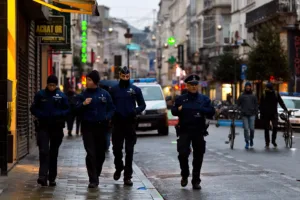
Poland has been on high security alert following multiple stabbing attacks in the last week, which Tusk on Thursday denounced as a “cult of violence”.
Three attacks at schools in central Poland took place within four days last week, leaving one dead and many wounded, including children
In response to these incidents the police have since Friday visited over 64,000 locations, including many schools, and detained over 100 people, most of them teenagers found to have made threats or been in possession of weapons.
Sławomir Mentzen, one of the leaders of the opposition right wing libertarian nationalist Confederation Party said that he has had scores of death threats made against him and the perpetrators were never identified by the authorities.
“I have had lots of death threats received by email. The police have always had to close these cases because it was never possible to identify the perpetrator” wrote Mentzen on social media platform X.
“I hope Tusk will have more luck and that in his case the security services will be able to identify the identity of the people making the threats”, added Mentzen.
Stanisław Żaryn, a security official in the last Conservative (PiS) government criticized the government for its security response in the last few days.
“Another message sent to Poles and the world that Poland is no longer a safe country, a diminished sense of security in Polish society, and even heightened threats through a message that could encourage unstable individuals to imitate such behaviour,” Żaryn said.
Żaryn further argued that the authorities should have “responded effectively, but quietly.”
“Instead of staging a spectacle and political theatre, they should have strengthened protection, threat assessment and information sharing, and reinforced the teams protecting Poland’s most senior figures.”, he said, adding that this should have been done without drawing attention that left society with a sense of danger.
He felt that the government was behaving in a way which contributed to a feeling of insecurity in the public.
The paranoia surrounding schools in recent days is being compounded by the hysteria over the prospect of a political assassination targeting Poland’s leaders. We are ourselves contributing to weakening societal resilience,” Żaryn concluded.
Conservative leaning portal Niezależna reported that just an hour after Tusk had been notified about the death threat he was walking together with his press spokesman and a journalist who passed the PM almost within touching distance without any intervention of the security details who were present. This, argued the portal, was not the action of someone who feared for his life.
The most famous assassination of a Polish politician took place in 1922 when President Gabriel Narutowicz was shot dead at a Warsaw art gallery by a nationalist extremist just five days after the President’s inauguration.
In recent times a successful assassination took place against the Mayor of Gdańsk in 2019 when he was stabbed on stage during a charity event and later died in hospital. The attack was carried out by a man who had been released from prison and who had blamed the party Adamowicz was once associated with for him having been sent to prison in the first place.
However, there have not been any actual incidents of armed violence or assassinations attempted by radical political groups though there have been incidents of property damage to offices of members of parliament.
Donald Tusk may be relieved that the security services believe that they have identified his potential assassin and detained him, but he will not have enjoyed the result of the election in Krakow where his candidate for Mayor was roundly defeated losing the run-off 38 to 62 percent
The city was voting for Mayor after Tusk party’s (Civic Coalition) Aleksander Miszalski was deposed in a recall referendum after allegations of cronyism at city hall, a mounting municipal deficit and outrage at public transport fare hikes and the introduction of a “clean air zone” reducing motorists access to the city centre.
In the election for Mayor that followed Tusk party’s candidate Monika Piątkowska was on Sunday defeated by an independent candidate Łukasz Gibała who was backed by both left wing and right wing opponents of the Civic Coalition.
While the result was influenced by local factors, for Tusk’s party to lose control of the second largest Polish city is not welcome news just one year ahead of next autumn’s parliamentary elections.
PiS MEP Adam Bielan speculated in a Youtube podcast for the daily Super Express on October 12 that it was very convenient for the Prime Minister on the day that he knew his party was going to lose in Kraków that the media agenda could be dominated by the report about the death threat allegedly made against him.
The opposition PiS have on several occasions accused Tusk of ratcheting up security tensions in order to create the “flag effect” under which people when they are feeling fearful rally behind the government of the day and several commentators have said that while the PM has regularly warned of imminent attacks by Russia his government has taken little action to prepare for such an eventuality.