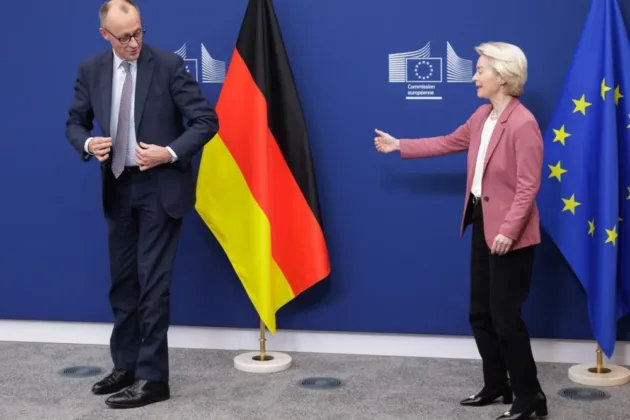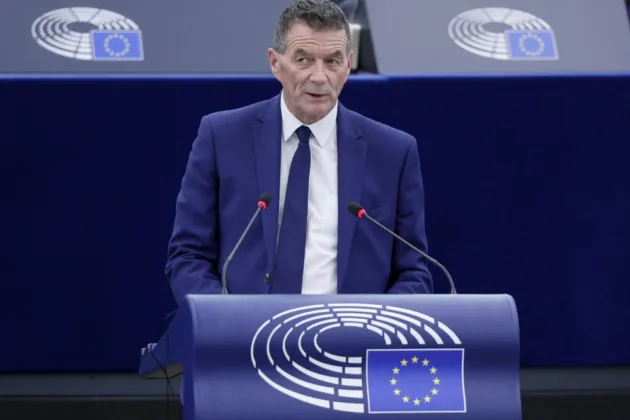


The managers of the Cypriot presidency of the Council of the EU were no doubt relieved to hand over their responsibilities to their counterparts in Ireland on July 1. The hottest of the hot potatoes tossed from Nicosia to Dublin is the EU’s 2028-2034 budget. While the European Commission proposes a fat 65 per cent increase over the current budget, totalling €2 trillion over the seven-year cycle, the frugals led by Germany seek to slash that top-line number by €400 billion. Berlin points out that even at this reduced number, Germany’s annual contribution would exceed €50 billion a year, or roughly one fifth of the entire budget. Complicating negotiations among the 27 member states is the looming requirement to begin repayment on the Next Generation EU debts incurred during the pandemic. Principal repayments of €13.9 billion a year are scheduled to begin in 2028. With interest, payments could rise to €30 billion annually by 2030, according to the European Parliamentary Research Service (EPRS). Carving this number out of a budget reduced to Germany’s satisfaction would likely come at the expense of the EU’s most sacred cows: Agricultural support and regional development aid.
The Commission, squeezed by German demands on one side and the threat of farm tractor convoys on the other, has renewed its call for additional “own resources” paid directly to the EU. Such revenues would help ensure the repayment of Next Generation debts and safeguard an abiding ambition of Euro-federalists: The expansion of common EU debt financed by Eurobonds. But where to find these new revenues? Europe’s net beneficiaries prefer that “someone else” pay for their budget goodies, and Germany, facing dire economic prospects, now declines to play her traditional role as that someone else.
And so the Commission has suggested new revenue sources derived from entities with less influence in the corridors of the Berlaymont. Call it a hunt for kulaks: Disfavoured groups from whom resources can be extracted using the coercive powers of government. Tobacco users, largely concentrated in Eastern Europe, would pay an estimated €11.2 billion into EU coffers annually. Generators of unrecycled electronic waste would remit €15 billion. Revenues from domestic carbon emitters under the Emissions Trading System would be redirected from member states to the EU to the tune of €9.6 billion a year. Foreign carbon emitters exporting to the EU would pay €1.5 billion under the Carbon Border Adjustment Mechanism.
Like Stalin’s kulaks, each of these revenue sources is a wasting asset: Present exploitation lowers future returns. Tobacco taxes cut consumption, recycling decreases e-waste, increased levies on carbon emissions will reduce those emissions and thus the future revenues accruing to the EU. As wasting assets don’t constitute a sturdy basis for long-term Eurobond issuance, the Commission has cast a wider net for potential future revenues. The Corporate Resource for Europe (CORE) would tax the revenues of corporations with turnover above €100 million a year. A tax on turnover rather than profits avoids the need to harmonise 27 national tax codes, but ignores the vast differences between highly profitable businesses like French luxury goods maker LVMH or Dutch semiconductor lithography firm ASML and low-margin businesses like the Aldi supermarket chain. Although a revenue tax could push a business working on single-digit margins into annual losses and headcount reductions, the Commission feels entitled to extract cash from all big business, no matter how fat or thin their profits.
The frantic search for revenues has identified other kulaks busy at work in the Single Market. Greedy corporations reaping “unjustified” profits are always popular targets, yet proposed taxes on excess profits make no distinction between returns accruing to productive innovation and those earned through market manipulation or other malign activities. Such a tax would complicate Europe’s difficulties in fostering new firms at the forefront of technological innovation, and likely drive such firms to more congenial jurisdictions outside the EU. Crypto is another disfavoured target. These alternative currencies trouble governing elites, who view taxation as a means of controlling a threat to fiat currencies like the euro. But crypto is by its very nature highly mobile and can flee EU taxes to non-taxed platforms overseas at the push of a button. Like wealth taxes, taxes on crypto are unlikely to realise optimistic revenue projections.
The most attractive combination of high potential revenues and disfavoured kulak status lies in an EU-wide digital services tax, which would be extracted from those dreaded American tech firms: Google, Meta and Amazon. Such a tax set at 5 per cent of annual turnover could yield an estimated €37.5 billion a year, according to an estimate by the Centre for European Policy Studies (CEPS) commissioned by the Greens/European Free Alliance group in the European Parliament, but would carry significant political risk: The White House has made it clear that European taxes on digital services will be met with harsh countervailing tariffs. American tech giants may not have many friends in Brussels, but they come with powerful support in Washington, no matter which party is in power. Member states struggling to keep the US committed to NATO would view new taxes aimed directly at American tech firms as a political own goal for Europe.
In its own quest for new resources, the European Parliament has found further targets for punishment. Penalties imposed on companies failing to close a gender pay gap would depend on determining complex equivalencies between disparate job descriptions, say between the (mostly male) construction workers and (mostly female) administrative assistants employed by a single firm. Needless to say, any such programme would greatly increase the regulatory complexities facing European firms. Another trial balloon would impose penalties for the production of food and other biological waste. Presumably, a cadre of new inspectors would poke around the rubbish bins behind every restaurant in search of excess food waste production. Given that the EU’s plans for the production of bio-naphtha depend in part on ample supplies of food waste, penalties on its production would be contrary to Europe’s Net Zero ambitions. You may imagine that enterprising restaurateurs will simply paint “Bio-Naphtha Feedstock” on their bins as a handy means of avoiding any new penalties.
These proposals for new own resources may spare national budgets, but will stifle innovation and increase the regulatory burden on Single Market firms. If the Commission wishes to realise its Euro-federalist dreams, it should instead lobby for a more efficient and less distorting solution: A flat EU income tax on Europeans. This taxing authority would create the long-term foundation for Eurobonds and grant the euro reserve currency status rivalling the dollar. A credit-worthy EU capable of floating debt on international markets could fund other long-term goals like a common defence budget. An EU income tax would also help close the democratic deficit, as nothing encourages popular oversight of imperious government like direct taxation.
But this may be precisely the point: Hunting kulaks is much easier than confronting your citizens with the bill for their benefits.