


The European Parliament has declined to discuss highly controversial constitutional changes by the new Hungarian government which the opposition says violate basic democratic principles.
This stands in high contrast with prior attitudes in Brussels, where the establishment was quick to hold back funds for Hungary and opened multiple investigations against the country when it introduced conservative policies, allegedly over rule-of-law worries.
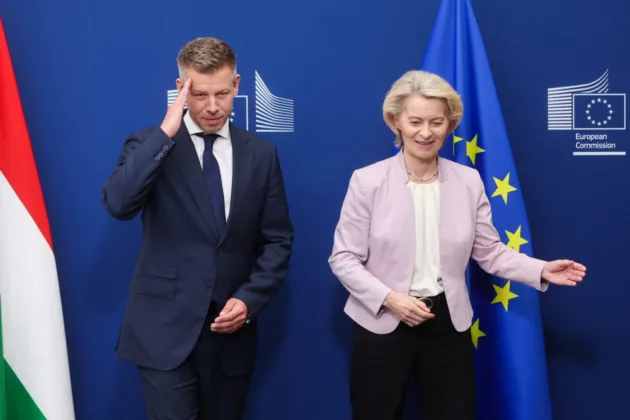
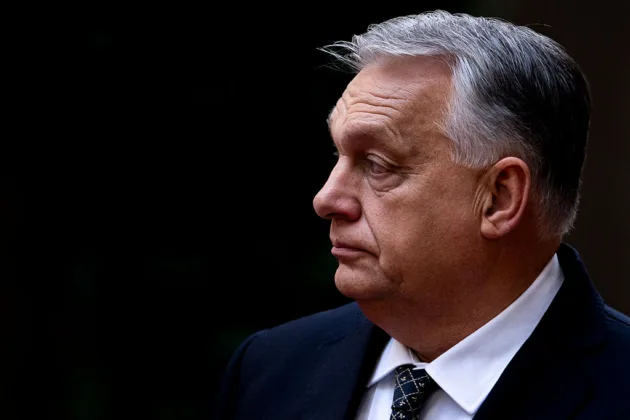
Hungary’s Fidesz party and its allies in the European Parliament have accused the new government led by Prime Minister Péter Magyar of Tisza of engaging in anti-democratic practices through recent constitutional amendments, including retroactive restrictions aimed at preventing former Prime Minister Viktor Orbán from returning to office.
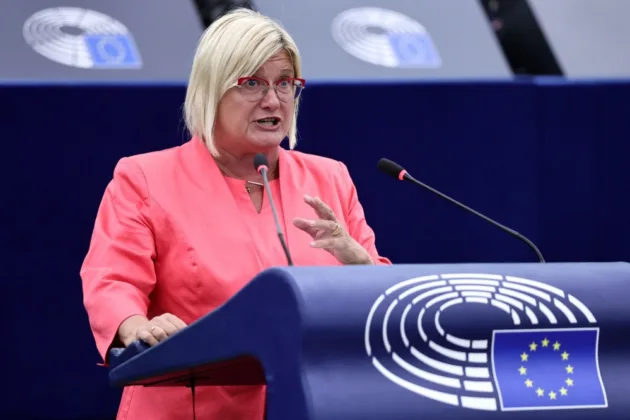
MEP Kinga Gál (Fidesz/Patriots for Europe) and the official Fidesz EP account on X claimed that the new government is prioritising “political vendetta” over governance.
They highlighted constitutional changes that impose term limits on the Prime Minister and place restrictions on eligibility for elected office, describing them as a “serious violation of democratic principles” and “unprecedented in Europe.”
Following Tisza’s victory in the April 2026 parliamentary elections, which ended Orbán’s 16-year rule, the new government has moved quickly to amend Hungary’s Constitution.
Key changes include limiting prime ministers to a maximum of eight years in office (two four-year terms), calculated retroactively from 1990, which effectively bars Orbán from seeking the role again.
There are also broader institutional reforms, including proposals to introduce mandatory retirement ages for judges, and restructure public asset management foundations established under the previous government.
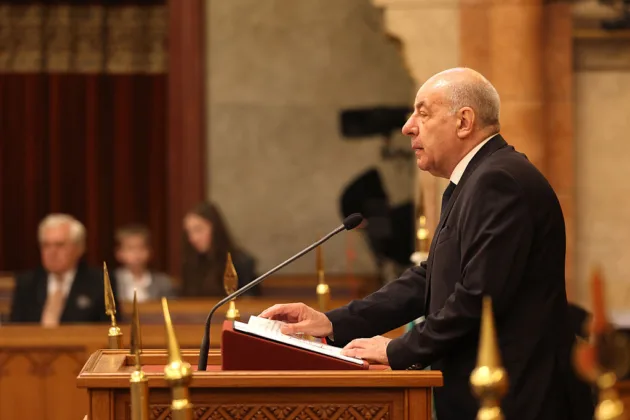
The Magyar government also wants to remove the sitting President and head of the Constitutional Court.
These steps are framed by the new administration as essential to dismantling the “illiberal” system built by Orbán, restoring judicial independence, tackling corruption, and meeting EU rule-of-law benchmarks to unlock frozen European funds.
Brussels Signal reached out to the European Commission for a reaction on the rule of law debate in Hungary, but did not receive a reply at the time of publication.
The European Commission has been engaged in talks with the new Hungarian authorities over the release of EU funds tied to rule-of-law conditionality.
Brussels has generally welcomed the change of government as an opportunity to address long-standing arguments with the conservative populist Orbán government.
Fidesz representatives argue that the retroactive nature of the measures infringes on voters’ rights to choose their representatives and sets a dangerous precedent.
They requested a debate in the European Parliament’s Conference of Presidents on the “recent constitutional changes” that they say “violate basic democratic principles.”
The proposal was rejected by left-wing groups and the EPP.
In their statements, Fidesz accused the EU institutions of hypocrisy, claiming that while Hungary faced years of politically motivated criticism under Orbán, genuine concerns about the new government’s actions are being ignored.
Amnesty International and other observers have expressed concern over the speed and scope of the new government’s constitutional changes, warning that rushed amendments risk undermining due process and could hinder genuine rule-of-law restoration.
Critics note that while Orbán’s government might have gone to far, the new supermajority’s approach must still respect constitutional norms and consultation procedures when it wants to change things.
Retroactive application of laws, changing the rules after the fact and applying them to past actions or situations, is viewed as a fundamental violation of the rule of law in democratic systems.
Hungary has secured the release of around €16.4 billion in frozen European Union funds after new Prime Minister Péter Magyar agreed to a package of reforms set by Brussels — an outcome widely anticipated since he ousted Viktor Orbán in April. https://t.co/fg3eSi34Hm
— Brussels Signal (@brusselssignal) May 29, 2026