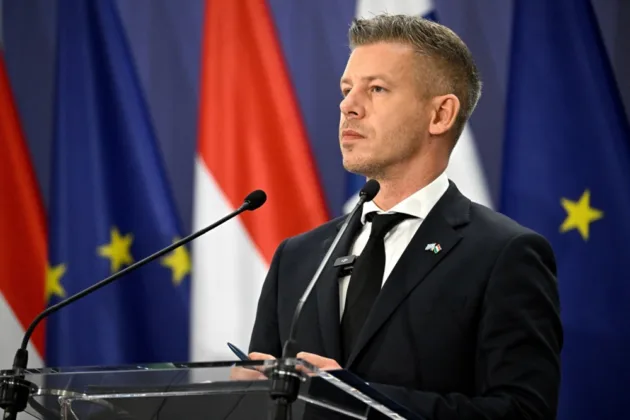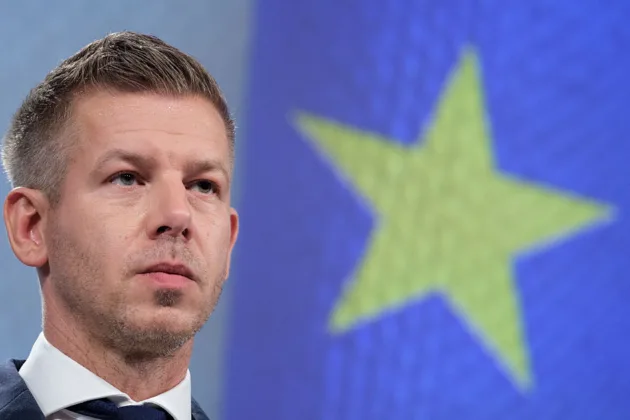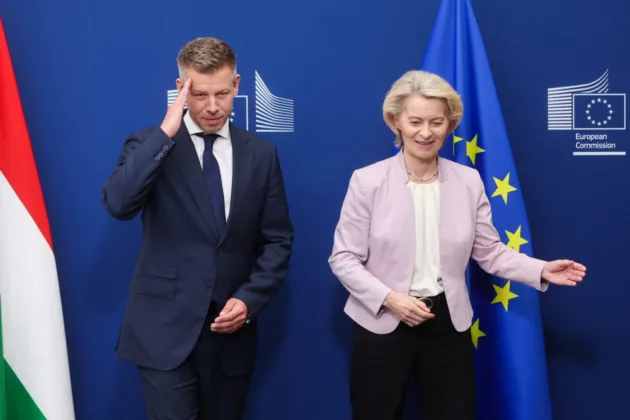




Hungary has just carried out one of the most far-reaching constitutional overhauls since the adoption of its Fundamental Law in 2011. Using its two-thirds parliamentary majority, the government of Prime Minister Péter Magyar pushed through an amendment, the seventeenth since 2011, that immediately ends the term of sitting president Tamás Sulyok, introduces a 12-year cap on parliamentary mandates and lowers the retirement age for Constitutional Court judges. The move has triggered sharp criticism from the opposition Fidesz party and raised questions about legal certainty and political stability.
The government frames these changes as necessary to restore the rule of law and dismantle institutional structures built during Viktor Orbán’s long tenure. Critics argue that the reforms violate basic principles of constitutional stability by applying new rules retroactively to officials elected or appointed under the previous legal framework. While the political motivations on both sides are clear, the episode raises a broader question: How far can a parliamentary majority legitimately go in reshaping the political order it inherits?
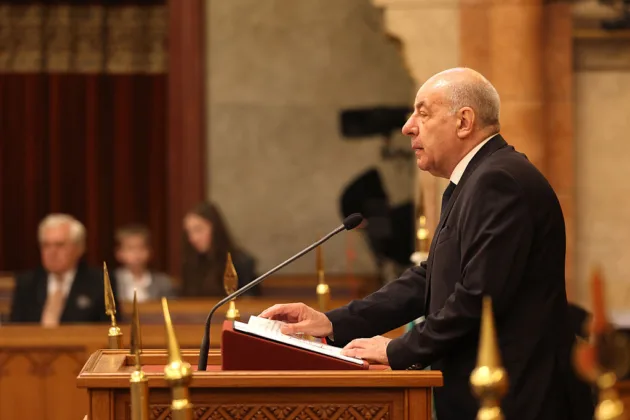
The amendment, passed on July 13 by 139 votes to six, with Fidesz and its Christian Democratic People’s Party (KDNP) ally boycotting the sitting and the six votes against cast by the right-wing Mi Hazánk (Our Homeland Movement), ended the mandate of the sitting head of state the day after the text entered into force. It also imposed a 12-year limit on parliamentary service, which does not apply to members elected in the current term, and lowered the retirement age for Constitutional Court judges to 70, forcing the departure of the court’s president, Péter Polt, a long-standing Orbán ally, together with three other judges. Sulyok, who signed the amendment on July 18 and left office two days later, described it as a breach of constitutional principles, damaging to legal certainty and the stability of Hungary’s constitutional system, but said the constitution left him with no legal option but to promulgate legislation duly adopted by parliament. He had asked the Venice Commission, the Council of Europe’s constitutional advisory body, to assess whether removing a sitting head of state by constitutional amendment met European standards, in a 22-page submission first sent on May 29. The body opened an urgent procedure and sent a delegation to Budapest on July 2.
The government’s justification rests on a straightforward argument: Magyar’s Tisza party took 141 of the 199 seats in the National Assembly at the April 12 election, on 53.2 per cent of the list vote and a turnout of 79.6 per cent, giving it a constitutional mandate to amend Hungary’s Fundamental Law. Magyar and his allies argue that key state bodies remained dominated by Orbán appointees despite the change of government, limiting the new administration’s ability to implement its programme. Without replacing senior office holders, they contend, real reform is impossible.
This is a familiar argument in the region. Similar debates emerged in Poland after 2023, when the new government argued that extraordinary measures were necessary to dismantle institutions shaped by its predecessors. In both cases, the underlying logic is the same: Previous governments allegedly captured the state, and only swift, comprehensive institutional change can restore democratic health. Yet in both cases, critics have raised the same question: When does reform become replacement?
What makes Hungary’s current transition remarkable is not simply the changes themselves, but the political language surrounding them. Similar constitutional tools once described as symptoms of democratic backsliding are now increasingly presented as instruments of democratic restoration. The vocabulary has changed far more dramatically than the techniques themselves. When Orbán used a parliamentary supermajority to reshape the judiciary, media regulation and the constitutional order, the reaction from Brussels and much of the European press was swift and critical. The language was strong: Capture, authoritarianism, dismantling democracy. Now, when similar instruments are used by a government that speaks the language of liberal democracy, the contrast in political and media reactions inevitably invites comparisons. The mechanisms themselves often appear remarkably similar; what has changed is the political context in which they are being interpreted.
Rather than fully rejecting the methods of the Orbán era, Magyar appears to be adapting parts of the same governing logic for different political purposes. This is perhaps the most striking aspect of Hungary’s current transition. The new prime minister promises democratic renewal while relying on some of the same instruments that shaped the system he set out to replace.
For 16 years, Hungary pursued a consistent governing philosophy that survived multiple electoral cycles. Whether admired or criticised, Orbán’s governments offered continuity in strategic direction that has become increasingly uncommon across the continent. Most European democracies experience frequent reversals of major policies as governing coalitions change. Hungary instead maintained a relatively stable strategic course across successive elections. That continuity is now being dismantled in a matter of months.
The problem with retroactive application of new rules is that it fundamentally alters the meaning of electoral mandates. Sulyok was elected by parliament and Polt appointed to the Constitutional Court under the legal framework that existed at the time of their nomination. Changing the rules in the middle of their terms, and forcing them out on the basis of those new rules, inevitably raises questions about legal certainty. If every new parliamentary supermajority treats the political order as something to be rebuilt rather than inherited, then elections cease to be moments of democratic alternation and gradually become moments of institutional replacement.
There is another long-term consequence that deserves attention. Once political competition becomes centred on dismantling the institutional legacy of previous governments, elections cease to determine who governs under shared rules and instead become battles over the rules themselves. Poland offers perhaps the clearest contemporary example of this dynamic. Rather than reducing political conflict, successive attempts to reverse the institutional legacy of previous governments have produced even deeper polarisation. Hungary now risks entering a similar cycle.
The approach to Judit Polgár over the vacant presidency illustrates this tension. The former chess grandmaster is a figure of considerable prestige, respected in Hungary and internationally. Magyar framed the approach as a gesture of unity and national reconciliation, and the Tisza parliamentary group said on July 20 that it considered her the most suitable candidate. She declined the same day, thanking the prime minister for seeking a nominee from outside party politics. Magyar then said at least 10 credible names had been put forward and that the decision rested with parliament. Yet the timing is striking. The same government that promises a new beginning and calls for unity has removed the sitting president, reshaped the Constitutional Court and rewritten the constitutional framework. Calls for national unity usually gain credibility when accompanied by institutional restraint. Pursuing both symbolic reconciliation and rapid restructuring of state institutions at the same time inevitably raises questions about which objective is truly driving the process.
A fair assessment of Orbán’s final years in office also requires acknowledging that Hungary, like much of Europe, was simultaneously confronting the pandemic, the energy crisis, soaring inflation and the geopolitical consequences of Russia’s invasion of Ukraine. Not every economic or political difficulty can therefore be understood solely through the lens of domestic policymaking. Hungary’s strategic environment was shaped by forces beyond Budapest’s control, and any honest assessment must account for that reality.
Despite adopting a noticeably different rhetorical tone towards Russia, Magyar has so far shown considerable continuity in areas where Hungary’s long-term strategic interests are concerned.
Orbán’s Hungary may ultimately be remembered less for the length of his rule than for the rare ability to sustain a political project beyond a single electoral cycle. In an era increasingly defined by short-term reversals, that continuity became one of its defining characteristics.
The question is not whether Hungary needed reform. The real question is whether a constitutional order should be strong enough to survive elections, or whether every electoral victory should carry with it the expectation of rebuilding the state itself. A democracy that rebuilds itself after every electoral cycle is not a democracy that learns. It is a democracy that never stops fighting the last election. Europe’s answer to that question may ultimately shape its democracies far more profoundly than any individual election ever could.