





A growing number of Labour MPs have pressed the party’s incoming leadership to significantly water down planned migration reforms, exposing deep divisions within the government over one of the most sensitive policy areas.
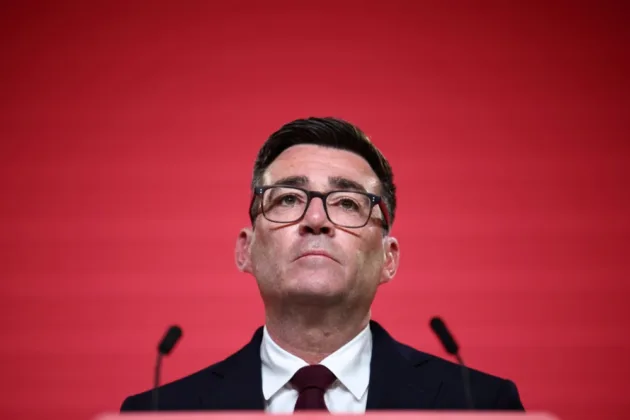
Almost 80 Labour MPs wrote a letter to Andy Burnham, the party’s presumptive next leader and prime minister-in-waiting, warning that he risked “losing progressive voters” if he went ahead with the Immigration and Asylum Bill, a set of reforms brought forward by Home Secretary Shabana Mahmood.
“Targeting a group of migrants that followed the rules, and applying this retrospectively, does not pass the fairness test for a compassionate but firm system. We do not recall being asked on the doorstep to make it harder for migrant workers to settle in the UK.
Under the bill, most migrants would face a doubled waiting time before becoming eligible for indefinite leave to remain, while asylum seekers would be required to repay a portion of their taxpayer-funded hotel costs. They would be barred from settling permanently unless they repaid £10,000 (€11,500) of hotel, accommodation and benefit bills once able to work.
The letter sets out a series of specific demands, including a national migration levels plan linked to reindustrialisation and local government empowerment, the removal of “hostile rhetoric” from government communications, and a more efficient asylum system that closes asylum hotels, involves local authorities more closely and clears application backlogs.
The MPs called for “an expansion of managed asylum routes, a review of the pause on family reunion for unaccompanied minors, and the introduction of the right to work for asylum seekers after six months”.
They argue that allowing asylum seekers to work after six months would reduce reliance on taxpayer-funded support, while closing asylum hotels would cut one of the largest costs in the asylum budget. The Home Office estimates asylum support costs the taxpayer about £4 billion (€4.6 billion) a year.
The letter stops short of calling for Mahmood’s removal, but a change of course along these lines would significantly sideline her direction. She had been expected to remain at the Home Office under Burnham. Her plans have drawn repeated backbench resistance: in February more than 50 Labour MPs threatened to rebel unless they were softened.
Labour backbenchers and some ministers argue that ambitious cuts to net migration could damage key sectors of the economy and alienate core voter bases.
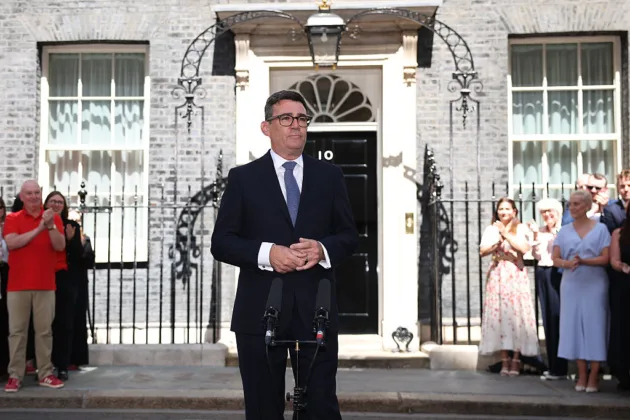
The pressure comes as Burnham prepares to set out the government’s direction following the leadership transition. He could be sworn in as Prime Minister as early as July 20.
Senior Labour MPs told The Times that the party cannot afford to alienate working people because the plans could damage the National Health Service (NHS) and social care by restricting foreign workers too sharply.
One backbencher reportedly warned privately that aggressive reform risked “playing into the hands of the Right” and could lead to labour shortages in public services.
The demands reflect a clear split inside the Labour Party, where, alongside Mahmood, some senior figures have acknowledged the need to reduce net migration. It has fallen sharply, to about 200,000 in the year to June 2025 from 649,000 a year earlier, according to the Office for National Statistics (ONS).
A significant faction on the left of the party continues to push for a more open approach, emphasising humanitarian concerns and economic benefits of immigration.
Critics outside the party have accused Labour of being soft on the issue.
Migration Watch UK, a long-standing critic of high immigration levels, has repeatedly warned that any dilution of reform would fail to meet public expectations. The group has said successive governments, including the current one, have not delivered the reductions voters were promised.
Burnham faces a difficult balancing act, because he campaigned in favour of Mahmood’s reforms during the Makerfield by-election on June 18, a Leave-supporting seat where he was also forced to reverse his earlier support for giving migrants immediate access to benefits.
Polling consistently shows that a majority of British voters, including many traditional Labour supporters, want lower immigration levels and stricter enforcement of the rules.
Yet powerful interest groups, from business lobbies to parts of the public sector, continue to press for higher inflows.
Across Europe, centre-left governments often promise tighter controls during elections only to face internal resistance once in office.
In the UK, the issue is particularly acute after the record net migration of 2023, which strained housing, infrastructure, security and public services.
A government source told reporters that “no final decisions have been made”, but acknowledged that “realistic and deliverable” reforms would be required.
The United Kingdom is on the cusp of a profound demographic turning point, with deaths projected to exceed births every year from mid-2026 onwards. https://t.co/DmIXM3JCb7
— Brussels Signal (@brusselssignal) April 30, 2026