






French President Emmanuel Macron has awarded the Legion of Honour to Prime Minister Keir Starmer, making him the first serving British prime minister to receive France’s highest decoration.
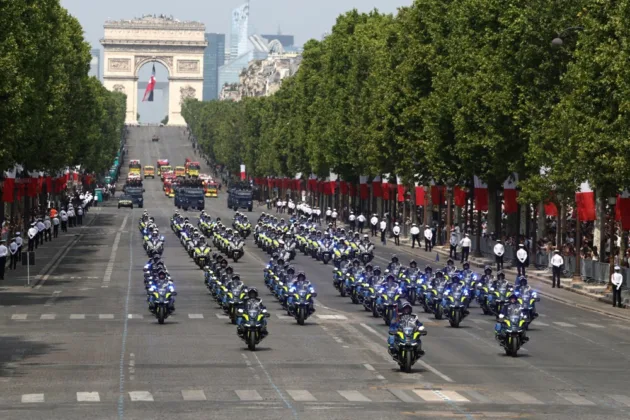
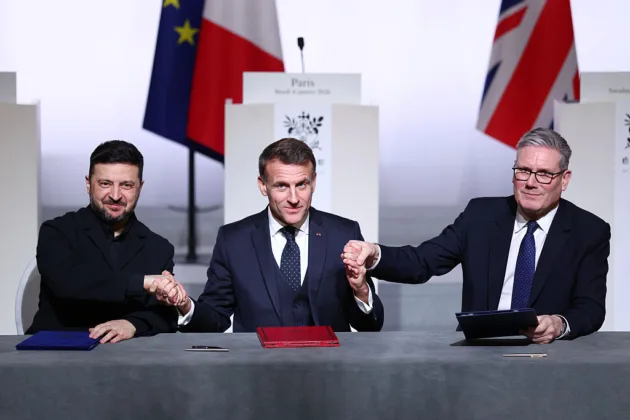
Macron presented the award in Paris on July 13, where Starmer was attending a summit of the Coalition of the Willing, the group of Ukraine’s allies co-chaired by London and Paris. The prime minister stayed on as Macron’s guest for the July 14 military parade in the French capital.
Presenting the red ribbon, Macron praised what he called Starmer’s “personal leadership” and his commitments to European security, Ukraine and the bilateral relationship. The French president described the decoration as a testimony of gratitude from the French people.
Starmer received it seven days before he is due to leave Downing Street on July 20. He announced his resignation as Labour leader on June 22 and said he would stay in post until his successor was chosen.
Only one other British prime minister has held a comparable French honour. Winston Churchill was awarded the higher-ranking Grand Cross in 1958 for his wartime leadership and his ties to France.
The Legion of Honour was created by Napoleon Bonaparte in 1802 and is given for outstanding merit to French citizens and foreigners alike. Ukrainian President Volodymyr Zelensky received it from Macron in 2023. Russian President Vladimir Putin was decorated in 2006 by then-president Jacques Chirac.
Macron’s dealings with former prime ministers Theresa May, Boris Johnson and Liz Truss were soured by Brexit. Starmer kept disputes with Paris away from the front pages and pressed a firm line on Russia, and Zelensky thanked him for his support before the ceremony.
The prime minister’s standing at home moved in the opposite direction. Labour lost hundreds of council seats to Nigel Farage’s right-wing Reform UK at the May local elections, while Welsh Labour was pushed into third place at the Senedd election, ending a century of dominance in Wales.
Defence secretary John Healey quit on June 11, saying the British Government’s defence investment plan left the armed forces under-resourced. Andy Burnham then won the Makerfield by-election on June 18 and moved against the leadership within days.
Burnham, the former mayor of Greater Manchester, took the bulk of Labour nominations on July 9 and was expected to succeed unopposed once nominations closed on July 16.
Starmer leaves office decorated in Paris and rejected in Westminster. An Ipsos poll published shortly before his resignation found 52 per cent of the British public wanted him to stand down, against 35 per cent who wanted him to continue.