

Polish Prime Minister Donald Tusk has warned of major changes in personnel across the public sector as prosecutors continued to investigate a hospital scandal involving allegations of political favouritism, fraud, unethical behaviour in the morgue and mismanagement in emergency services which it is claimed led to fatalities.
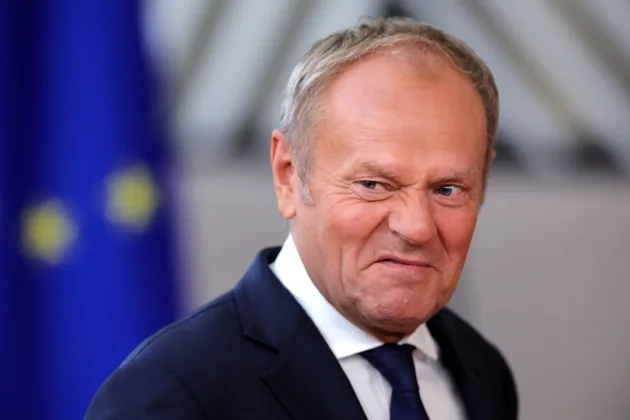
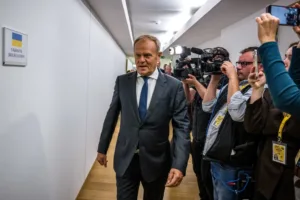
On July 3 Tusk held a press conference in which he informed reporters that the minister of health and the head of the health fund (NFZ), the state health insurer, have only four days to present a plan for freeing the Polish health system of practices such as by-passing of queues, doctors claiming pay from a number of hospitals and political appointments.
“If I do not receive satisfactory, precise recommendations by Tuesday, I will make appropriate decisions, including ones about personnel, on Wednesday,” he said.
Health Minister Jolanta Sobierańska-Grenda, whom Tusk appointed because she is not a politician but a former hospital manager, is under heavy pressure and lacks any political allies to protect her from being dismissed.
She has kept a low profile throughout the dispute and has claimed that “the state system is working since irregularities have been identified and are being dealt with”.
However, in reality it was media reports which triggered the existing scandal rather than any investigation by public agencies.
Asked whether the present crisis could lead to the ruling centre-left coalition led by Tusk taking a decision to remove all political appointees from management boards across the public sector Tusk said that he would be in favour of such a move.
“For me when someone is a party member that is a reason to consider not to appoint them to a management job in the public sector rather than to hire them for it”, he said.
Warsaw’s mayor Rafał Trzaskowski earlier on the same day had accepted the resignation of two senior town hall officials in connection with the hospital scandal and promised that he would not allow party members to remain on boards of public entities controlled by the city.
It is acknowledged in Poland that boards of a whole raft of public companies and public services at the central and local government levels are part of the ‘spoils system’ in which the ruling party appoints its own nominees.
Tusk’s remarks have come in the middle of a scandal involving Warsaw Southern Hospital managed by the Warsaw City authority, after reports emerged that politicians from his ruling Civic Coalition (KO) and their relatives received preferential treatment, including the existence of a “VIP lounge” for their visits.
Dawid Kacprzyk, the doctor at the centre of the controversy, was a local councillor and head of the youth wing of the KO who managed to earn nearly 400,000 Euro, sometimes claiming to have worked 24 hour shifts four days in a row. He was the coordinator of the accident and emergency service at the hospital but had only graduated two years ago and had not yet completed any specialist training.
Tusk conceded the seriousness of the scandal and blamed it not only on individuals who had done wrong but also on a “bad system” which allowed doctors to scam the system and in which supervision was inadequate.
The PM insisted that “access to health care must be equal” and called for a central register to manage a queue system for patients that would avoid abuse.
“There cannot be places in public hospitals where selected people are admitted simply because they have access to hospital management, the district governor, or the head of the hospital.”
Currently when referred to a hospital or a specialist by a GP a Polish health service patient has a choice where to be treated, something that may not be easy to keep in a centralised system where waiting times are standardised.
Audits of the present arrangements have identified widespread abuses. In one Warsaw hospital’s pancreatic cancer unit it was found that 97 percent of patients had received treatment outside of the NFZ queues.
One of the most persistent practices within the health system is the way patients who see a specialist privately are then bumped up in the queue for getting hospital treatment in the public sector paid for by NFZ.
Tusk is anxious to show the government is reacting to a scandal that seems to be escalating rather than receding.
Last week it emerged that at the same hospital in Warsaw the head of the morgue had a business arrangement with a funeral parlour and pressured relatives of the deceased to use it, had let the morgue out for filming, as well as posting photographs of human remains online. Some of the material has been marked by Instagram as graphic content and is available only after user confirmation.
Polish portal Zero cited a comment published online by outraged observers.
“The last straw was the situation in the morgue, when a TV series was being filmed there during the hours when death certificates were being collected, and the crew was shushing the families of the deceased!!!!!”
Polish law prohibits the advertising and promotion of funeral services on hospital promises.
It has also been revealed that the hospital is the subject of a public prosecutors investigation into the forgery of 20 death certificates in the second half of 2025.
These may relate to allegations made by Emil Jędrzejewski, a surgeon who acted as a whistleblower to the media on what had been going on at the hospital.
The surgeon in question had last year attempted to warn Warsaw Mayor Trzaskowski of serious irregularities at the hospital but the Mayor, smarting from his defeat in Poland’s presidential election earlier that summer, did not intervene.
Trzaskowski and Tusk now claim that the surgeon should have informed the police and prosecutors about what he knew rather than saving his revelations for the media.
They have also said that the surgeon was in conflict with the young head of A&E as well as being in conflict with the hospital over remuneration for his services.
The opposition Conservatives (PiS) have called for the head of Mayor Trzaskowski, who is facing a call for a recall referendum as a result of the revelations about the events at the hospital and the inadequacy of supervision there. But they have also called for Tusk to fire the interior minister and General Secretary of the KO Marcin Kierwiński.
The interior minister is regarded as the key decision maker with regard to appointments within Warsaw’s local government rather than Trzaskowski and the doctor who headed the A&E service at the hospital embroiled in the scandal was allegedly one of Kierwiński’s party proteges.
But PiS, a party that has been in power twice, once for two years and the last time for eight years, has also been accused of having tolerated favouritism and queue jumping inside the health service.
During its time in office its leader Jarosław Kaczyński was reported to have received highly favourable treatment at a hospital in Lublin and of having had crutches personally delivered to his home by a specialist in Warsaw.
However, it is the KO which is now suffering from continuing revelations about the way its activists and senior politicians treat the health service as their own property.
Recently reports emerged of a KO Senator Tomasz Lenz forcing a local hospital to treat his son outside of the A&E queue, another activist health service administrator effectively hijacking an ambulance to help the mother of a local KO MP.
In the most recent case a KO MP Małgorzata Pępek demanded her medical tests were carried out outside of the queue and when reports of this emerged and she was asked to pay she proceeded to publicly criticize the hospital’s management on other issue, whereas previously she had lobbied for her local hospital.
The present escalating hospital scandal is being compared to the “waitergate” scandal in 2014 when the media published illicit recordings of conversations between Tusk party politicians in top restaurants which contributed to their electoral defeat in 2015.. These recordings revealed not only the way decisions were taken but also the vulgarities and personal animosities prevalent among the ruling elites
However, some commentators believe that although the revelations in the hospital scandal are shocking the public may feel that no one is likely to tackle the underlying issues, including problems with the health service.
Polish parties of all political colours have been promising to ease access to the health service and to make appointments to the management of public companies and services transparent and free of political interference.
Lucrative appointments in the public sector are parts of a spoils system which allows the leaders to award favourites and keep the troops happy at the local level. It is hard to envisage it being replaced and how this would be done.
Tusk’s coalition allies, the Left Party and the Polish People’s Party (PSL) have certainly benefitted from that spoils system and may not easily agree to end it, especially at the moment Tusk’s party is in political trouble.
But the prime minister will be closely watching findings from focus groups and internal polling on how the evolving scandal is affecting support for his party and government as a whole. His press conference last week suggests that he is preparing for the need for actions that his political allies may not be comfortable with.