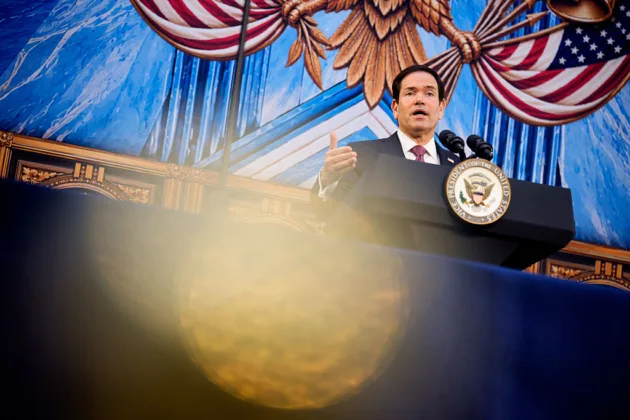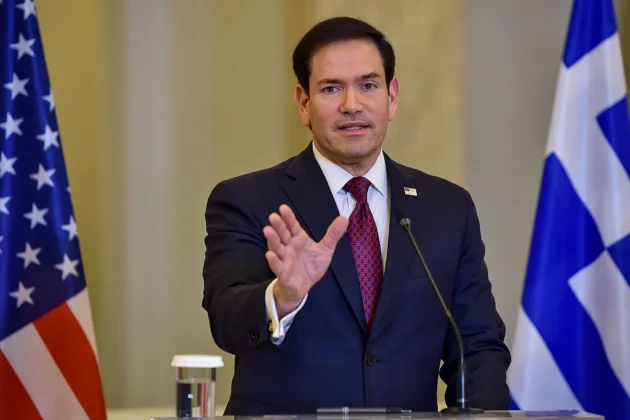


On July 16, US Secretary of State Marco Rubio convened a ministerial conference on the resurgence of political terrorism in Washington. In his remarks, he described modern political terrorism as “a distinctive and unique evil”, driven by a hatred “above all else, for civilisation itself”.
Although the focus was on today’s left-wing and anarchist movements, they point toward one of the oldest civilisational struggles: The fight between those that want to restore versus those that wish to destroy.
Sixty-six delegations attended, and Rubio stressed that this is not an American problem alone. The resurgence of political terrorism is a shared threat across the transatlantic community, one that has afflicted the United States alongside its European and Latin American partners.
Political assassinations, insurgencies and ideological extremism are common challenges. The State Department has called the threat a blind spot in international counterterrorism, and recognising it as such remains an important first step in fighting it together.
The policy objective of the conference was clear, but Rubio also invited a broader civilisational reflection on the resurgence of political terrorism, which is closely bound up with an older pattern of revolutionary violence.
Manifested in movements from the French Revolution to the 20th-century communist revolts, it is driven by those who repeatedly seek to destroy the moral, religious and political foundations upon which Western civilisation rests.
The timing itself makes that continuity difficult to ignore. July 17 marks the anniversaries of two of the most chilling acts of revolutionary violence in modern history: The execution of the 16 Carmelite Martyrs of Compiègne during the French Revolution in 1794, and the murder of Tsar Nicholas II and his family during the Russian Revolution in 1918.
These revolutions differ in less significant respects but ultimately share the same ideological character, rejecting authority, both legitimate political authority and the authority of the divine, natural law, hierarchy and objective truth.
Rejecting the notion that truth exists independent of human will, their leaders seek to dissolve inherited institutions and erase distinctions that previous generations understood as part of what had been created and handed down.
This helps explain why revolutionary movements, though masked in different rhetoric across the centuries, often produce remarkably similar outcomes. Rubio called it a poisonous resentment cloaked in the language of equality and justice, driven by “an overwhelming need to tear down what greater men have built”.
Through its Christian roots, the Western world has taught justice, charity and the dignity of every human person, rooting law and leadership in justice. Revolutionary movements subordinate all of these principles to their own ideological ends. In the French Revolution, Liberty, Equality and Fraternity became ends in themselves.
The subsequent violence committed against the ancien régime, ordinary French citizens and the counterrevolutionaries in the Vendée remains among the darkest chapters in Western civilisational history.
During the communist revolutions, those who claimed to free humanity from the chains of economic slavery instead destroyed families, churches, traditions and millions of lives.
Revolutionary violence is never merely political and it never stays in the realm of politics. The victims are the institutions that bind civilisation together: Families, churches, schools, traditions, memory and faith.
That impulse is alive today in language centred on “oppressor versus oppressed”, demands to dismantle the police and efforts to abolish inherited understandings of sex and gender. For Rubio, it amounts to hatred of civilisation itself.
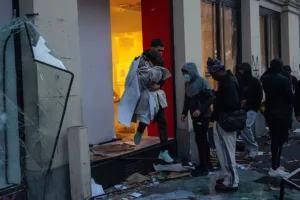
As his remarks documented, recent years have brought a renewed wave of ideological violence, including assassination attempts against political leaders, attacks on churches and places of worship, riots targeting public institutions and organised campaigns of political intimidation.
Rubio argued that these incidents are not isolated. They reflect a broader resurgence of political extremism that increasingly justifies violence as a means of remaking society.
He closed on a distinction worth remembering, observing that “it is easy to destroy great things” and far harder to make them. The enemies of civilisation, he said, were capable only of the former, while the nations represented in the room had built great things together.
That should inspire a restorative and reforming vision today rather than another revolution. In Paris in 1910, Theodore Roosevelt praised “the man in the arena”, the one willing to strive despite failure. This is a call to stand with those who enter the arena to preserve, strengthen and renew what is good, true and beautiful.
The struggle Rubio described is much larger than current security challenges and certainly than counterterrorism alone. The revolutionary impulse is, in many respects, as old as civilisation itself: The recurring temptation to reject inheritance, deny moral order and begin history anew in the image of whatever man decides should be the ruling ideology.
Because this temptation is perennial, so too is the wisdom for resisting it. The civilisations that have endured did so not through revolution, but through faith, family, virtue, memory and the patient work of renewal.
The enemies of civilisation believe that destruction is easier than construction. History suggests they are right about the first part.
History also shows that good peoples, united by a shared inheritance and determined to build rather than tear down, have repeatedly prevailed. That remains the task today.