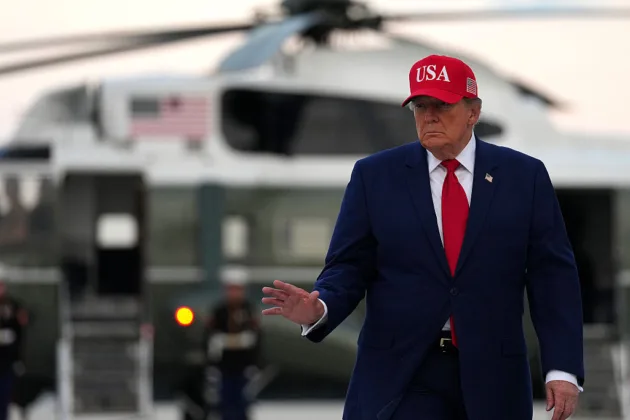

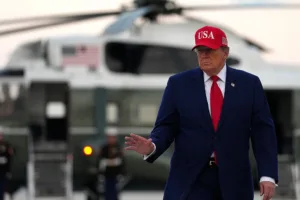

United States President Donald Trump has cast doubt on Ukrainian allegations that Russia is supplying Iran with satellite imagery of American positions in the Gulf. He said he would put the question directly to his Russian counterpart, Vladimir Putin.
“I’ll ask Putin about it. We’ll find out,” Trump told reporters aboard Air Force One on July 27.
The President said any Russian assistance had made little difference because Washington had hit Iran hard. He argued that the Islamic Republic had been left without an army, an air force or a navy.
Trump added that he did not believe Moscow had been providing such help, certainly not on a large scale, and that any support had proved ineffective. He pointed to Venezuela, where Russian-supplied equipment failed to stop the American operation there.
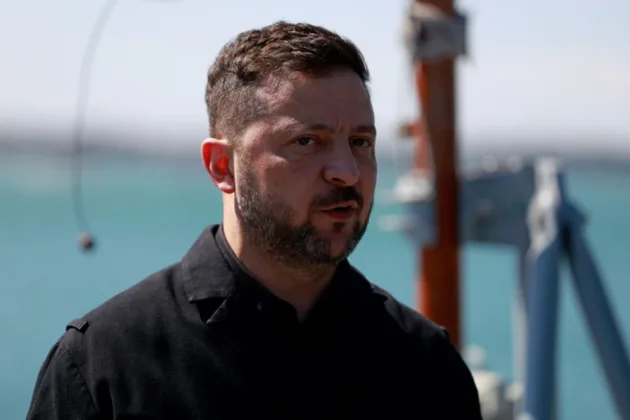
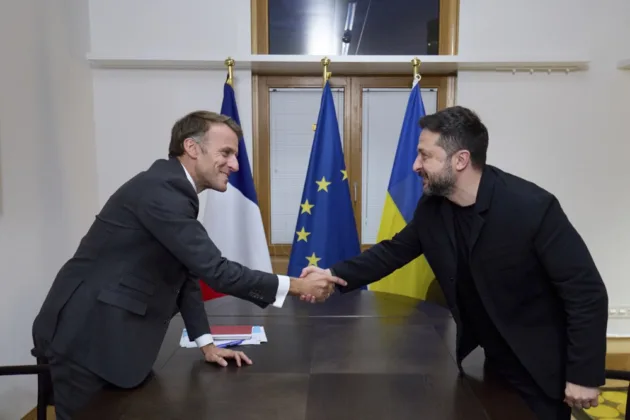
Ukrainian President Volodymyr Zelensky said on July 25 that Russian satellites had been tracking Gulf states and US military sites since the start of July, with the resulting imagery passed to Tehran. He said Kyiv had identified a “clear correlation” between that imagery and Iranian strikes.
Ukrainian forces struck vessels in the Caspian Sea the same day. Ukraine’s Security Service said one ship had been carrying military cargo between Iran and Russia while evading international sanctions.
Iran’s foreign ministry said the attack caused an explosion aboard an Iranian commercial vessel, killing one sailor and injuring another. It summoned Ukraine’s chargé d’affaires in Tehran and described the strike as an act of aggression capable of widening the war.
Iranian foreign minister Abbas Araghchi said the attack “cannot go unanswered” and accused Israel of provoking it to draw Europe into the conflict. He raised the incident in calls with European Union foreign policy chief Kaja Kallas and Russian foreign minister Sergei Lavrov, Al Jazeera reported.
The exchanges have followed a pause in the American air campaign after 13 nights of strikes. Iranian foreign ministry spokesman Esmaeil Baghaei said on July 27 that Tehran was not negotiating with Washington, though it was discussing shipping arrangements for the Strait of Hormuz with Oman.
Trump said Iranian officials had asked for a meeting and that there was a good chance of an agreement, warning that strikes would resume if talks failed. He described the strait as being in very good shape.
The waterway carries about a fifth of the world’s oil and remains the central European interest in the conflict. The European Union has estimated that gas prices rose about 70 per cent and oil about 50 per cent after the strait closed, and it adopted sanctions in May against Iranian officials behind the disruption.