







Europe’s next migration crisis is already visible in the desert south of Libya, in the overcrowded apartments of Cairo, in the boats leaving Tobruk for Greece. A convergence of pressures, desperation and opportunity may lead to a crisis of unprecedented proportions.
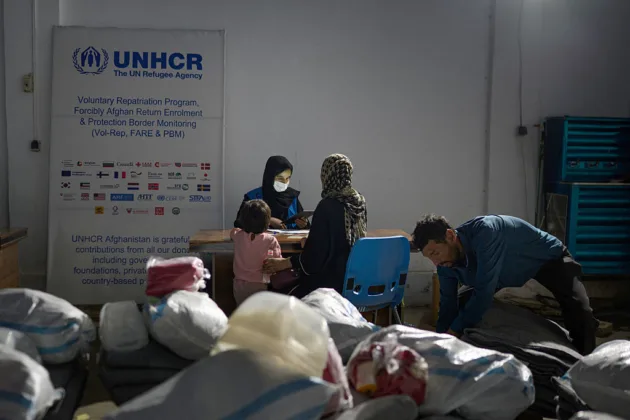
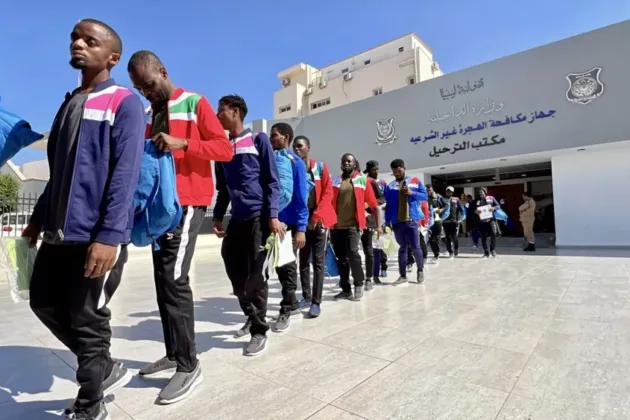
In January 2026, the International Organisation for Migration (IOM) estimated 15 million people had been displaced within Sudan and across its borders. By March 2026, 4.6 million had crossed into neighbouring countries. The United Nations High Commissioner for Refugees (UNHCR) estimates roughly 560,000 Sudanese have entered Libya, many through Kufra before moving north towards the Mediterranean coast, with approximately 388,100 entering during 2025 alone. Looking further ahead, UNHCR expects Libya to host more than 700,000 refugees and asylum seekers between 2026 and 2030, roughly 96 per cent of them Sudanese. A parallel corridor runs northeast from Khartoum into Egypt, where UNHCR Cairo had registered approximately 830,000 Sudanese refugees by late 2025.
The route is no mystery. It runs north from Khartoum and Darfur, cutting through Chad and southern Libya before terminating at Tobruk, Zuwara and ultimately European shores. The neighbourhood through which these corridors pass is under serious strain. Egypt is absorbing an enormous refugee burden while managing mounting security pressures and a deepening fiscal crisis. Libya remains what it has long been, a fractured state split between rival administrations, economically brittle, its central bank governor submitting his resignation on August 9, 2026. Tunisia is convulsing under its own crisis, with spreading protests fuelled by deteriorating living conditions and rolling power blackouts. The conditions that produce mass Mediterranean crossings, war, state collapse, economic failure and desperate movement through ungoverned corridors, are not easing. They are compounding.
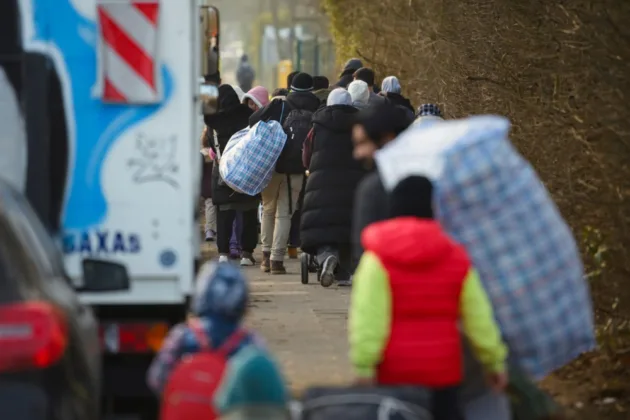
The leading indicator has already flashed. The IOM recorded 12,684 Sudanese arrivals in Europe between January and November 2025, 3.3 times the number during the same period in 2024. Some 65 per cent arrived through Greece, 31 per cent through Italy, the remainder through Spain. That diversification matters because aggregate Central Mediterranean statistics can conceal movement from Libya to Crete, from Egypt to Greek islands, from eastern Libya to other entry points. Smugglers and migrants change departure points in response to interdiction, conflict, prices and weather. A decline on one route does not disprove the forecast. It confirms the system’s adaptability.
In May 2026, 1,690 Sudanese lodged first-time asylum applications in the European Union, making them its fourth-largest national group, according to Eurostat. Sudanese children were the second-largest group of unaccompanied minors seeking asylum. The European Union Agency for Asylum (EUAA) placed the Sudanese recognition rate at 60 per cent, twice the overall EU+ rate. Sudanese applicants therefore carry a rational expectation of receiving protection if they reach Europe, while European governments cannot resolve an influx through rapid rejection and return. The EU’s new mandatory border procedures, which took effect on June 12, 2026 under the Pact on Migration and Asylum, were designed chiefly around nationalities with recognition rates of 20 per cent or lower. Sudanese applicants do not fit that profile. Even under the Pact’s accelerated procedures, a 60 per cent recognition rate means the majority of arrivals would generate full examination rights, extended accommodation obligations and appeal processes. The border procedure was designed to filter. It cannot compress a population that qualifies.
To understand the pressure building behind this movement, Europe must first understand what the war in Sudan actually is, and this is where the comfortable fictions become dangerous.
Sudan was an Islamist state for over three decades following Omar al-Bashir’s Muslim Brotherhood coup in 1989, which systematically embedded Islamist networks throughout the army, intelligence services, universities and civil bureaucracy. These structures did not dissolve when Bashir fell in 2019. When fighting broke out in April 2023, Western reporting defaulted to the frame of two warlords competing for power, a framing that obscured the ideological stakes entirely. The Sudanese Armed Forces (SAF) are not a neutral national institution temporarily captured by one ambitious general. They are reconstructing a theocratic order behind a military façade.
The Rapid Support Forces (RSF), though born from the same architecture, were recruited into the Saudi-led coalition fighting the Houthis in Yemen, positioning them functionally against political Islam and the Muslim Brotherhood. Thousands of RSF fighters died on Yemen’s frontlines as Saudi-paid combatants. Saudi Arabia, exhausted and financially drained, eventually made a pragmatic, not principled, shift towards the Sudanese Armed Forces. The United Arab Emirates (UAE) has maintained a morally clear stand, continuing to oppose the return of Islamist state power and supporting Sudanese civilian leaders and a civilian path for Sudan, even at significant diplomatic and reputational cost.
This history is essential for understanding what the current war actually is. The SAF is not a neutral institution temporarily captured by one ambitious general. It is reconstructing a theocratic order behind a military façade, with Islamist brigades, former Bashir officials embedded in its command structure and, since October 2023, restored relations with Tehran, Iranian drones documented by the UN Panel of Experts, and Islamist formations fighting alongside it. Turkish-made drones and new Pakistani armoured vehicles are reportedly bolstering SAF capabilities further, evidence of the Mecca Joint Defence Agreement, signed on August 7, 2026, activated on the Red Sea not as a defensive arrangement but as the consolidation of an offensive outpost. What is taking shape is not a conventional civil war between rival factions but the reconstruction of a regional Islamist axis, with Sudan as its newest anchor.
The RSF is credibly accused of committing brutal atrocities and must be accountable for them. The SAF, on the other hand, was found by the US in April 2025 to have used chemical weapons in 2024, in breach of the Chemical Weapons Convention. Sudan’s 2019 revolution was a revolt against exactly these options , both of which the civilians equally reject. It decriminalised apostasy, lifted laws policing women and initiated steps towards the Abraham Accords framework. The counter-revolution did not end with the October 2021 coup. It is continuing now, through a brutal and devastating war now in its fourth year.
Europe’s policy class nevertheless gravitates towards the army because it has ministries, embassies and uniforms. This is the same error Europe made during the Arab Spring, when disciplined Islamist movements were presented as culturally authentic democrats whom elections would domesticate. The resulting regimes and civil wars drove Islamists and their victims alike towards Europe. Europe cannot develop a coherent position on Sudan while clinging to the consoling fiction that this conflict has no ideological context.
This strategic blindness is reinforced by a narrative campaign that casts the UAE as Sudan’s principal villain while minimising the Islamist restoration occurring through the SAF. Abu Dhabi had provided approximately $800 million (€690 million) in humanitarian assistance since the war began before pledging another $500 million (€431 million) in February 2026. Europe should think twice before demonising a regional partner while expecting it privately to finance the consequences of Sudan’s collapse. If that support recedes, the cost will be measured first in Sudanese lives and then along Europe’s borders.
Ceuta, where Moroccan border guards stood aside in May 2021 and some 8,000 people crossed into the Spanish enclave in two days, also demonstrated how migration becomes cognitive warfare. Islamists obscure the political forces that produced the displacement, the radical Left strips migration of ideological context and reduces it to a humanitarian situation, and the identitarian Right converts images of disorder into a narrative of invasion. The migrant becomes both the victim of political failure and the instrument through which competing movements radicalise European elections. Sudan will reproduce this dynamic at far greater scale.
Europe therefore needs a policy that begins before the boat. It must treat Islamist restoration as a principal driver of displacement, support Sudan’s civilian democratic forces, and prevent humanitarian aid from strengthening military institutions captured by Islamist networks. The warning is already clear: Unless Europe acts now, what unfolded in Ceuta will become the playbook for a crisis of continental scale, and this time it could end the European Union as we know it.