



The United Nations High Commissioner for Refugees (UNHCR) has confirmed a 16 per cent budget reduction and plans to slash approximately 3,500 official posts.
Internal documents presented to member states in Geneva on August 28 indicate that the agency’s preliminary budget for 2027 will drop to $7.14 billion (€6.17 billion), down from $10.6 billion (€9.16 billion) in 2025.
That would be the organisation’s smallest financial framework in a decade as it navigates a severe funding crisis.
“The budget constraints are real, but we are also moving forward with a comprehensive reform agenda to make UNHCR more agile, cost-effective, and accountable,” a spokesman for the agency said. He added that many of the posts had never been filled.
The sharp descent in resources is largely driven by a cumulative decline in foreign aid contributions, most notably steep reductions from the United States.
Washington, historically the agency’s primary financial benefactor, scaled back its contributions significantly following policy shifts and domestic budget prioritisation.
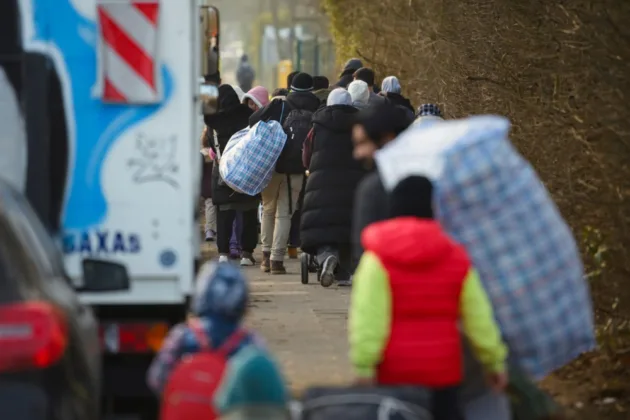
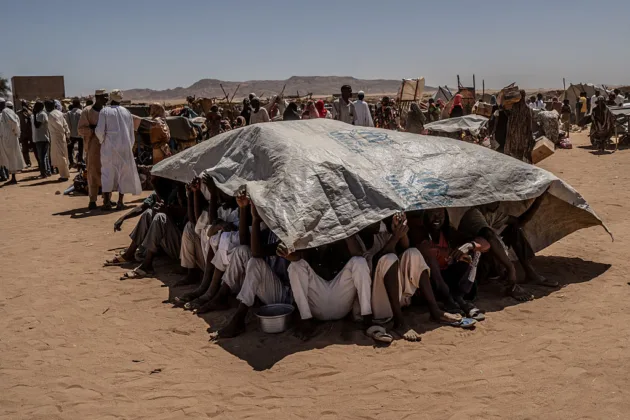
Regional programmes in the Americas, Asia-Pacific and West and Central Africa are absorbing double-digit percentage cuts, threatening aid networks for millions of displaced persons, including Rohingya refugees in Bangladesh and populations affected by conflict in Sudan.
The fiscal squeeze unfolds against a backdrop of mounting political polarisation over the agency’s core mission.
Conservative politicians and nationalist factions in Western nations have increasingly targeted the UNHCR, accusing the body of operating as an institutional enabler of mass migration rather than restricting its focus to traditional refugee protection.
In June there was also a backlash in North Africa, where local inhabitants blamed the agency for helping mass migration, blocking its office in Tripoli, Libya, on June 4.
Critics frequently level charges of a left-wing institutional bias against the agency, pointing to its promotion of open humanitarian frameworks, expansive legal interpretations of asylum, and global burden-sharing compacts.
Opponents argue these policies run counter to tighter national border controls and undermine sovereign immigration strategies.
The UNHCR had already announced nearly 5,000 job cuts during 2025 and scaled back 185 field offices.
Other UN organisations have also been hit by cuts. The World Health Organisation (WHO) is shedding more than 2,300 posts by mid-2026.
As cuts were made to the US Agency for International Development (USAID) and the bodies it funded, thousands of other employees lost their positions in other agencies.
Some 83 per cent of USAID programmes were cancelled in March 2025 on the orders of US Secretary of State Marco Rubio, and more than 233,000 jobs were lost worldwide as a result.
Libyans stormed the UN refugee agency headquarters in Tripoli demanding an end to mass illegal migration from sub-Saharan Africa.
Crowds are chanting “Libya only for Libyans” and “No to intruders, get them out.”
pic.twitter.com/wSHnAUwnQn— Visegrád 24 (@visegrad24) June 19, 2026