






The Netherlands’ centre-right Liberal People’s Party for Freedom and Democracy (VVD) has proposed offering Syrian refugees a one-off payment of €10,000 to return permanently to their home country, on the condition that they accept a lifetime ban from re-entering Europe.
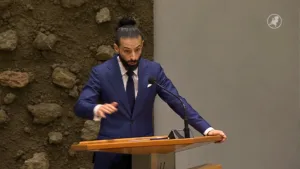
VVD MP Ulysse Ellian tabled the motion on November 18 during a parliamentary debate on the asylum budget. The scheme would target roughly 71,000 Syrians currently residing in the Netherlands on temporary residence permits.
“You receive a one-off €10,000, and a European entry ban: you may never come to Europe again,” Ellian told the House of Representatives, according to Hart van Nederland.
Under the proposal, the departure bonus would be paid out in instalments and only once an individual has actually left the country, with funding drawn from existing budgets earmarked for migration cooperation and return programmes.
Ellian said he hoped “several thousand” Syrians would take up the offer, arguing that encouraging voluntary return would save the Dutch treasury significant sums while enabling returnees to assist in the reconstruction of Syria.
Citing domestic welfare figures, the VVD MP noted that more than 60 per cent of Syrian status holders are still receiving state benefits four years after arrival, contending that the long-term cost of hosting them far exceeds the expense of a departure grant.
He added that crime and general public nuisance compounded the bill.
Paying them €10,000 to leave is five times cheaper than paying for their stay, Ellian said in the plenary.
Ellian said that entry bans have become much easier to enforce thanks to the new European regulations, with more controls at the external borders.
The VVD maintains that Syria is now sufficiently safe for the majority of its nationals to return.
Currently, adult Syrians who choose to return voluntarily can receive approximately €800 in cash, supplemented by several thousand euros in goods or services.
The initiative doubles a temporary incentive trialled by the previous Dutch government at the end of 2025.
Between November 17 and December 31, 2025, the then caretaker cabinet raised the voluntary return bonus to €5,000 per adult and €2,500 per child.
According to figures from the Repatriation and Departure Service (DT&V), that six-week window generated 660 applications.
By the end of 2025, 145 people had actually departed, of whom 50 held formal residence permits, while some 440 applications remained pending at the start of 2026. In total, 945 Syrians returned voluntarily from the Netherlands in 2025, the DT&V said.
It remains unclear whether Ellian’s motion will command a parliamentary majority. The minority coalition holds 66 of the 150 seats in the lower house, 10 short of a majority.
Conservative party JA21 welcomed the principle of the plan, with MP Diederik Boomsma suggesting the payout might need to be even higher—pointing to Sweden, where he said return grants can approach €100,000 per family.
Ellian indicated he was open to discussing larger sums.
Meanwhile, coalition partner Democrats 66 (D66) also backed voluntary return as “better and cheaper”, though MP Robert van Asten advocated for a “go-and-see” arrangement allowing Syrians to visit their homeland to assess conditions without jeopardising their asylum status in the Netherlands.
The VVD’s push also highlights a continuing tension within the ruling coalition—comprising the VVD, D66 and the Christian Democrats (CDA)—over how to classify conditions in post-Assad Syria.
While the Immigration and Naturalisation Service (IND) resumed processing Syrian asylum applications in June 2025, asylum and migration minister Bart van den Brink (CDA) informed parliament on April 22 that the situation on the ground was “not yet sufficiently stabilised” to begin revoking or reassessing existing residence permits.
A coalition of five European countries has announced plans to establish a “return hub” in Rwanda, where rejected asylum-seekers could be deported as early as 2027. https://t.co/X7yPDjlhLv
— Brussels Signal (@brusselssignal) November 17, 2026