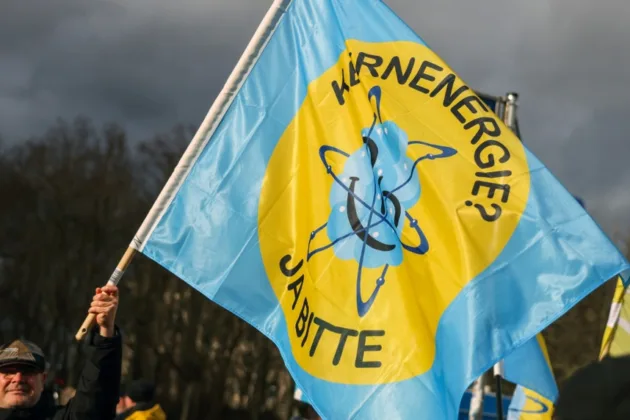

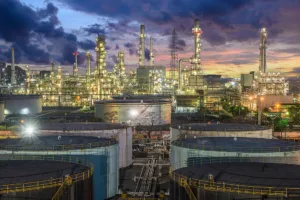



A German pro-nuclear association has lodged a formal programme complaint against Norddeutscher Rundfunk after a television report compared Poland’s planned Baltic nuclear station with a nearby offshore wind farm.
Nuklearia e.V. said NDR presented the project as if Warsaw were spending about €45 billion on something a wind park could do for €5 billion.
The group argues that the comparison mixed the output of one reactor with the cost of three reactors on one nuclear station, ignored how little of a turbine’s advertised power is delivered over a year, and left out the extra kit a grid needs when the wind drops.
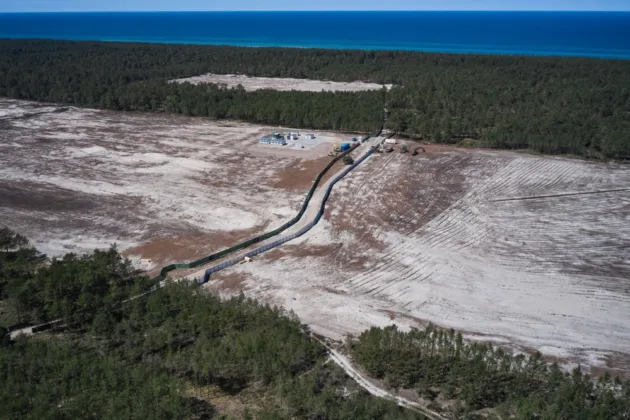
The NDR piece, broadcast on Nordmagazin on August 23, 2026 and published online the same evening, covered the handover of the Lubiatowo-Kopalino site in Pomerania to the American contractor Bechtel.
Reporter Martin Möller wrote that the cleared plot was the size of 500 football pitches and that the plant, at an estimated €45 billion, was Poland’s largest single investment since 1989.
Three Westinghouse AP1000 reactors are planned, with a combined capacity of 3,750 megawatts.
In the same item NDR noted that the Baltic Power offshore wind farm, almost in sight of the nuclear site, is due to finish this year with 76 turbines and 1,140 megawatts, “roughly the output of one reactor” of the planned plant.
Construction of the wind farm was put at three years and about €5 billion.
The nuclear plant was put at ten years and €45 billion.
A like-for-like nameplate comparison would require three Baltic Power-sized farms, about €15 billion, to match the 3,750 megawatts written on the nuclear nameplates. Even that still compares advertised peak watts, not kilowatt-hours actually generated.
A nuclear unit is designed to run most hours of the year. Industry figures for modern reactors sit near 90 per cent of nameplate over a year.
Wind does not. Onshore farms in Europe commonly deliver about a quarter to a third of their rated power over a year.
Good offshore sites do better, often in the 40 to 50 per cent range, but they still sit idle or at part load for long stretches.
Three reactors at 3,750 megawatts and a 90 per cent load factor would produce on the order of 30 terawatt-hours a year. Baltic Power at 1,140 megawatts and a mid-40s offshore factor would produce about four to five.
Matching the nuclear station’s annual energy with turbines in that range would mean several times the 1,140 megawatts NDR put on screen, and offer a significantly different bill.
Other issues are that turbines in a dense farm steal wind from one another. Wake losses rise as parks are packed, so extra machines are needed for the same yield.
And because there is no wind on still days, the grid still needs plants that can run on demand, plus wires, storage or interconnectors.
Those system costs sit on top of the turbine invoice.
Adding to this, Nuklearia notes, “the nuclear power plant is designed for 60 years of operation, Baltic Power for about 30 years. Over the same period, wind power would therefore have to be completely replaced. This puts €65 billion euros for wind power around €45 billion euros for nuclear power”.
Nuklearia published the complaint on August 28, 2026. On X it said NDR had compared “one reactor on output, but all three on cost.”
Recalculated that way, the association wrote, wind already looked dearer on investment cost alone, before system costs such as backup, grids and storage.
The group also pointed to Fota4Climate, a Polish environmental organisation that backs the nuclear build.
NDR has not issued a public reply to the complaint. A programme complaint under German broadcasting rules is examined by the station and can be taken further to the broadcasting council. It does not by itself force a correction.
The nuclear plant is still in site preparation. Earthworks by Budimex are under way. First nuclear concrete is scheduled for late 2028.
Commercial operation of the first unit is now planned for 2036, with the second and third in 2037 and 2038, later than the 2033 date in earlier Polish programmes.
PEJ applied to the National Atomic Energy Agency for a construction permit in March 2026.
The European Commission approved state aid in December 2025. The package includes equity of about €14 billion, roughly 30 per cent of the advertised cost, and a contract for difference in operation. Cost estimates in official and industry sources cluster around €42 billion to €45 billion, or about 178 billion to 192 billion zloty.
Poland still generates most of its electricity from coal. The Tusk government has kept the nuclear programme.
Polls cited by the energy ministry in January 2026 put national support at 92 per cent. Local consent in Choczewo and neighbouring communes has been reported at about 75 per cent.
US ambassador Mark Rose attended the site handover. The reactors are American. Cooling is to use seawater, without towers.
Baltic Power, owned by Orlen and Northland Power, began sending power this summer. Polish and German agency reports put its investment near €4.7 billion to €5 billion for about 1.2 gigawatts of nameplate capacity.
Nameplate watts are not the same as annual energy. An AP1000 is designed to run most hours of the year. An offshore farm’s output depends on the wind. NDR’s script treated 1,140 megawatts of turbines as roughly equal to one 1,250-megawatt reactor. Nuklearia says that is the error. Whether the broadcasting council agrees is a separate question. The licence-fee broadcaster has not withdrawn the item. Warsaw has not paused the earthworks.