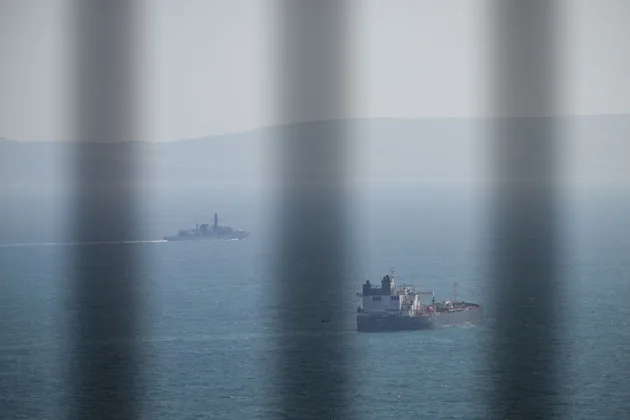


European Union member states have been given the power to confiscate and sell oil cargoes carried by detained shadow-fleet tankers, under the bloc’s 21st package of sanctions against Russia.
Ambassadors from the 27 member states agreed the package on July 23 after weeks of deadlock, with formal adoption launched by written procedure the same day. It is the first sanctions round overseen by Ireland, which holds the presidency of the Council of the European Union.
Until now, national authorities that stopped suspect tankers had no clear route to keep what was on board. Ships detained in European waters have been released with their cargoes intact, even where criminal investigations followed.
German customs officials confiscated the tanker Eventin and its cargo, only for a court to rule that the government had lacked the authority to do so. The vessel has remained anchored off the island of Rügen, in northeastern Germany.
The package added 41 vessels to the shadow-fleet blacklist, taking the total above 670. It also widened the listing criteria to cover ships that refuel or service sanctioned tankers at sea, the first time the bloc has targeted the fleet’s supply chain rather than the tankers themselves.
Member states froze the price cap on Russian crude at $44.10 (€38.72) a barrel for 12 months, blocking an automatic adjustment that would have lifted it to about $58.50. Oil prices have climbed since the outbreak of war in Iran and the disruption of shipping through the Strait of Hormuz.
In total the package carries 218 designations, covering 170 entities and 48 individuals, the bloc’s largest single round in four years. It takes the number of listings linked to the war to close to 3,000.
Several proposals were dropped or diluted before agreement was reached. Greece secured a one-year exemption allowing its shipping firms to continue carrying Russian liquefied natural gas to non-EU buyers under contracts signed before February 24, 2022.
The exemption is capped at 2025 volumes, though the EU ban on Russian LNG imports is still due to take effect on January 1, 2027.
European Council President António Costa said the bloc’s support for Ukraine remained “unwavering”. EU foreign policy chief Kaja Kallas said Moscow would return to negotiations only “if it is forced to do so”.
EU forces boarded the tanker MV South Star in the Mediterranean on July 20 to verify its flag. Member states have also authorised the counter-piracy mission Atalanta to conduct similar boardings in the Indian Ocean.
Russia’s permanent mission to the EU said the new restrictions would worsen the economic and social situation inside the bloc. Moscow has consistently rejected EU sanctions as unlawful, arguing they carry no mandate from the United Nations Security Council.