






The departure of Russia’s ambassador to the United Kingdom has been traced back to June 11, two months before the row over British-made drones that has framed most coverage of the vacancy.
The Times reported that Andrey Kelin’s exit was announced internally at a Russia Day reception at the embassy in London on that date, with no public statement made. He ended his mission on July 21 after almost seven years.
Reports that Ukrainian forces had used British-made long-range drones against targets inside Russia, among them oil refineries in Volgograd and Yaroslavl, appeared on August 16. The embassy warned of consequences for London the following day.
The withdrawal had therefore been settled inside the mission before either event, which weakens the reading of the vacancy as retaliation for British weapons supplies.
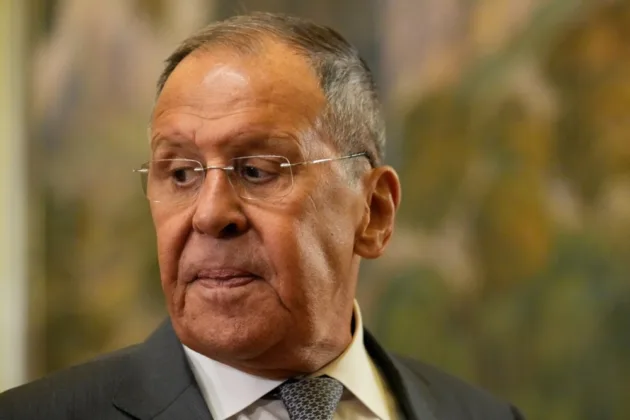
Other explanations are available. Kelin turns 70 in May 2027, and The Spectator has suggested his exit may form part of a retirement process, noting talk of a seat in Russia’s Federation Council. Foreign Minister Sergei Lavrov is 76.
His replacement at the head of the mission, chargé d’affaires Vasily Tsyganov, is 49 and previously served as deputy director of the Russian foreign ministry’s Department of Pan-European Cooperation, a job Kelin himself once held. The magazine judged him probably not seasoned enough for London.
Gaps are not new either. Around two months passed between Alexander Yakovenko leaving and Kelin arriving in 2019.
Moscow has left senior posts empty elsewhere in Europe. Its permanent mission to the European Union has been run by an acting representative since Vladimir Chizhov left Brussels in September 2022, and the ambassadorship in Vilnius has stood vacant since Russia and Lithuania downgraded relations. Yet Moscow appointed a new ambassador to Belgium in July 2025.
John Foreman, a former British defence attaché in Moscow and Kyiv, said gaps between ambassadors were not unprecedented, though the deterioration in ties since 2018 made him wonder whether Moscow would “permanently downgrade the relationship this time”.
The embassy has rejected that reading, saying such conclusions were “solely those of the author of this article” while insisting relations had fallen to an unprecedented low on London’s initiative.
Britain has meanwhile deepened its commitment to Kyiv, where Prime Minister Andy Burnham co-chaired the Coalition of the Willing on Independence Day on August 24.