








The Sudanese population, mainly women and youth, have dreamt of a better future after more than thirty years under Islamist rule. With the fall of Omar al-Bashir in April 2019, a whole generation of young people and young women and girls yearning for justice, equality, freedom and democracy emerged. This generation fought for a peaceful country which guarantees the rights of every individual no matter his religion, ethnicity or gender.
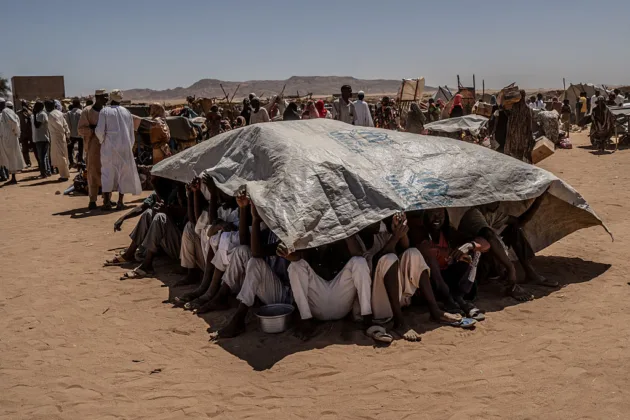
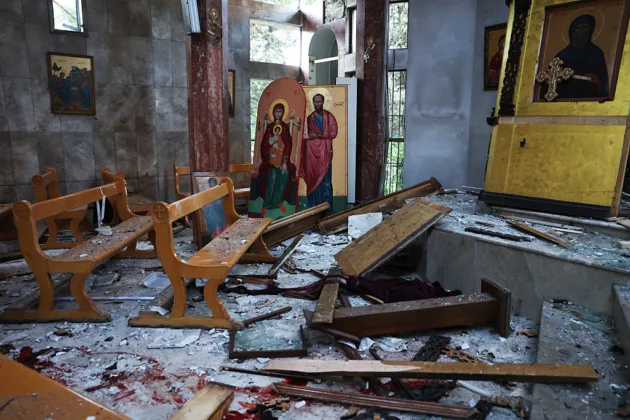
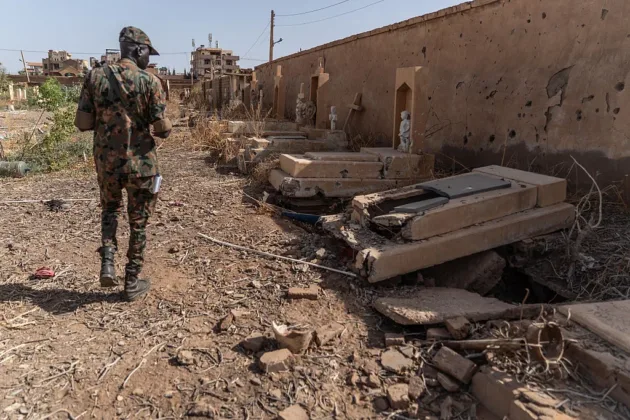
Unfortunately, the dream of a free and democratic country was stolen by the Islamist coup which plunged the country into a civil war and a humanitarian disaster targeting mainly women and minorities, especially Christians. The alleged use of chemical weapons against the Sudanese population by the Sudanese Armed Forces (SAF) has changed the lives of millions of Sudanese for ever.
Women are the first victims of an armed conflict and they are subjected to economic and environmental pressures, but in the case of Sudanese women the majority of women and children are not only victims of discrimination, displacement, poverty and sexual abuse but also of environmental and health problems. What is happening in Sudan is a humanitarian crisis and a crime against humanity. Sudanese women are not only victims of the use of chemical weapons but are also denied medication, health care and their basic needs. The use of chemical weapons has severe consequences on the health of women, their families and future generations, affecting their maternal status.
According to a report published by Sudanese women’s organisations and based on investigations conducted by France 24 and the US State Department, chemical weapons have been used against unarmed and peaceful civilians.
The report emphasises the need for independent verification to ensure accountability under international law. It cites the France 24 investigation of October 9, 2025, which documented chlorine gas use by the SAF in 2024, and Human Rights Watch’s call that same week for an international inquiry. It discusses the broader impact on women, noting health risks such as reproductive problems, economic insecurity and increased caregiving burdens. The effects of chemical exposure require a gender-sensitive approach in any investigation.
Witness accounts and photographic material gathered by Sudanese women’s organisations working with first-hand sources in Sudan and Uganda have revealed the purported effects of chemical exposure, including civilian injuries and the presence of suspected chemical containers. These reports provide important contextual evidence, even if independent verification is required to establish the exact nature of the compounds involved and to assign blame.
In January 2025 the US government imposed sanctions on General Abdel Fattah al-Burhan, who leads the SAF and serves as Sudan’s head of state, citing alleged use of chemical weapons although no evidence was presented to support the claim. On April 24 that year Washington formally determined, under the Chemical and Biological Weapons Control and Warfare Elimination Act, that Sudan had used chemical weapons in 2024. A second round of sanctions took effect on July 20, 2026.
In October 2025 an investigation by France 24 offered the first public evidence that aligns with the American accusations, suggesting that the SAF may have employed chlorine in September 2024 in two separate incidents.
A Sky News Arabia investigation reveals images of women and children bearing chemical scars, accompanied by medical reports detailing symptoms starting with acute respiratory distress and culminating in sudden physical collapse. The investigation team reviewed documents, medical reports and blood test results that mirrored those of other individuals presenting similar clinical symptoms, most notably suffocation and skin rashes.
Medical analyses of victims across various groups revealed elevated lymphocyte counts, signs of chronic inflammation, severe shortness of breath, fainting spells, digestive disturbances and rashes. According to the investigation, this reflects a consistent pattern of symptoms despite differences in location.
The controversy continues, with the Human Rights Forum – Sudan calling for an independent and impartial international investigation under the auspices of the Organisation for the Prohibition of Chemical Weapons (OPCW). The Forum says the absence of a professional investigation prevents the truth from being revealed and deprives victims of justice, and that there are currently no findings that can prove or disprove the allegations.
The Forum has urged the OPCW and states parties to the Chemical Weapons Convention to activate international verification mechanisms and dispatch a specialised team with the authority to collect evidence, access relevant sites and conduct examinations and interviews. It also called on Sudanese authorities to guarantee safe and unrestricted access. “The truth does not belong to any party,” it said, describing it as an inherent right of the victims and the basis for accountability and for preventing impunity.
These calls come amidst the ongoing Sudanese conflict, which has caused one of the world’s largest humanitarian crises. International law experts consider any accusation of chemical weapons use to be among the most serious in armed conflicts, given that the Chemical Weapons Convention prohibits the development, production and use of these weapons. Proving such violations requires complex field investigations based on scientific evidence and reports from independent experts.
Specialists emphasise that the absence of independent investigation opens the door to conflicting accounts and to political exploitation of the issue, while an international inquiry contributes to building a narrative based on evidence and facts, thus serving justice and upholding the credibility of international law. The OPCW has so far opened no fact-finding mission.
International reports and journalistic investigations, including The New York Times, indicate that military aircraft dropped barrels containing toxic chlorine gas. The documented locations are concentrated around sensitive conflict zones, most notably the vicinity of the al-Jaili oil refinery north of Khartoum.
It is regrettable that the UN report which reached Reuters on July 29 did not mention the atrocities committed by the SAF or the use of chemical weapons. Ignoring these human rights violations is letting down a whole population suffering for so many years and showing perpetrators that there is no accountability for such acts.
It is clear that we all have a common responsibility towards our Sudanese sisters, who are in need of support and urgent care through local assistance with their basic needs, as well as our call for accountability to document war crimes and to demand legal and immediate action against perpetrators.