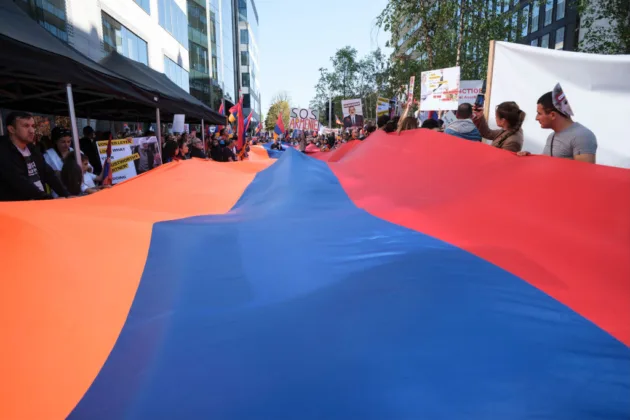

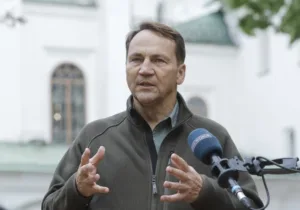

Armenian Prime Minister Nikol Pashinyan has said his country could begin applying for European Union membership in the near future, telling deputies a national referendum would be held only once a formal bid had been lodged.
He was speaking on August 24 as he presented his Government’s programme for 2026-2031 to parliament in the Armenian capital Yerevan.
Pashinyan said Armenia would first have to submit an official application, then await a response from Brussels and agree a roadmap before any vote took place. He said Yerevan would take account of concerns raised by its partners in the Eurasian Economic Union (EAEU).
Armenia has not applied for membership and does not hold candidate status. Its parliament approved a law launching the accession process on March 26, 2025, though the Armenian Government has said the text does not amount to a formal bid.
Kremlin spokesman Dmitry Peskov said the trade, sanitary and customs rules of the two blocs did not match. He has previously pointed to Turkey, which applied in April 1987 and remains outside the EU nearly 40 years later, as evidence that accession is not a near-term prospect even for candidates.
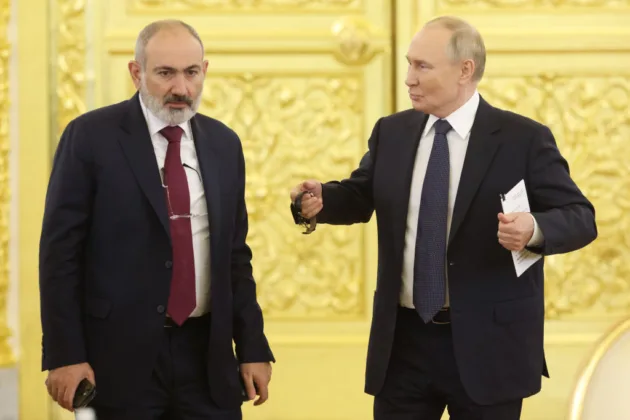
Russia keeps a military base in Armenia and remains its principal energy supplier. President Vladimir Putin used a July 27 telephone call to urge a referendum as soon as possible on whether to choose the EU or the EAEU.
Russia’s agricultural watchdog Rosselkhoznadzor has restricted a widening list of Armenian goods since the spring, barring almost all plant products from June 12. Officials in Yerevan and Brussels have called the measures politically driven.
The leaders of Russia, Belarus, Kazakhstan and Kyrgyzstan warned in a joint statement in Astana on May 29 that Armenian preparations for EU accession carried serious risks for the economic security of their bloc.
Putin said the same day that the crisis in Ukraine had begun with Kyiv’s push to join the EU. Russia recalled its ambassador from Yerevan days later.
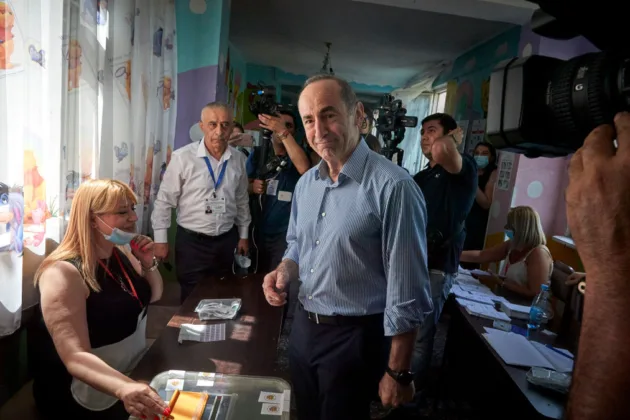
Pashinyan’s Civil Contract party went on to take 49.8 per cent of the vote and 64 of the 105 seats in the June 7 parliamentary election.
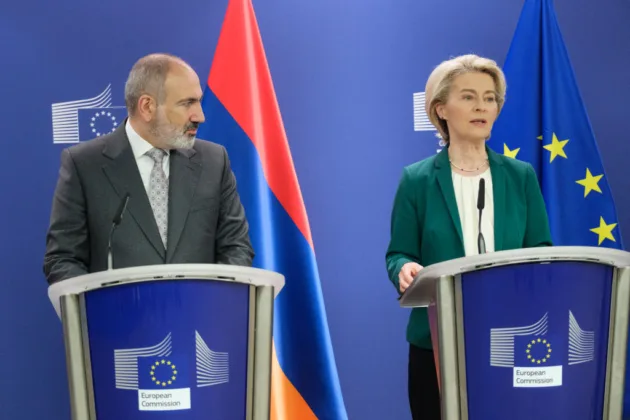
The EU held its first summit with Armenia in Yerevan on May 5 and European Commission President Ursula von der Leyen opened the bloc’s market to most Armenian exports on July 2.
None of the steps Pashinyan set out has yet begun and no date has been fixed for an application. The four EAEU governments are due to report in December on the consequences of suspending the treaty in relation to Armenia.