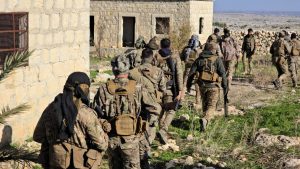






The Kurdish-led Syrian Democratic Forces (SDF), for years the main partner of the United States in the fight against Islamic State, has announced its own dissolution, completing its absorption into the Syrian army.
Speaking at the People’s Palace in Damascus on August 25, its commander Mazloum Abdi said the force’s mission had ended and declared “their dissolution as an independent military force”.
He said fighters had already been folded into brigades of the Syrian army under an agreement reached with Ahmed al-Sharaa, and cast the moment as a shift from war to reconstruction.
The Autonomous Administration of North and East Syria, the civilian body that ran the Kurdish-held northeast, has been wound up alongside the armed force, with its institutions passing to the State.
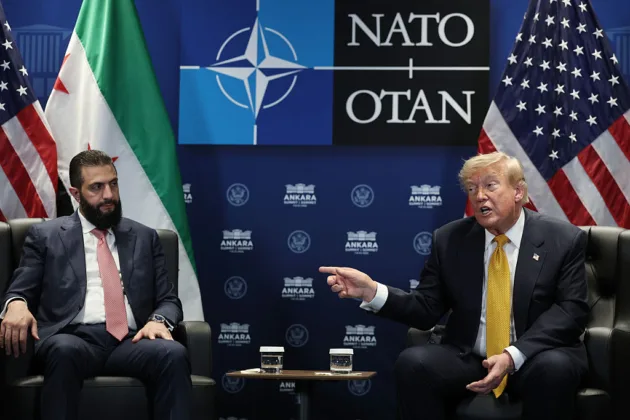
The move completes a deal signed on January 29 and brokered by Washington, with French and Turkish backing. It came after a government offensive earlier that month in which Kurdish forces lost most of their territory.
Under the agreement, Damascus took over border crossings, oil and gas fields, prisons and the camps holding Islamic State detainees. The SDF also committed to expelling non-Syrian members of the Kurdistan Workers’ Party (PKK) from the country.
Sipan Hamo, a former Kurdish militia commander appointed deputy defence minister for eastern Syria in March, said there could not be “two administrations in a single state”.
Turkey, which treats the SDF as an extension of the PKK, has pressed for the group’s dismantling as part of a domestic settlement with Kurdish politicians.
Abdi used the announcement to press for Kurdish-language schooling, saying he had found al-Sharaa receptive. The Syrian President issued a decree in January recognising Kurdish as a national language and guaranteeing cultural rights.
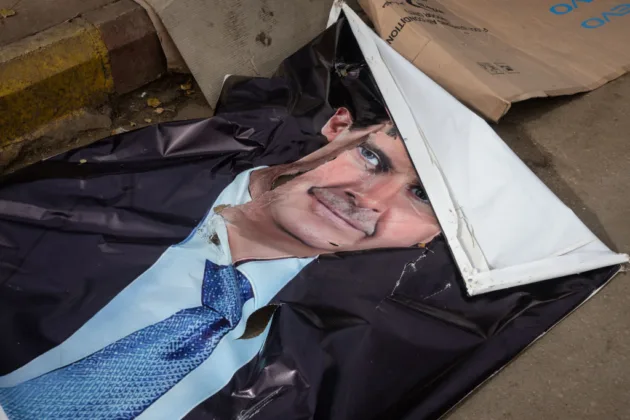
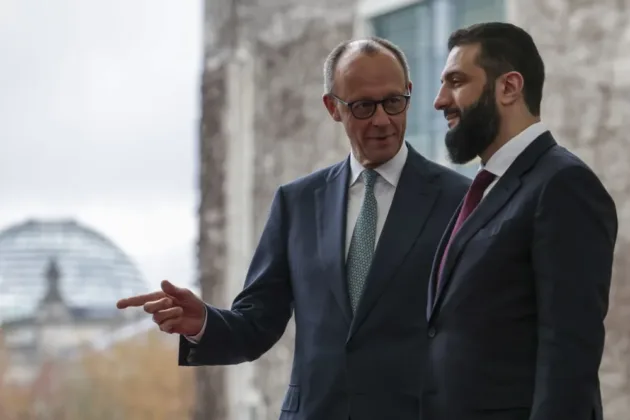
The European Union has moved steadily to normalise ties with Damascus since al-Assad was toppled in December 2024. The Council restored the full application of the EU-Syria co-operation agreement on May 11 and removed the interior and defence ministries from its sanctions list on May 18.
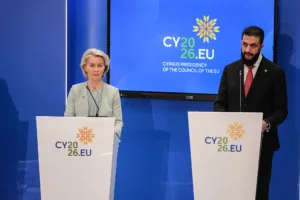
European Commission President Ursula von der Leyen and European Council President António Costa travelled to Damascus on January 9 to meet al-Sharaa, and the bloc has pledged €620 million for 2026 and 2027. Brussels has presented that re-engagement as a route towards the eventual return of Syrian migrants, though EU officials have conceded conditions do not yet allow it.
Syrians have been the largest single group of asylum seekers in the EU for more than a decade. Sectarian bloodshed against Alawites, Druze and Christians has continued since al-Sharaa took power.