


Stand-up comedian Deniz Göktaş has been ordered back into pre-trial detention on August 28 before he could leave prison, minutes after an Istanbul court accepted an appeal and directed that he be released in a case over jokes about President Recep Tayyip Erdoğan and religion.
Prosecutors then put a new charge before another judge.
Göktaş, 32, whose 90-minute show Ölü Deniz (Dead Sea) has drawn more than 14 million views on YouTube, has been held since July 3.
He was detained at Istanbul Airport on July 2 after returning from a trip abroad and jailed the following day.
Istanbul prosecutors said they had received 185 complaints about the performance, filed through the Presidential Communication Centre (CİMER), which was recorded at an open-air venue and posted online on June 24.
Access to the video was later blocked in Turkey under article 8/A of Law No 5651.
The first case concerned accusations of insulting the President and inciting hatred and hostility, after an investigation that began with complaints of publicly denigrating religious values.
Insulting the President is a criminal offence in Turkey under article 299 of the penal code, carrying one to four years in prison.
Göktaş has denied intending to insult religion or the head of state and has described the material as satire.
No indictment had been filed in that file by August 28.
At 5.03pm on August 28 an Istanbul on-duty criminal court of first instance accepted his lawyers’ appeal and ordered him released pending investigation on the original accusations, his lawyers said.
Before a release warrant could be prepared for Çorlu Karatepe high-security prison in Tekirdağ province, northwest Turkey, where he has been held, prosecutors brought him before a magistrate by video link on a separate allegation of “praising a crime and a criminal”.
That court, the Istanbul 4th criminal judgeship of peace, which had also ordered his first arrest, ordered him detained pending trial, citing a risk of flight and of tampering with evidence.
His lawyers said they were not notified of the second hearing and that a bar-appointed lawyer appeared instead.
They argued that the new charge was brought minutes after the release ruling and outside ordinary office hours in order to keep him in custody.
They said they would appeal. Turkish media reported that he was produced before the second court via the SEGBİS video system.
The new file relates to another passage in the same show.
According to his lawyers and reporting by Turkish Minute, Göktaş joked about the cost and ease of hiring a killer in Turkey and referred to the Daltonlar, an organised crime group linked to killings and armed attacks.
The court held that the remarks praised the gang, legitimised its crimes and made criminal services easier to obtain. The offence carries up to two years.
Göktaş denied praising the group and said the joke was criticism of crime and violence.
He remains in Çorlu.
On his 58th day in custody he sent a message, published on his social media account on August 29, treating the sequence as another routine.
He said he would mark the opening of the judicial year, on September 1, inside the prison. He added that a 90-minute show was producing a new charge every two months.
Göktaş, a former engineering and psychology student, built a large online audience with stand-up that mocked a wide range of public figures, including opposition politicians as well as the President.
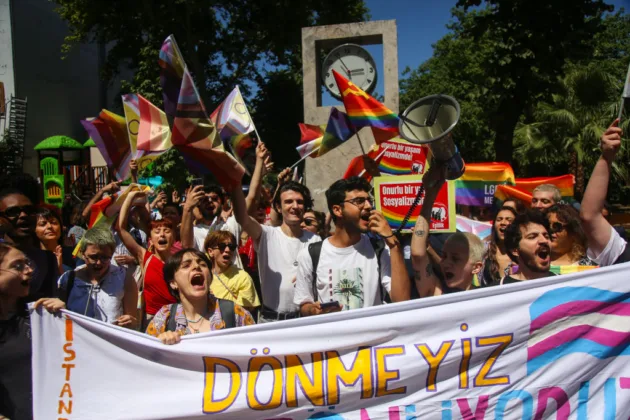
His arrest, in which he was led away in reverse handcuffs of a kind more often used for violent suspects, prompted gatherings outside court and statements from artists and rights groups arguing that satire was being treated as a crime.
Opposition Republican People’s Party (CHP) figures visited him in custody.
His lawyer has said the investigation began as an alleged insult to religion and was then recast as incitement to hatred and insult to the President.
The rearrest comes against a wider pattern of investigations and detentions of journalists, musicians, cartoonists and opposition campaigners.
Staff at the satirical magazine LeMan have faced charges over a cartoon that critics said insulted religious values, a 2025 case.
Other recent cases have included journalists held under disinformation and insult laws.
Authorities present such files as responses to criminal complaints and to offences set out in the penal code.
Critics say pre-trial detention is used as punishment before trial and that successive charges from a single performance keep defendants inside even when one court orders release.
Karatepe Yüksek Güvenlikli Ceza İnfaz Kurumu’ndan selamlar.
Bir iyi haber, bir kötü haberim var.
İyi haber: Tahliye oldum.
Kötü haber: Tutuklandım.Ben de sizin okuduğunuz hızda öğrendim bu iki haberi. Bu sefer, Daltonlar hakkındaki şakadan, “suçu ve suçluyu övmek” suçundan…
— Deniz Göktaş (@idgoktas) August 29, 2026