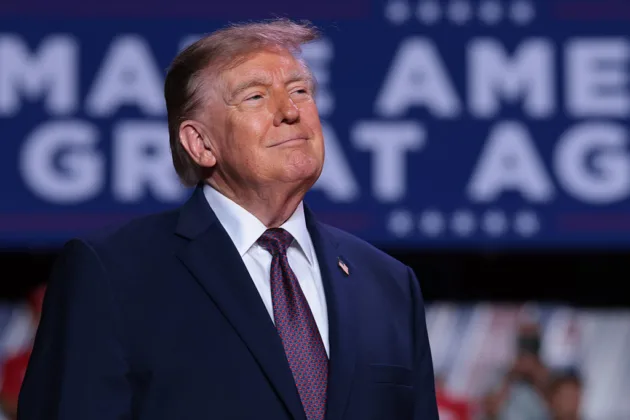



United States President Donald Trump has ruled out negotiations with Iran for now, saying Washington would not engage until Tehran was ready to talk seriously. Speaking in the Oval Office on July 21 alongside Lebanese President Joseph Aoun, he said Iranian officials had been pressing for a meeting through back channels.
Trump said the US had “no interest in meeting” until Iran came to the table in a meaningful way. He also signalled further escalation, saying American forces would soon strike the area around Pickaxe Mountain, a fortified underground site near the Natanz enrichment complex.
Iran’s Khatam al-Anbiya military command said any attack on its nuclear facilities would amount to an expansion of the war.
The remarks came as US defence secretary Pete Hegseth told the Senate Appropriations Committee that the conflict had cost $37.5 billion (€32.9 billion), up from close to $29 billion (€25.4 billion) in mid-May. The estimate projects spending to the end of the US fiscal year on September 30.
Hegseth was defending a supplemental budget request of $87.6 billion (€76.8 billion), of which $67.1 billion (€58.8 billion) would go to the Pentagon. Democratic senator Patty Murray said the package was “chock full of asks” unrelated to Iran, while Republican John Kennedy said the Pentagon owed Congress straighter answers.
US Central Command said it had completed an 11th consecutive night of strikes on Iranian targets, saying the campaign aimed to degrade Tehran’s ability to threaten shipping in the Strait of Hormuz. Iran has kept the waterway effectively closed and widened its attacks on Gulf states, with Kuwait, Bahrain and Jordan all reporting interceptions.
Brent crude rose about 3.5 per cent on July 22 to near $94 a barrel, after closing above $90 for the first time in more than a month.
For the European Union the strait remains the central issue. Roughly a fifth of the world’s oil and liquefied natural gas passed through it before the war, and its closure has driven energy costs across the bloc higher.
The European Commission has cut its growth forecast for the euro area to 0.9 per cent this year and raised its inflation projection above 3 per cent, citing the energy shock. European Commission President Ursula von der Leyen welcomed the June memorandum of understanding that has since collapsed, calling at the time for the waterway to reopen toll-free.
Brussels also imposed sanctions in May on Iranian commanders and energy officials accused of obstructing traffic through the strait, the first use of its expanded freedom-of-navigation powers.
Pakistan has meanwhile stepped up efforts to salvage the deal it brokered. Iranian interior minister Eskandar Momeni held closed-door talks in Islamabad with Prime Minister Shehbaz Sharif and army chief Field Marshal Asim Munir.