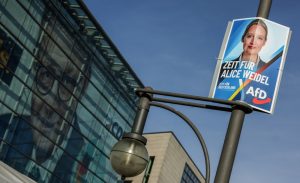




A Forsa poll for the Kölner Stadt-Anzeiger has put Alternative for Germany (AfD) first in Germany’s most populous state if a Bundestag election were held now.
Among 1,030 eligible voters questioned in North Rhine-Westphalia (NRW) between September 7 and 18, AfD scored 24 per cent and the Christian Democratic Union (CDU) 22.
The Greens were on 18, the Social Democratic Party (SPD) 14, the Left (Die Linke) 12 and the Free Democratic Party (FDP) 3.
It is the first time Forsa has recorded AfD ahead of the Christian Democrats in NRW on a national question.
The CDU figure, down four points, is the institute’s lowest for the state. The previous low was 23 per cent, in December 2021, and the party took 30.1 per cent in NRW at the February 2025 federal election.
The margin of error is about 2.5 to 3 points.
The same sample, asked about a state election, still put Minister-President Hendrik Wüst’s CDU first, though by a narrower margin and below 30 per cent for the first time in his premiership.
The CDU was on 29 (down three on April), AfD 22 (up two), the Greens 18, the SPD 14, the Left 8 and the FDP 3.
The governing CDU-Green coalition would still have a majority. No other two-party deal without AfD would work.
The next state vote is due on April 25, 2027.
In 2022 the CDU won 35.7 per cent, the SPD 26.7 and AfD 5.4.
On these numbers AfD would be about four times stronger and the SPD almost halved.
In July 2025 Forsa had the CDU 22 points ahead of AfD in NRW, at 38 per cent to 16. The gap on the state question has now dwindled to seven.
NRW has about 18 million people, roughly as many as the Netherlands, and has long been treated as Christian Democrat and Social Democrat country.
It is Chancellor Friedrich Merz’s home state, though historically the SPD had a strong showing in the Ruhr, Germany’s industrial “rust belt”.
That is where AfD was strongest in the local elections of September 14, 2025, when it took 14.5 per cent statewide, up from 5.1 per cent in 2020.
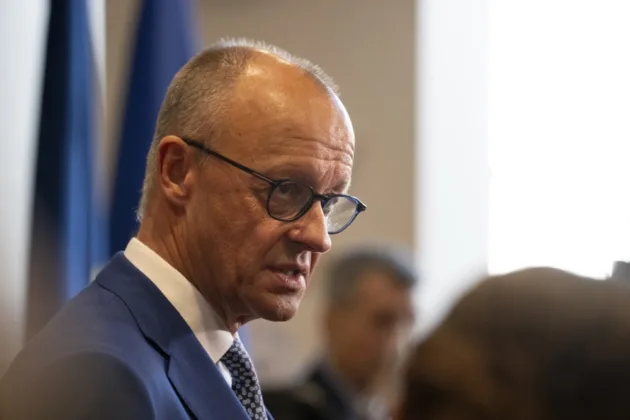
Satisfaction with Merz among those polled was 11 per cent, while 87 per cent were dissatisfied.
Wüst fared better, with 46 per cent satisfied and 37 per cent dissatisfied.
That “Merz effect” is what German coverage has tied to Wüst’s slide.
Forsa founder Manfred Güllner told the Kölner Stadt-Anzeiger that a trend visible nationwide for months was “now inevitably manifesting itself in North Rhine-Westphalia too”.
He added that Wüst’s standing could no longer offset what the CDU was losing because of Merz.
AfD’s state list for 2027 is headed by regional party leader Martin Vincentz, whose camp prevailed in July over a rival faction led by Bundestag member Matthias Helferich.
The party remains excluded from coalitions by the others.
Its strength was long treated as an eastern story, but now appears to be growing across the board.