




The European Commission has said it needs further answers from the Spanish Government before it can finish assessing Madrid’s request for emergency money and for support from Frontex and Europol in Ceuta.
Commission spokesman Markus Lammert told the institution’s daily briefing on September 3 that the requests were being handled as a priority. He said important questions remained open which the Spanish authorities had to answer first.
Lammert did not set out what those questions were. He said close contact on the operational side was always necessary so that any deployment could work in practice, and that this had yet to happen.
Frontex already has a presence at the port of Ceuta, the spokesman said. What Brussels now had to establish was where else the agency could help and how that presence might be continued.
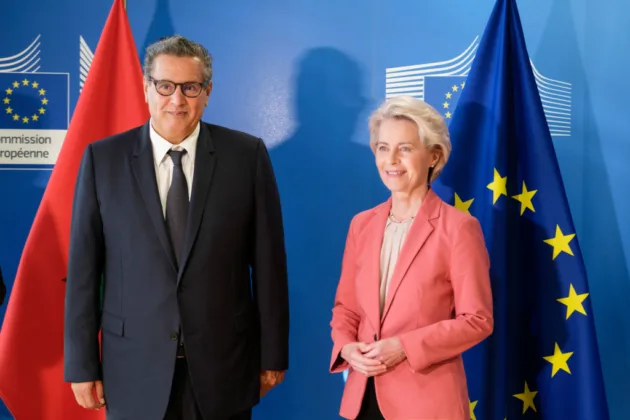
Commission President Ursula von der Leyen’s spokeswoman Paula Pinho said at the same briefing that the executive stood ready to reinforce Frontex in Ceuta and at other stretches of the European Union’s external border that needed it.
Interior Minister Fernando Grande-Marlaska sent the Spanish request on August 28 to Beate Gminder, the Commission’s director-general for migration and home affairs. It sought help with the screening and case processing of migrants still in the city illegally, and staff from the European Union Agency for Asylum to conduct interviews and interpret.
Madrid also asked for 10 extra officers from the Frontex standing corps and for an extension of Operation Minerva, which covers the ports of Ceuta, Algeciras and Tarifa and had been due to end on September 2. A separate funding request remains pending.
Prime Minister Pedro Sánchez told the Congress of Deputies on September 3 that he would go further, seeking a permanent Frontex presence at the port and at the breakwater along with a dedicated Europol mission to monitor irregular migration. “We are going to ask that a permanent Frontex presence be established,” he said.
The Commission declined to comment on the leaked report by the National Police immigration intelligence unit, which concluded that Moroccan officers had actively guided the crowds towards the crossing points. Lammert said Brussels did not comment on leaks and that an investigation was under way in Spain.
Morocco remained an important strategic partner on migration and above all on the fight against migrant smuggling, he said. He welcomed the close cooperation between Madrid and Rabat on controlling the situation and securing the swift return of those with no right to remain.
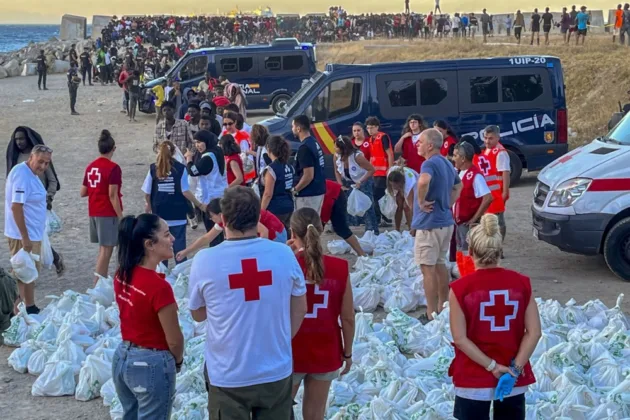
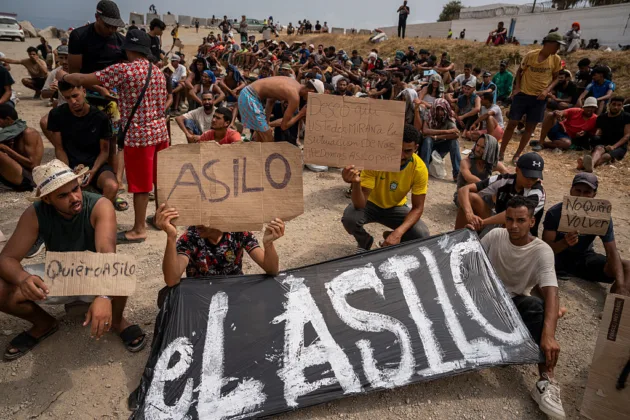
Spain’s interior ministry has put at about 72,000 the number who crossed from Morocco on July 30 and 31. Between 5,000 and 10,000 are still thought to be in Ceuta, a city of some 84,000 on the European Union’s only land border with Africa.