

German police have arrested a 48-year-old man suspected of a week-long series of attacks on electricity substations serving lignite-fired power plants, ending a manhunt that began after ministers briefly raised the possibility of a foreign, including Russian, hand.
Cologne police said the suspect was detained on Tuesday near the Weisweiler power station in North Rhine-Westphalia, west of Cologne, where he reportedly was trying to evade a traffic stop.
He was carrying further explosives and offered no resistance.
German media, citing investigators, have identified him as Daniel V., from Gevelsberg in the southern Ruhr.
A Europe-wide alert had been in force after officers searched his flat and found explosive material.
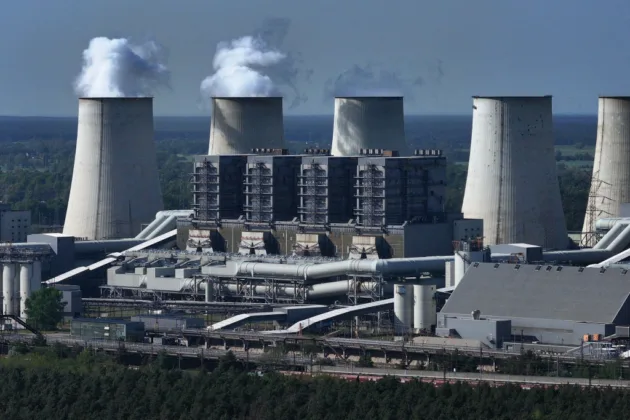
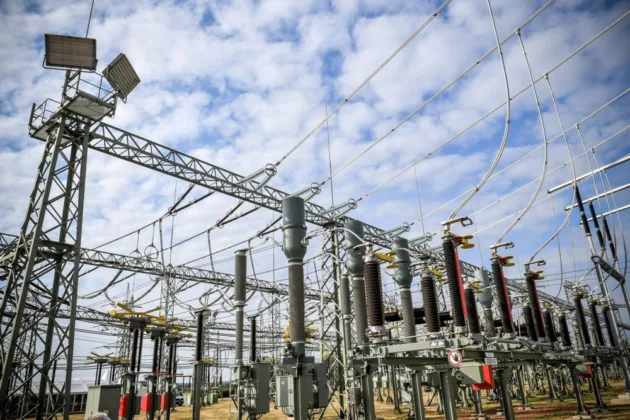
The first confirmed attacks came on September at a substation feeding the Jänschwalde plant in Brandenburg and at facilities near Bergheim, west of Cologne.
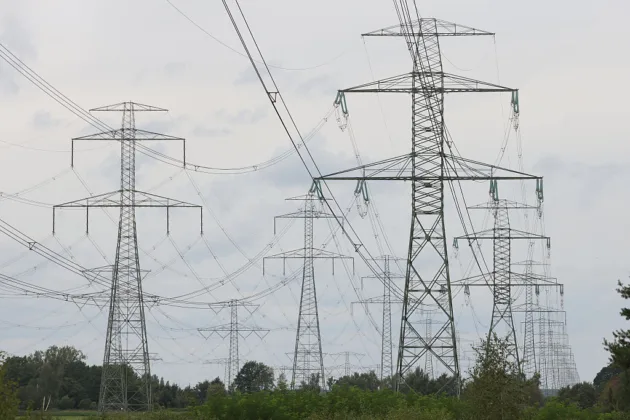
Investigators say the method was consistent and timed pyrotechnic homemade rockets were used to fire thin wire over high-voltage lines in an attempt to cause short circuits.
Units were taken offline in places; there was no widespread blackout. Further launch devices and a fresh letter claiming responsibility were found this week near Weisweiler and in Saxony, where police said 21 devices had been defused.
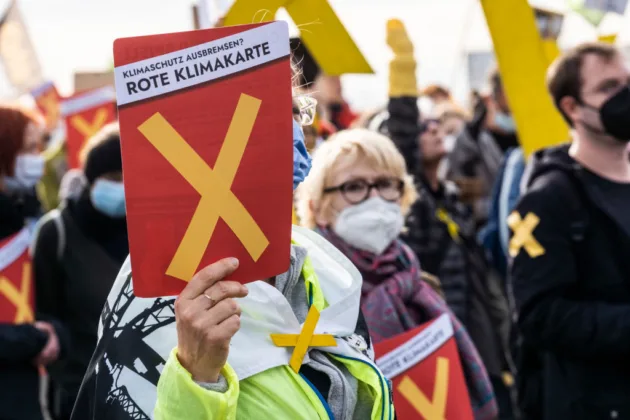
Letters sent to media outlets and authorities cited opposition to electricity from fossil fuels.
“Generating electricity from fossil fuels is a crime,” he reportedly said in a letter.
He said “media are doing are doing sh*t to convey the urgency of the situation”.
In one letter, the author expressly welcomed the fact that his actions could also cut off industry from the power supply.
He said he would “not be sad” if the German arms industry was affected by power outages due to German arms deliveries to Israel and the alleged “genocide in Palestine”.
He also tried to distance himself from the left-wing scene, fearing possible reaction to it.
Der mutmaßliche Strom-Saboteur Daniel V. wurde am Dienstagmittag bei einer Verkehrskontrolle in Weisweiler bei Aachen, Nordrhein-Westfalen, gefasst. pic.twitter.com/er5b6IJwV3
— Rak (@RakMakkabi) September 8, 2026
Interior minister Alexander Dobrindt said on September 4 that the case should be treated as “climate extremism” or “climate terrorism” by a lone perpetrator.
North Rhine-Westphalia’s interior minister, Herbert Reul, said the letters displayed detailed knowledge of the attacks and were presumed authentic. The writer said he had acted alone and that left-wing groups were not involved.
That assessment reversed the first official reaction. After the opening incidents, security officials in Brandenburg and North Rhine-Westphalia said they could not exclude a foreign power.
Germany was already on alert after the government blamed Russia for an attempted drone attack at Leipzig/Halle Airport on 4 August.
Attention then shifted to the named domestic suspect after the letters and the explosives were recovered from his home.
Police also searched a lorry converted into a mobile home near Hambach Forest, a long-standing site of anti-lignite protest; he was not there.
The case comes weeks after Washington warned European governments that “poisonous”, violent far-left networks were increasingly targeting energy, rail and other critical infrastructure.
⚡ UPDATE: New development in Germany’s power-grid sabotage case.
What initially raised fears of possible Russian involvement is now being investigated as an apparent climate-extremist attack.
🔍 Investigators have named a 48-year-old activist as their main suspect.
Read the…
— Brussels Signal (@brusselssignal) September 7, 2026