





Police in North Rhine-Westphalia have said they are treating a disturbance at a high-voltage substation near Cologne as a deliberate criminal act after several lines failed following a short circuit on the evening of September 1.
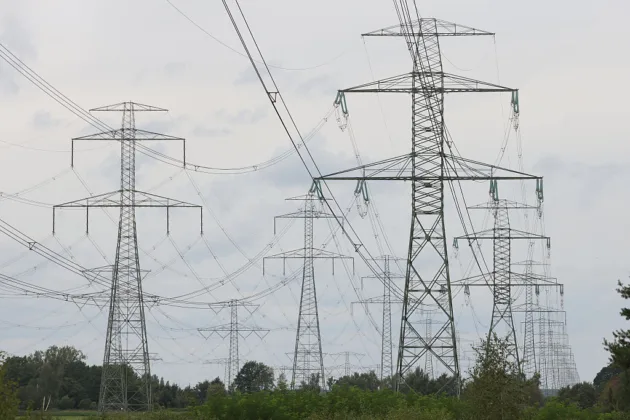
Officers were called at about 8pm to the Amprion installation in the Rheidt district of Bergheim, in the Rhein-Erft-Kreis west of Cologne. A short circuit took several lines out of service.
There was no reported loss of general electricity supply and Amprion said system stability was maintained throughout.
The transmission operator said the incident occurred “in the vicinity of the Amprion Rommerskirchen substation in the Rhineland” and affected the operation of power-plant feeders.
Some RWE Power facilities subsequently went offline. “The general electricity supply was at no point affected,” Amprion said.
A spokesman for Essen police, which is leading the inquiry, said: “On the current state of the investigation we are not proceeding on the basis of a technical defect, but of a deliberate act, a criminal offence.”
Cause, method and motive have not been disclosed. Police declined to confirm reports that drones were used.
Residents had previously reported flashes of light and explosive noises, according to the newspaper Bild. Video circulating online shows two flashes at ground level followed seconds later by detonations.
The site belongs to Amprion, which operates extra-high-voltage transmission in western Germany.
Police said they were co-operating closely with Amprion and RWE. No injuries were reported.
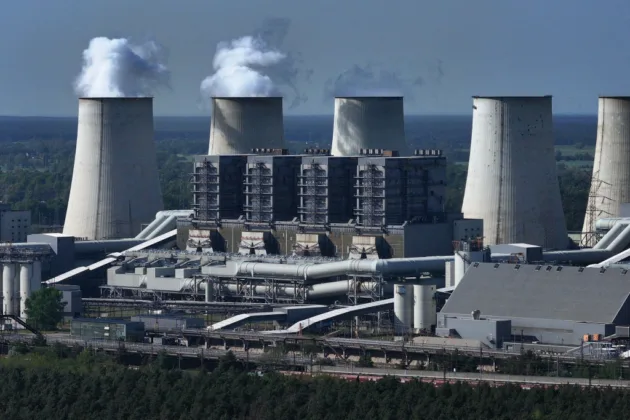
The Bergheim incident came hours after an attack on a 380-kilovolt node at Turnow-Preilack in Brandenburg, which feeds power from the Jänschwalde lignite plant into the 50Hertz grid.
Investigators there recovered homemade devices resembling fireworks rockets and at least one detonated. Supply was interrupted briefly. Police put the number of explosive and incendiary devices found on the lines in double figures. One of the four 500MW units at Jänschwalde shut down automatically, LEAG said.
Plant owner LEAG called that episode “an attack”. Brandenburg Minister-President Dietmar Woidke said the frequency of such incidents showed infrastructure “must be resolutely protected”.
North Rhine-Westphalia police said it was too early to establish whether the two events were linked. No group has claimed responsibility for the Bergheim short circuit.
Bavaria has been dealing with a separate explosion.
An unknown object exploded at about 3.15am on September 2 in a passageway on Bahnhofstrasse near Augsburg’s main station, slightly injuring two passers-by, a 17-year-old girl and an 18-year-old man, both Ukrainian nationals, with blast trauma and damaging nearby windows.
Police later found a second suspicious item, sealed the station and halted all train services while Bavaria’s State Criminal Police Office deployed explosives specialists. Bild reported that a hand grenade had detonated outside a Turkish jeweller’s and that officers were examining a link to organised crime. Those reports have not been confirmed by officers, who have given no motive.
Deutsche Bahn has warned its employees in a confidential letter of left-wing extremist terrorist attacks in connection with the state election in Saxony-Anhalt on September 6. The letter came from DB InfraGO, the unit responsible for the rail network, and was published by the weekly Junge Freiheit.
Germany has recorded a rise in attacks on energy and rail infrastructure in recent years. The Federal Office for the Protection of the Constitution has documented left-wing extremist attacks on critical infrastructure, among them the January 3, 2026 arson attack on a cable bridge in Berlin-Lichterfelde that cut power to about 45,000 households. Other incidents remain unattributed.
Investigators have not named a suspect or ideology in the Cologne-area case as enquiries continue.
Alongside left-wing groups, there are also suspicions that some of the attacks are organised by Russia, in retaliation for Germany’s support for Ukraine, though Russia denies this.
A left-wing German group that claimed responsibility for an attack on the Berlin power grid has denied allegations that it was cooperating with Russia. https://t.co/i4Q1kL7IX2
— Brussels Signal (@brusselssignal) January 7, 2026