






More than 120 MEPs have called on EU leaders to reopen talks on using Russia’s frozen sovereign assets for Ukraine, weeks after Kyiv asked for extra money on top of the bloc’s already-agreed €90 billion loan.
The letter, organised by Swedish Renew Europe MEP Karin Karlsbro with fellow liberals Nathalie Loiseau of France and Petras Auštrevičius of Lithuania, and signed by 122 parliamentarians from six political groups, backs a late-August initiative by Poland, Sweden, the Netherlands and Spain.
It proposes transferring the immobilised accounts to a new EU instrument that would act as custodian and take on legal obligations towards Russia’s central bank, in an attempt to ease the burden on Belgium.
“MAKE RUSSIA PAY,” Karlsbro posted on X.
“We neither have the time nor the means to be cowards while Russia bombs Ukraine to smithereens. Let Ukraine buy weapons and missile defense using Putin’s frozen billions in the EU. We gather 122 parliamentarians in an appeal to put pressure on EU leaders.”
Latvian European Conservatives and Reformists (ECR) MEP Rihards Kols was among the signatories. In the letter, sent on September 9 to European Commission President Ursula von der Leyen, European Council President António Costa and others, the group said more than €200 billion in Russian central-bank assets sit immobilised in the EU, while estimates of war damage in Ukraine already exceed €600 billion.
The €90 billion support loan “helps, but it isn’t enough,” they argued. “Russia caused the damage. Russia must pay for it.”
With the letter, the MEPs have more or less rekindled the same idea EU leaders already rejected.
Around €185 billion of the frozen stock is held at Brussels-based securities depository Euroclear.
Belgium has consistently refused to allow those funds to be used as collateral or principal for a “reparations loan” unless every other member state provided legally binding, unlimited, on-demand guarantees covering litigation, damages, interest and any future restitution.
Other capitals would not give that guarantee.
Belgian Prime Minister Bart De Wever called the Commission plan to seize the Russian assets “fundamentally wrong”.
Belgian Prime Minister Bart De Wever has issued a scathing letter to European Commission President Ursula von der Leyen, urging her to abandon plans to tap into €140 billion in frozen Russian assets to fund Ukraine’s war efforts. https://t.co/ZCX6B9NZCO
— Brussels Signal (@brusselssignal) November 28, 2025
His New Flemish Alliance (N-VA) party put it more bluntly on X: “We will not saddle Belgium with risks of hundreds of billions of euros. Not today, not tomorrow, never.”
Belgian foreign minister Maxime Prévot warned that proceeding without full risk-sharing could leave Belgium facing a bill large enough to amount to bankruptcy if Russia later recovered the assets.
Euroclear itself holds a banking licence. If the money had to be returned and partners declined to cover the hole, a Belgian institution would be first in line.
Financial institutions and official bodies lined up against the scheme.
The International Monetary Fund (IMF) urged Europe not to undermine the international monetary system. The European Central Bank refused to act as liquidity backstop, treating the arrangement as incompatible with its mandate and equivalent to monetary financing of governments.
The National Bank of Belgium and private-sector economists, including ING’s Peter Vanden Houte, stressed that concentrated liability at a Belgian central securities depository was a Belgian problem first.
Euroclear’s management warned that moving the cash out of its books while leaving it legally liable to the Bank of Russia would look like expropriation and could damage the euro’s status as a reserve currency.
Russia’s central bank has since filed a lawsuit against Euroclear in Moscow, seeking $230 billion (€198 billion) in damages.
Rating agencies flagged liquidity and legal risk. Other member states holding smaller pots of Russian assets showed no appetite to take equivalent exposure.
At a summit that ended on December 19, 2025, after some 15 hours of talks, leaders dropped the assets-backed loan and agreed instead to borrow on the markets. They backed the €90 billion Ukraine Support Loan for 2026-2027, financed from the EU budget’s headroom, with Ukraine expected to repay only after receiving Russian reparations.
Hungary, Slovakia and Czechia opted out of the guarantee. The loan received final approval in April 2026, after Hungary lifted its veto.
De Wever welcomed the fact that leaders had opted for “chartered waters”. He had warned in October 2025: “There’s no free money. There are always consequences.”
Belgium’s position has not changed. Following an informal meeting of EU foreign ministers in Ireland on September 2, Prévot said the debate “generated little enthusiasm or appetite among colleagues” and that “the reasons behind our opposition have not magically disappeared”.
Using the assets in a way that amounts to confiscation, he repeated, “would entail very significant risks”.
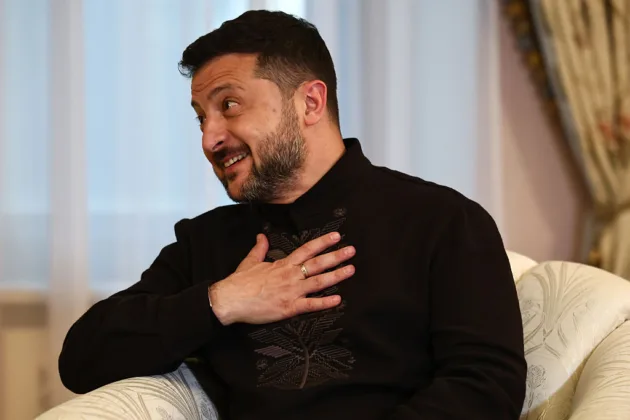
The MEP letter lands as Ukraine presses for more cash. President Volodymyr Zelenskyy told a Coalition of the Willing meeting in Kyiv on August 24 that Ukraine faces an unexpected defence-budget shortfall of about $27 billion (€23 billion) this year, after front-loading spending.
Officials in Brussels have asked for a detailed breakdown before committing extra funds. Commission economy chief Valdis Dombrovskis said there were still “open questions” about the size and origin of the gap.
The €90 billion package is designed to cover roughly two-thirds of Ukraine’s identified 2026-2027 needs: €60 billion for defence procurement, preferably from European industry, and €30 billion for budget support.
Disbursement is phased and tied to reforms, including revenue measures and anti-corruption steps.
So far, €3.2 billion in budgetary aid and €8.35 billion in military aid have been paid out, according to Euronews. Front-loading part of the 2027 tranche is under discussion. Ukrainian deputy prime minister Vsevolod Chentsov said on September 4 that this would not be a “silver bullet”.
Accountability remains a live issue. EU and IMF programmes already attach conditions on governance. Ukraine’s anti-corruption bodies have pursued high-profile cases, including an alleged $100 million (€86 million) kickback scheme around state nuclear operator Energoatom that reached figures close to the presidency.
The National Anti-Corruption Bureau (NABU) and the Specialised Anti-Corruption Prosecutor’s Office (SAPO) have also investigated an alleged network inside the Prosecutor General’s Office that protected scam call centres and laundered the proceeds. Prosecutor General Ruslan Kravchenko, whose offices were searched, resigned on September 7 while denying any involvement.
Partners have repeatedly linked further money and accession talks to independent institutions and a record of convictions, not only investigations.
In an interview with Euronews published today, Dombrovskis again stressed “good governance, good financial management and anti-corruption” as part of programme conditionality.
COMMENT: Ukrainian membership plan: A Union of equals or an asylum for corrupt states?, writes Konstantinos Bogdanoshttps://t.co/GWJnqbwoNP
— Brussels Signal (@brusselssignal) June 6, 2026