
Union Saint-Gilloise has been forced to look for a ground in the Netherlands or Germany to stage its Europa League “home” match against Hapoel Be’er Sheva, after Leuven banned the fixture and every other Belgian city with a UEFA-standard ground followed suit.
The dispute has run since the draw in Monaco on August 28. Union, of Brussels, cannot use Stade Joseph Marien for European matches because the ground fails UEFA’s standards. The club’s home since the 1920s holds 9,400.
The club therefore booked Den Dreef in Leuven, east of Brussels, for its league-phase home games. In earlier European campaigns it used Anderlecht’s Lotto Park, the King Baudouin Stadium and a ground in Ostend.
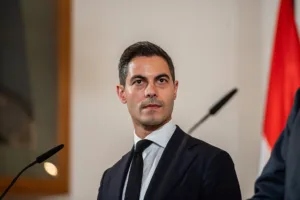
On August 31, Leuven’s mayor Mohamed Ridouani, of the Flemish socialist party Vooruit, told the city council that the Israeli visitors would not be allowed on his territory, even behind closed doors. He was answering a question from Anton Nilis, a councillor for the left-wing PVDA-PTB.
“Union is welcome here, but in this case it is an Israeli team, and I am consistent in my position,” he said.
He had already stopped Belgium’s men and women from playing Israel in Leuven.
Celtic, Real Sociedad and Lech Poznań, Union’s three other home opponents in the league phase, may still play there.
UEFA said finding another ground was Union’s problem, but it has offered assistance in identifying possible locations.
Ridouani gave two reasons for banning the team.
First, public safety could not be guaranteed and protesters could still gather outside an empty stadium.
Second, on September 22, 2025, Leuven’s council approved a structural boycott of Israel, extending a purchasing policy already used against Russian firms after the invasion of Ukraine. The measure passed with a single abstention and covers purchasing worth more than €40 million a year.
The city said it would no longer contract companies that “profit from the illegal occupation, the violence and the genocide”.
Ridouani backed a council motion on the Gaza war last year, and the boycott text describes Israel’s campaign as genocide.
Critics say a mayor who has already boycotted Israeli business is a poor judge of whether an Israeli football team can be policed.
Ridouani says the match ban is about order, not the boycott. He told the broadcaster VRT the decision was not aimed at Israel and had no anti-Semitic motive.
After two weeks of searching for an alternative in Belgium, the club has come up empty-handed.
Chief executive Philippe Bormans said on September 16, as the squad left for Plzeň, in the west of the Czech Republic, that no eligible Belgian city would take the game.
“We contacted virtually all the clubs in Belgium and each time it proved impossible.” Union has opened talks in the Netherlands and Germany and wants the shortest trip, to avoid a second flight.
Bormans said the match, scheduled for October 22 in the third round of the league phase, will probably be played behind closed doors. Should no ground be found, UEFA would impose a neutral venue.
The dispute is not an isolated case. Since the Hamas attacks of October 7, 2023 and the war in Gaza, Belgian authorities have repeatedly treated Israeli teams as a security problem they will not manage. UEFA has separately required Israeli clubs to play European home games in neutral countries, and Hapoel used Hungarian and Romanian grounds in Champions League qualifying.
Brussels refused to host Belgium’s 2024 Nations League match against Israel at the King Baudouin Stadium, warning of demonstrations. The Belgian football association then approached every other city with a compliant ground and was refused by all. That fixture was moved to Debrecen in eastern Hungary and played with empty stands.
Ridouani cites earlier refusals as proof he is being consistent. His detractors argue that the pattern itself is the problem: Israeli clubs are the only ones told they cannot be protected.
The Israeli embassy in Brussels called Hapoel an example of coexistence, noting the three Arab-Israeli players in its squad, and said politics should not interfere with sport.
The Coordinating Committee of Belgian Jewish Organisations called Leuven’s ban “an expression of anti-Semitism”. It said guaranteeing public safety was the mayor’s duty, not a burden to be shifted. Ilana Sumka, a rabbi in Leuven, has backed him.
Defence minister Theo Francken, of the New Flemish Alliance (N-VA), called the ban a bad example that feeds polarisation.
Leuven police, with federal support, could secure a football match, he said. Joren Vermeersch, a jurist and Francken aide, wrote that public law is broken if socialist mayors can veto any event involving an Israeli team under the heading of safety.