
Some €2 trillion: That is roughly the size of the European Commission’s eye-watering budget proposal for 2028 to 2034, unveiled on July 16, 2025. It is more than 60 per cent larger in nominal terms than the present long-term budget, or Multiannual Financial Framework (MFF).
Unsurprisingly, national governments are pushing back hard. Germany has floated cuts as high as €400 billion. On August 27, it was joined by Austria, Denmark, Finland, the Netherlands and Sweden in a joint statement demanding reductions of “several hundred billion” euros.
Yet the debate has quickly devolved into hypocrisy, as everyone demands fiscal discipline, but nobody wants their own slice touched. Cohesion states guard regional aid, agricultural nations protect farm subsidies and nearly every capital demands fresh billions for defence, competitiveness and migration. Everyone has discovered new priorities, but almost no one is willing to surrender an old one.
Yet amid this frantic zero-sum battle over scarce resources, one specific spending explosion has flown largely under the radar. While member states squabble over where to trim hundreds of billions, Brussels is quietly engineering a massive expansion of the financial pipeline that bankrolls its own political ecosphere, including funding NGOs, media outlets, values campaigns and “civil society” allies.
The Commission proposes bringing several existing programmes under a single AgoraEU architecture covering culture, media, civil society, democratic participation and the promotion of “European values” (or even “EU values”).
Its proposal is worth €7.6 billion in constant 2025 prices (€8.6 billion in current prices). CERV+, the strand covering democracy, citizens, equality, rights and values, would receive €3.18 billion, almost twice the comparable allocation under the present framework. MEDIA+ (essentially EU funding for politically aligned media) would receive another €2.83 billion.
The European Parliament, of course, wants to go even further. Its current position on the next long-term budget, driven by groups on the Left with tacit approval of the European People’s Party (EPP), calls for €10.72 billion in current prices, equivalent to €9.5 billion in 2025 prices.
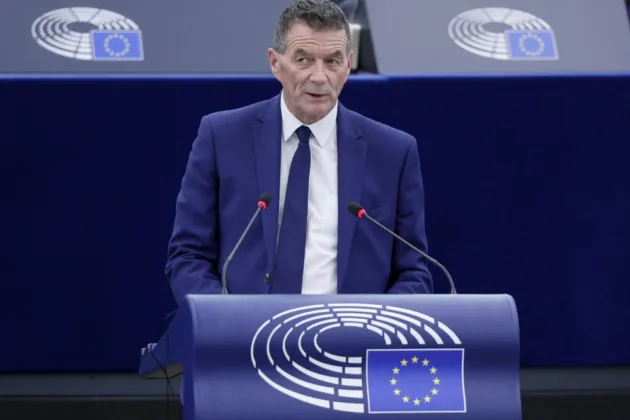
The rapporteur of Parliament’s culture committee, Portuguese EPP MEP Helder Sousa Silva, had proposed €12 billion in 2025 prices, while the Greens sought €17.5 billion.
That is a remarkable priority at a time when member states are being told that difficult choices are unavoidable. The first attempt to reduce the Commission’s overall excessive MFF proposal already contemplated cuts to Horizon Europe, competitiveness, defence, security and external programmes. The EU must also find some €168 billion for interest and repayments on the debt raised for NextGenerationEU, according to the Commission’s own proposal.
Yet funding for the EU’s political civil-society infrastructure is heading in the opposite direction. AgoraEU blurs funding for cultural activities with something politically much more consequential: A large system of EU financing for organisations involved in equality, anti-discrimination, democratic participation, fundamental rights and the defence of EU values.
They campaign on contested EU legislation, lobby or even sue governments and EU institutions, attempt to shape public opinion and participate directly in some of Europe’s most contentious political debates.
This creates an obvious conflict of interest when the financing institution is itself a political actor. Critics have long warned that EU grant funding operates as a self-referential loop, as it is the Commission that establishes political priorities, funds NGOs to advocate for those exact priorities and then cites “civil society demands” as evidence of “organic” public pressure for further EU competencies.
In April 2025, the European Court of Auditors found that the Commission still lacked an accurate picture of how much EU money went to NGOs.
In some cases, EU-funded organisations even deploy strategic litigation campaigns, co-funded by the Commission, of course, to reshape policy direction via legal means outside the democratic process. While the Commission frames this as support for democracy, pluralism and “EU values”, the reality is far more transactional. It represents taxpayer-funded political advocacy designed to reinforce the governing agenda of the very institutions disbursing the money.
Making elastic “EU values” a mandatory funding prerequisite makes the practical outcome obvious: Conservative and right-leaning initiatives are systematically excluded from public resources, as the Commission retains exclusive authority to define what constitutes an “EU value”.
The ultimate enabler for these networks is the proposed “Rapid Response Facility”, through which NGOs would even be able to bypass standard vetting and public tenders to receive direct funding at the Commission’s sole political discretion. AgoraEU is simply a giant EU slush fund for aligned activists and barely even bothers to hide that.
AgoraEU reveals where Brussels’ true priorities lie. Even in an era of fiscal restraint, when large electorates like farmers, rural communities and vital research programmes face severe cuts, the EU is willing to mobilise close to €11 billion (more than Montenegro’s entire GDP of some €8 billion in 2025) to fund its political NGO ecosphere.
In fact, the EU is building a taxpayer-funded NGO strike force designed to undermine national sovereignty and neutralise uncomfortable electoral outcomes across member states. This is narrative control by funding rather than direct censorship: Brussels doesn’t need to dictate every word when it holds the “golden reins” (goldene Zügel, as a German saying goes) of public money.
This brings the argument back to the €2 trillion battleground. With member states demanding more for defence, European businesses struggling under pressure and massive debt repayments looming, hard cuts are inevitable.
The Commission hopes to plug the gap by introducing new EU “own resources”: In practice, new taxes and levies on European businesses and consumers to the tune of €58 billion a year.
That is precisely what makes AgoraEU so revealing. While crucial sectors like agriculture, research and infrastructure are forced to fight for every euro, Brussels expands the funding machinery for its own ideological network. Budgets reveal priorities far more accurately than speeches.
Every euro channelled into activist groups is a euro denied to the real economy and voters. Europeans are told that painful trade-offs are unavoidable.
Yet when forced to choose between the people who build Europe’s prosperity and the EU ecosystem that reinforces its own power, Brussels makes its priorities crystal clear.