


Bulgaria has asked the European Union and NATO for technical help in establishing who attacked two merchant ships off its Black Sea coast, six days after drones sank one of them and left its crew missing.
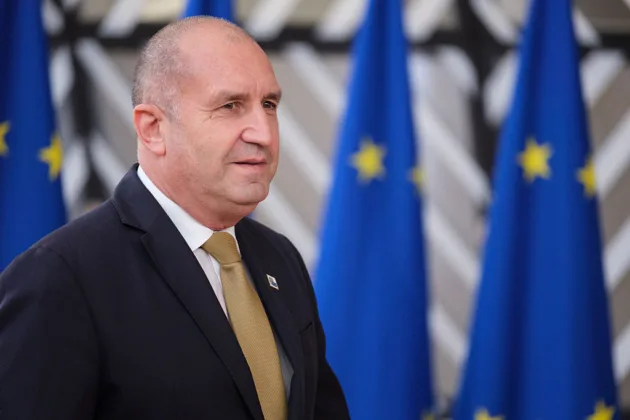
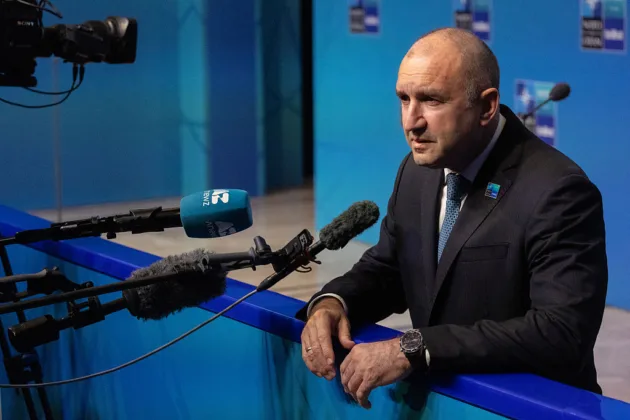
Prime Minister Rumen Radev made the request on October 12 in letters to European Council President António Costa, European Commission President Ursula von der Leyen and NATO Secretary General Mark Rutte. He asked for the matter to be treated as a priority, according to a Bulgarian Government statement carried by State news agency BTA.
Sofia has also sought help from the European Maritime Safety Agency (EMSA), after its own efforts failed to locate any drone debris that could indicate where the weapons came from. The aim is to examine all the physical evidence, satellite data and other information gathered since the attack.
Radev said Bulgaria condemned military attacks on commercial shipping and civilian crews and was determined to identify those responsible. Once that had been done, he said, the country would take every diplomatic and legal step open to it under international law.
The two vessels were hit by sea and aerial drones at about 3am on October 6, some 70 nautical miles (130km) east of the coastal town of Byala, inside Bulgaria’s exclusive economic zone. The Togo-flagged Alfa Watan sank, and Bulgaria ended the search for its crew on October 7 without finding any of the sailors.
The Palau-flagged Able caught fire. All 18 of its crew were picked up by a Bulgarian ferry that had diverted to the scene.
Syria has called for an independent inquiry, saying nine of the 10 missing sailors are its citizens.
Nobody has claimed the attack. Ukrainian President Volodymyr Zelensky has blamed Russia, while the Russian embassy in Sofia has denied any Russian involvement.
Radev said on October 6 that the drones were either Russian or Ukrainian. He has since said Bulgaria cannot blame Russia without proof.
The request stops short of formal NATO consultations. Radev has said there are no grounds to invoke Article 4 of the alliance’s treaty, though the Democratic Bulgaria (DB) alliance and the centre-right GERB party have called for talks with allies.
The European Commission confirmed on October 7 that the EU was supplying satellite imagery requested by Bulgaria and Romania. The bloc has no naval mission in the Black Sea, though its strategy for the region, presented in May 2025, promised a maritime security hub.
The Bulgarian strike came a day after a Turkish-owned grain carrier sank off Romania following a drone attack that killed two crew members. Radev has warned that such attacks are disrupting Black Sea shipping and driving up insurance costs as the Ukraine war widens.