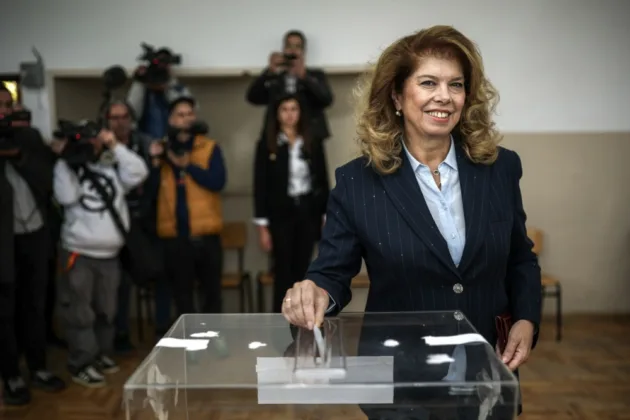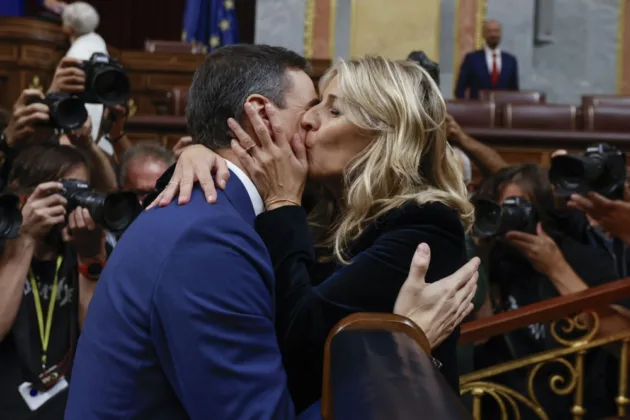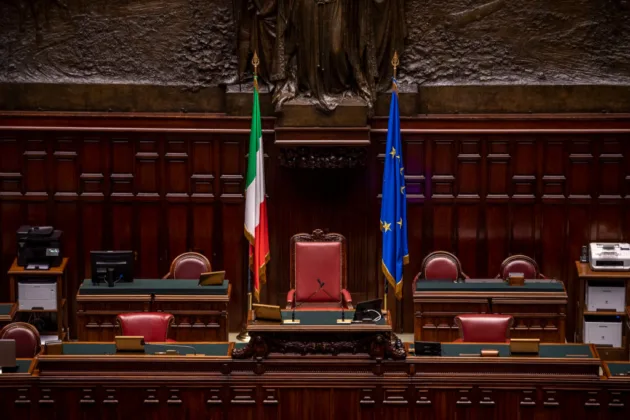
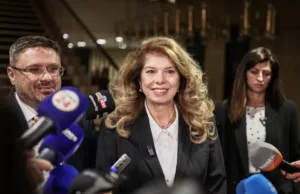

Bulgaria has elected incumbent President Iliana Iotova as its first woman head of state, handing the presidency to the same political camp that already controls the government.
Near-final results from the Central Election Commission showed the Iotova ticket on 57.6 per cent in the November 1 run-off, or about 1.1 million votes. Her rival Andrey Gyurov, a former caretaker prime minister backed by the pro-Western opposition, took 39.5 per cent.
About 3 per cent of voters ticked the “I support no one” box. Turnout stood at about 29 per cent according to preliminary figures, slightly up on a first round that drew the lowest participation of any Bulgarian presidential vote since the end of communist rule.
Iotova claimed victory late on November 1 flanked by Prime Minister Rumen Radev, saying her campaign had focused on incomes, peace and the challenges ahead. She thanked his Progressive Bulgaria party for its support.
Gyurov conceded, saying Bulgarians had made their choice and the result had to be accepted.
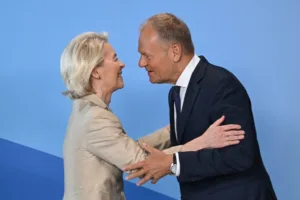
European Commission President Ursula von der Leyen congratulated the winner on X, writing: “For a strong Bulgaria in a strong Europe.”
A former journalist and MEP, Iotova served nine years as Radev’s vice president. She took over the presidency in January, when he resigned to lead his new party into the April parliamentary election, which it won outright.
According to AP, keeping both the presidency and the government in the hands of the ruling majority marks a departure from Bulgaria’s post-communist history.
The race was dominated by the war in Ukraine and by drone strikes on merchant ships off Bulgaria’s Black Sea coast, which Sofia has asked the EU and NATO to help identify. Radev has said the attacks appeared to serve Moscow’s interests, though his government said there was no evidence directly linking them to Russia.
Iotova responded to the attacks in October by calling for a moratorium on drone strikes against civilian shipping in the Black Sea. She said she had coordinated the initiative with her counterparts in Romania and Turkey.
The two candidates clashed over Europe and Ukraine throughout the campaign. Iotova opposes military aid to Kyiv and presented herself as the candidate of peace, while Gyurov, a former deputy governor of the Bulgarian National Bank, pledged to keep the country firmly anchored in the European Union and NATO.
Although directly elected, Bulgaria’s president has limited powers. The head of state commands the armed forces, grants and withdraws citizenship and appoints ambassadors on the government’s proposal.
The president can also veto legislation and return it to parliament but, unlike in France, cannot dismiss the prime minister. Presidents serve a five-year term, renewable once.