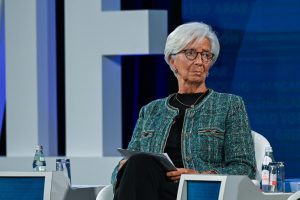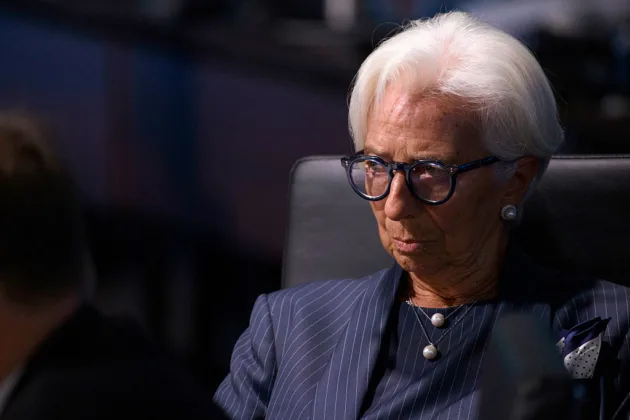



European Central Bank policymakers have lost patience with Christine Lagarde over her refusal to say whether she will leave Frankfurt before her term ends, people familiar with the matter have told Bloomberg.
Months of speculation and evasive answers from the President have left the Governing Council with no timetable for her succession. Several members fear the drift is damaging the bank’s standing abroad at the very moment it has resumed raising interest rates.
Part of the irritation concerns Lagarde’s plan to publish an autobiography in January and tour to promote it while still holding one of the most powerful offices in the eurozone. Other sources played the matter down, arguing that monetary policy and the rest of the bank’s work can continue undisturbed.
Her eight-year mandate runs to October 31, 2027, though an early departure has been treated as near certain since February, when the Financial Times reported that she had already decided to go. She insisted otherwise in April, telling Bloomberg TV that “this captain is not going to leave the ship”.
The World Economic Forum could appoint her as its next chair as soon as November 2, when its Board of Trustees meets, four people close to the organisation told Reuters. No decision has been taken, and the board could instead fix a later vote so that she arrives in Davos in January as chair-designate.
Lagarde sits on the board that would elect her, one of 27 trustees listed by the organisation.
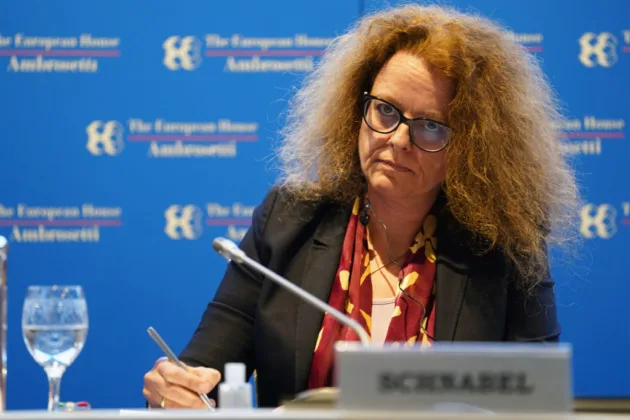
Her exit would open a second seat on the six-member Executive Board after the resignation of Isabel Schnabel, who leaves on January 3 for a senior post at the International Monetary Fund. Chief economist Philip Lane is due to depart in May 2027, and EU governments are expected to bundle the three jobs into a single package.
Those three jobs would be settled in national capitals rather than inside the bank itself.
Only the Schnabel process has formally begun. Eurozone governments have until October 28 to submit candidates, and Germany has signalled it will field a name to keep hold of the market operations brief.
Spain is pressing the candidacy of Pablo Hernández de Cos, the former Bank of Spain governor who now runs the Bank for International Settlements and won the Spanish Government’s backing in July.
The leader of the Partido Popular, Alberto Núñez Feijoo, added the opposition’s support on October 15, saying in Brussels that he was proposing not a Spanish candidate but a president able to guarantee the solvency of the euro.
His main rival is Klaas Knot, the former governor of the Dutch central bank, while France is understood to be aiming at the chief economist’s post.