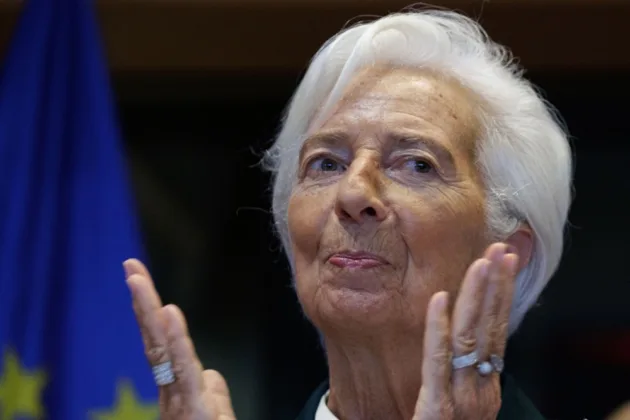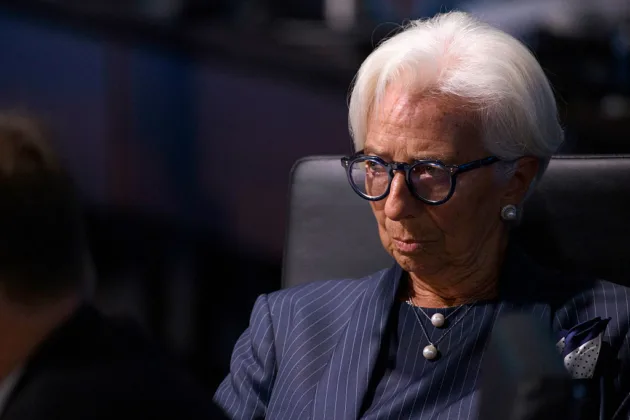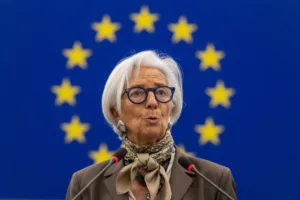






European Central Bank President Christine Lagarde has announced that she is to step down on February 7, 2027, nearly nine months before the end of her mandate.
The ECB said on October 29 that Lagarde had informed its Governing Council and European Council President António Costa of her decision. Her eight-year term had been due to run until the end of October 2027.
The Frankfurt-based bank gave no reason for her departure. It said the Governing Council, which sets interest rates for the 21 countries that use the euro, had thanked her warmly and “gave her a long standing ovation”.
Lagarde, writing on X, said she had just told her colleagues of her decision.
Costa thanked her for her service and said the process to appoint her successor would begin the same day and “proceed without delay”. He credited her with steady stewardship through the pandemic, the war in Ukraine, energy crises and inflation shocks.
The announcement came hours before the bank’s latest interest rate decision. The ECB was widely expected to keep its deposit rate at 2.5 per cent, after it raised rates in June for the first time since 2023.
Lagarde, a former French finance minister and managing director of the International Monetary Fund, took office in November 2019. She was nominated by EU leaders as part of a package deal that also made Ursula von der Leyen President of the European Commission.
Speculation about an early exit had grown since February, when the Financial Times reported she planned to leave before the French presidential election in April 2027 so that President Emmanuel Macron, who cannot stand again, could have a say in choosing her successor. Reports in recent weeks had also linked her with the chairmanship of the World Economic Forum.
Under European Union rules, the ECB president is appointed by the European Council by qualified majority, on a recommendation from eurozone finance ministers and after consultation with the European Parliament and the Governing Council.
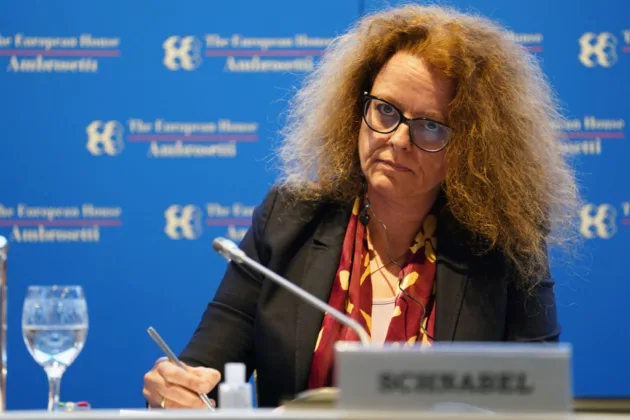
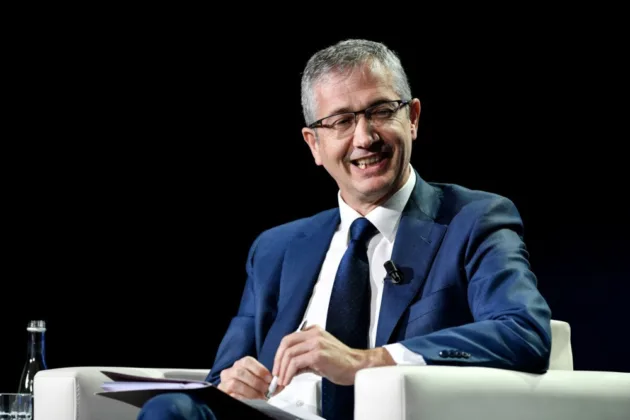
Four names have dominated the race: Former Dutch central bank governor Klaas Knot, Bank for International Settlements chief Pablo Hernández de Cos, Bundesbank president Joachim Nagel and ECB executive board member Isabel Schnabel.
The Spanish Government backed Hernández de Cos in July, the first time Madrid had put forward a candidate for the top job. Reuters reported in September that France favoured Knot, provided a French candidate was given the post of chief economist.
Past practice suggests a winning candidate needs the support of both Paris and Berlin.
Lagarde’s exit adds to a wider reshuffle at the top of the ECB. Schnabel is leaving the executive board early and eurozone finance ministers opened the race to replace her on October 9.