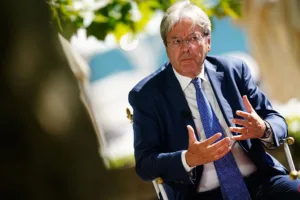

Former Italian prime minister and former European commissioner for the economy Paolo Gentiloni has warned of the political costs of defying the European Union’s direction, invoking former Hungarian prime minister Viktor Orbán as a cautionary example of the pressures that can arise when a national government challenges Brussels.
Speaking on In Onda, the political talk show broadcast by Italian television channel La7, on October 4, Gentiloni addressed the possibility that Italy could choose not to follow the EU’s political direction on European rearmament and military support for Ukraine.
He had been asked about a claim by Five Star Movement (M5S) leader Giuseppe Conte that 60 to 70 per cent of left-wing voters opposed military aid to Kyiv, according to Italian daily Il Fatto Quotidiano.
He dismissed that prospect, suggesting that Rome would face political pressure and concrete consequences from Brussels if Italy chose to oppose the EU’s direction on rearmament and increased defence spending.
When co-host Luca Telese objected that Italy could pull back “because we are in a democracy”, Gentiloni held his position.
“I rule out that Italy could do so. In any case, it is very complicated for a country to go directly against the European orientation. Very complicated. Call Orbán and ask him how that worked out for him,” he said.
His remarks have been recirculated on Italian social media since October 11, sparking debate and controversy over Italy’s ability to take a different position from Brussels and the broader implications for democratic sovereignty and the right of national governments to make independent decisions.
Gentiloni is an Italian politician from the centre-left Democratic Party (Partito Democratico, PD) and a former senior EU official. He served as Italy’s prime minister from December 2016 to June 2018, having previously held the posts of minister of communications and minister of foreign affairs.
From December 2019 to November 2024, he served as European commissioner for the economy under European Commission President Ursula von der Leyen.
Gentiloni’s reference to Orbán points to Hungary’s long-running confrontation with Brussels, particularly during Orbán’s 16 years as prime minister, from 2010 to 2026. The disputes centred on rule-of-law concerns, judicial independence, media freedom, migration and Hungary’s opposition to or obstruction of some EU policies, including support for Ukraine.
The conflict carried financial and political consequences. In December 2022, the EU suspended €6.3 billion in cohesion funding over concerns about corruption, public procurement and the protection of the European budget.
Restrictions also affected 21 Hungarian universities, which were cut off from new Erasmus+ and Horizon Europe grants, and access to other EU funds.
Critics accused Brussels of applying political pressure through financial measures, while the EC maintained that its decisions were based on compliance with EU rules. The release of €10.2 billion in funding for Hungary on December 13, 2023, the day before a European Council summit that opened accession talks with Ukraine, further fuelled accusations of political bargaining.
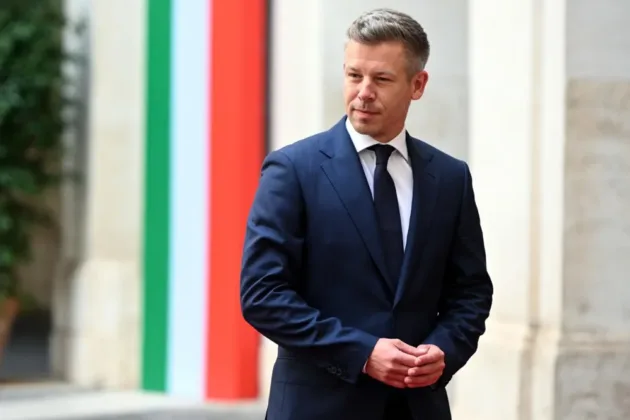
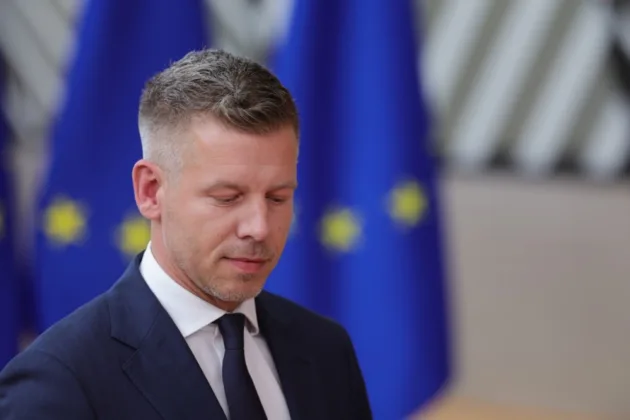
The tensions took on a new dimension when Orbán lost the April 12, 2026 election after 16 years in power, with Péter Magyar’s Tisza party winning 141 of 199 seats. Von der Leyen welcomed the result, declaring: “Europe’s heart is beating stronger in Hungary tonight.”
Her reaction reinforced criticism from those who see the EC’s approach to Hungary as politically biased, although the EC maintains that its actions are grounded in EU law and institutional obligations.
Magyar and von der Leyen sealed an agreement on May 29 to unlock €16.4 billion in frozen funds, subject to reforms. On September 23, the EC proposed lifting the measures imposed in 2022.
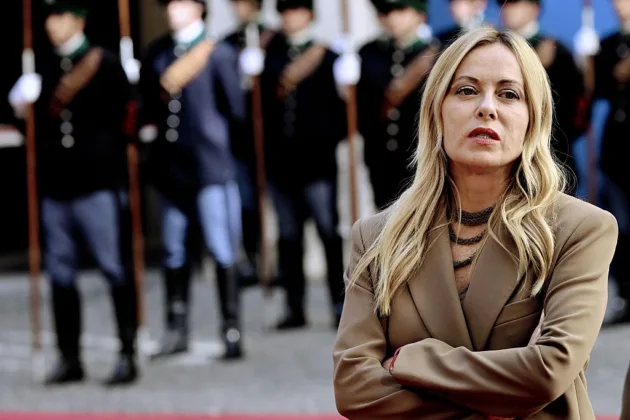
On October 12, Italian Prime Minister Giorgia Meloni told the general assembly of Milan-based business association Assolombarda that Italy did not sit in Europe “to always say yes”.
With Italy’s 2027 general election approaching, Gentiloni’s remarks can be read as a warning to whichever political force emerges victorious: Regardless of who forms the next government, challenging Brussels’ direction on key European priorities could carry political and financial consequences.
Gentiloni made the point himself on In Onda. “Suppose the current opposition parties, as I hope, win the next elections and go into government: What do we do?” he asked.
His reference to Orbán suggests that electoral victory does not necessarily shield a national government from pressure or repercussions when it clashes with the EU’s established course.