








Germany must systematically dismantle the economic and energy legacy of former chancellor Angela Merkel if it is to halt an escalating structural crisis and avoid severe deindustrialisation, economist Hans-Werner Sinn, who ran the Munich-based Ifo Institute for Economic Research from 1999 to 2016, has warned.
Speaking in an in-depth interview on the Ronzheimer podcast with Bild chief reporter Paul Ronzheimer on October 27, the 78-year-old academic set out a bleak assessment of Europe’s largest economy, warning that the German public faces a sharp and protracted erosion of living standards without a fundamental change in policy direction.
“The standard of living in Germany will decrease very, very significantly in the coming years,” Sinn warned, dismissing the notion that the country is undergoing a routine cyclical downturn.
Instead, he argued that Germany is grappling with an entrenched structural crisis built up over a decade and a half of political decisions that undermined competitiveness.
“Unwind 15 years of Merkel policies,” Sinn said, calling for a comprehensive reversal of government interventions introduced under Merkel’s four terms between 2005 and 2021.
He argued that core industrial pillars, most notably the automotive, chemical and engineering sectors, are buckling under the cumulative strain of high energy costs, rigid Brussels directives and demographic headwinds.
At the centre of his critique is the European Union’s climate regulatory framework, particularly fleet emission targets and mandatory sustainability reporting.
He pointed to declines across key industrial pillars: Real domestic industrial output has fallen roughly 16 per cent since 2018. Output in the automotive sector is down 25 per cent, mechanical engineering 23 per cent and chemical manufacturing 22 per cent, on his own calculations.
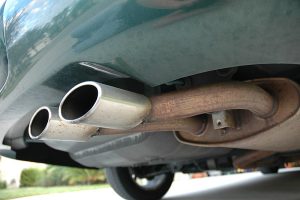
Sinn described European automotive mandates as an existential threat to the sector, characterising the EU’s CO2 limits as “an attack on the heart of our industry” that penalises domestic carmakers while handing structural advantages to international rivals.
He also said the rules had counted electric vehicles as zero-emission, an accounting choice he called misleading, and that Brussels mandates combined with US tariffs were pushing German manufacturers to invest across the Atlantic.
According to Sinn, the combined loss of stable nuclear baseload power and the sudden cut-off of cheap Russian gas imports has burdened domestic manufacturers with structurally uncompetitive energy tariffs.
Merkel accelerated Germany’s nuclear exit in 2011, days after the Fukushima accident in Japan, and the last three reactors were switched off in April 2023. Sinn said sanctions that forced Germany to buy costlier American energy instead amounted to “threat by self-harm”.
Beyond energy, Sinn took aim at mounting European and German corporate regulation.
He singled out EU-wide sustainability reporting rules, the Corporate Sustainability Due Diligence Directive and domestic supply-chain compliance laws as having degenerated into an unsustainable bureaucratic burden that diverts capital into politically favoured sectors while choking private investment.
Sinn also directed criticism at Chancellor Friedrich Merz’s current coalition in Berlin, dismissing government reform plans and debt-financed spending initiatives as mere “scarcity management” rather than genuine structural revival. The growth now being recorded, he said, was “not structural growth”.
He warned that attempting to subsidise uncompetitive structures risks eroding Germany’s long-term sovereign creditworthiness.
To reverse the trajectory, Sinn advocated a return to supply-side fundamentals: Deregulation, a transition from passive welfare to an activating “workfare” system with mandatory employment requirements, an increased retirement age and a skills-based immigration system.
Berlin has already tightened the system he criticised. The Bürgergeld benefit introduced under the previous coalition is being replaced by a stricter Neue Grundsicherung, in force since July 1, which obliges job centres to test immediate placement in work before funding training.
Sinn put the case as “workfare instead of welfare”, contrasting a Ukrainian refugee employment rate in Germany of 37.5 per cent with close to 70 per cent in Estonia and the United Kingdom.
Sinn already said similar things in a lecture at the Institute for Swiss Economic Policy in Lucerne, Switzerland, published on October 20.
The intervention comes as Merz’s coalition faces stagnant economic growth and mounting business insolvencies, intensifying pressure within Berlin and Brussels to reconsider long-standing climate targets and corporate mandates in favour of restoring competitiveness.
COMMENT: Part I: How Germany is destroying itself and the EU, writes Gunnar Beckhttps://t.co/kocmteVWqP
— Brussels Signal (@brusselssignal) June 13, 2026