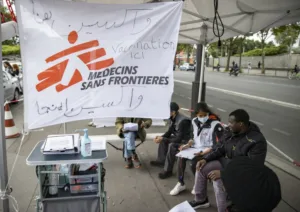




The Swiss Government has frozen CHF 1.25 million (€1.33 million) in public funding destined for Médecins Sans Frontières (MSF), accusing the medical charity of breaching contractual disclosure duties following allegations of sexual exploitation in Chad.
The Swiss Agency for Development and Cooperation (SDC), an arm of the Federal Department of Foreign Affairs (FDFA), withheld one tranche of Bern’s CHF 6.25 million annual pledge to the non-governmental organisation (NGO) after Swiss media published internal communications detailing long-standing misconduct allegations.
The frozen sum forms part of the CHF 6.25 million earmarked for 2026. Switzerland paid some CHF 7 million (€7.45 million) to MSF projects in Chad and South Sudan across 2024 and 2025, including CHF 2 million (€2.13 million) for the programme now under scrutiny.
An internal MSF investigation identified 59 separate allegations of sexual misconduct, abuse and exploitation concerning humanitarian operations in eastern Chad, where hundreds of thousands of refugees have arrived fleeing the civil war in neighbouring Sudan.
Some of those allegations were corroborated. Others could not be verified because neither the victims nor those accused could always be identified, MSF said.
Staff members were alleged to have conditioned the provision of humanitarian relief, jobs and financial assistance on sexual acts with displaced women and girls.
The cases involved contracted staff, daily workers, external contractors and suppliers. MSF employs 872 locally hired and 81 international staff in Chad, where it has operated since 1981.
MSF ultimately dismissed 18 personnel, including six affiliated with the organisation’s Swiss section, and barred them from any future work with the charity.
The administrative dispute in Bern centres on institutional transparency and compliance rather than the abuse itself, which MSF does not contest.
According to reports published by NZZ am Sonntag and drawn from internal correspondence, Swiss authorities received an initial alert regarding misconduct claims in November 2024.
A federal official wrote the following month that the FDFA had no urgent questions. By the summer of 2025 the file was treated internally as closed and, in February 2026, the SDC cited MSF as an example of transparency.
Officials in Bern argue, though, that the charity failed to proactively disclose the true breadth of the allegations and resulting dismissals.
The full extent of the scandal emerged publicly in June 2026 following investigative reporting by the Associated Press, prompting the SDC to formally demand complete documentation from the charity.
MSF had completed its internal report in July 2025. The Associated Press had already reported in November 2024 that Sudanese women in eastern Chad were being offered aid and employment in exchange for sex.
The FDFA determined that MSF violated its contractual obligations to provide timely and comprehensive notifications regarding serious institutional misconduct.
MSF representatives acknowledged procedural shortcomings, conceding that the scale of the findings had not been communicated “proactively and early enough”.
The charity said it had remained in constant contact with the SDC, admitted weaknesses in its 2024 recruitment and said it had since revised hiring, induction and training procedures, and opened confidential reporting channels.
Bern said the funds would remain frozen pending a review of the internal inquiry files.
The Swiss Confederation is currently assessing potential further sanctions, as well as an independent external review. The SDC said it had no evidence at this stage of deliberate concealment by the charity.
In response to the governance failure, Swiss authorities announced that statutory reporting requirements for all State-funded non-governmental organisations would be tightened from 2027, with stricter abuse-reporting clauses written into every partner contract.