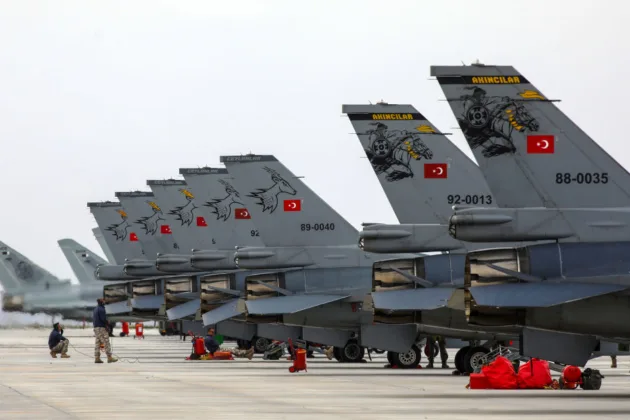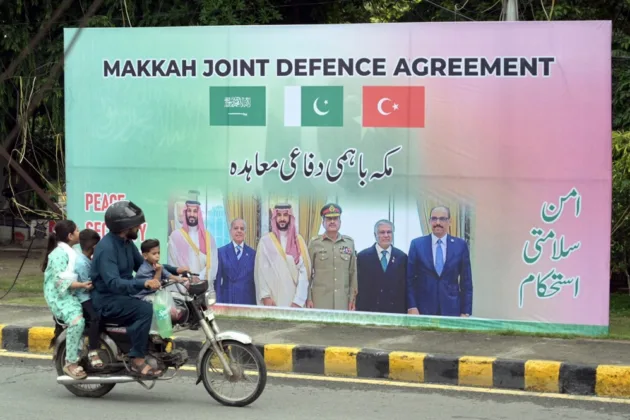






Turkey and Pakistan have agreed to deploy forces to Saudi Arabia under the Mecca Joint Defence Agreement, the first time the three-country pact has been invoked since it was signed on August 7. The decision followed an emergency meeting of the alliance’s political and defence committee in Riyadh on October 5.
The committee said it would apply its collective defence commitments immediately and move to a rapid deployment of agreed forces and assets to the kingdom. Saudi Defence Minister Prince Khalid bin Salman said the three countries had activated “collective deterrence measures” in response to the attacks and those responsible for them.
The joint statement condemned attempts to strike Mecca and Medina, the holiest cities in Islam, along with attacks on Saudi cities, civilians and economic installations. It did not name the Houthis, though Riyadh has blamed the Yemeni movement for months of strikes on its territory, its oil infrastructure and shipping linked to the kingdom.
Turkish Foreign Minister Hakan Fidan said the session had been scheduled in advance and that events in Yemen had turned it into an emergency meeting. The three governments also named Pakistani Lieutenant General Nauman Mahmud as the alliance’s first secretary general for a three-year term.
The pact ties NATO’s second-largest army to the Islamic world’s only nuclear-armed state and to the leading military power in the Gulf. US congressman Joe Wilson said on X that it had the potential to become “the NATO of the Middle East”.
The European Union has nothing comparable in the same waters. Its naval mission, Operation Aspides, has been escorting merchant ships since February 2024 under a defensive mandate that rules out any action on Yemeni soil.
EU foreign policy chief Kaja Kallas spent September pressing member states for more warships, after the Houthis declared a maritime embargo on Saudi Arabia in July and resumed attacks on Saudi-linked vessels. Two capitals have so far said they are considering it.
Italy, which moves about 40 per cent of its trade through the Suez Canal, has sent ships of its own towards the Red Sea. Israel has meanwhile set out plans for more submarines and warships as the waters off Yemen turn into a theatre in their own right.
Washington’s own posture in the region is shifting, with American bombers pulled out of a British base at the centre of an inquiry into an alleged Iranian plot. Riyadh has found in Ankara and Islamabad partners willing to move in a day.
The contrast is an uncomfortable one for Brussels. A pact signed two months ago produced troops within 24 hours, while the bloc’s request for a few more frigates has been running since September.