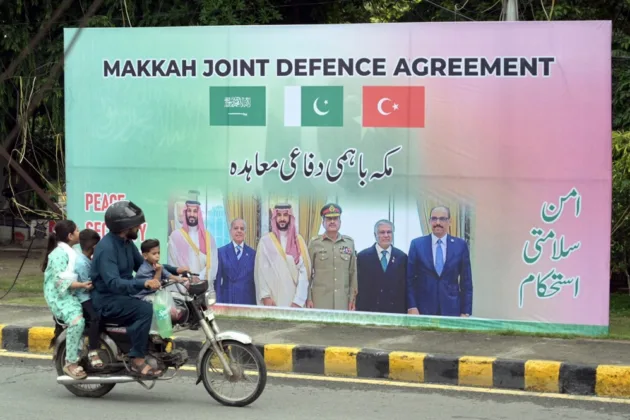



Turkey has moved to bind itself to Saudi Arabia and Pakistan under a joint defence agreement, with reports saying the accord would be signed in Jeddah, western Saudi Arabia, on August 7, 2026.
Two sources close to the Saudi military and government told Agence France-Presse (AFP) that Saudi Crown Prince Mohammed bin Salman would meet President Recep Tayyip Erdoğan and Pakistani Prime Minister Shehbaz Sharif in the Red Sea city. Reuters carried a similar account from two regional sources.
One of the Saudi sources said the pact had been under discussion for a long time “but the latest developments in the region expedite it”.
Sharif arrived in the kingdom on August 6 alongside Pakistan’s army chief, Field Marshal Asim Munir, for a visit running until August 8. The Turkish presidency said Erdoğan would travel to Saudi Arabia for a one-day working visit, though its statement made no mention of any defence agreement.
Riyadh and Islamabad already have a Strategic Mutual Defence Agreement, signed in September 2025, under which an attack on either country is treated as an attack on both. Pakistan is the only Muslim-majority country with nuclear weapons, which has fed speculation in South Asian media about an emerging “Islamic NATO”.
The trilateral talks have gathered pace against the backdrop of the war between the United States and Iran, which has closed the Strait of Hormuz since February 28 and driven European gas and oil prices sharply higher. Islamabad has acted as a mediator in that conflict.
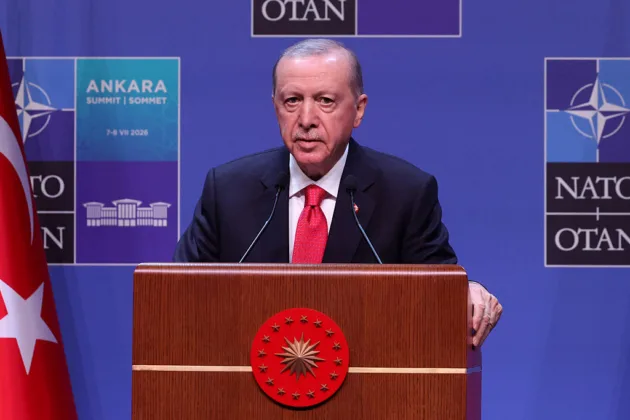
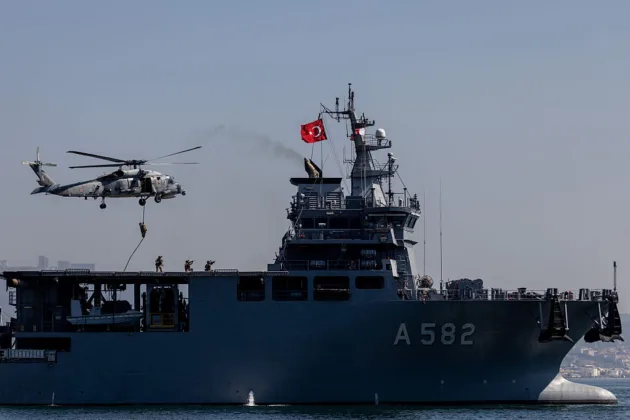
For the European Union the significance lies in Ankara’s direction of travel. Turkey commands NATO’s second-largest army and hosted the alliance’s summit in Ankara in July, yet it remains locked out of the EU’s €150 billion ($172 billion) Security Action for Europe (SAFE) loan instrument.
Greece and Cyprus have blocked Turkish participation, citing the occupation of northern Cyprus since 1974 and Ankara’s standing casus belli over Greek territorial waters in the Aegean. France has also signalled reservations.
Erdoğan told NATO parliamentarians in Istanbul in June that Turkey should be fully integrated into Europe’s defence architecture, arguing that shutting out one of the alliance’s largest militaries would weaken the continent.
The European Commission has said participation by non-member countries in SAFE projects can be limited where EU interests require it. Turkey remains a formal candidate for membership, though its accession talks have been at a standstill since 2018.