

While European foreign policy bureaucrats consume their precious time drafting sanitised press releases and holding hand-wringing summits, a seismic geopolitical shift is reshaping the broader Middle East, and exposing the total strategic bankruptcy of the European Union.
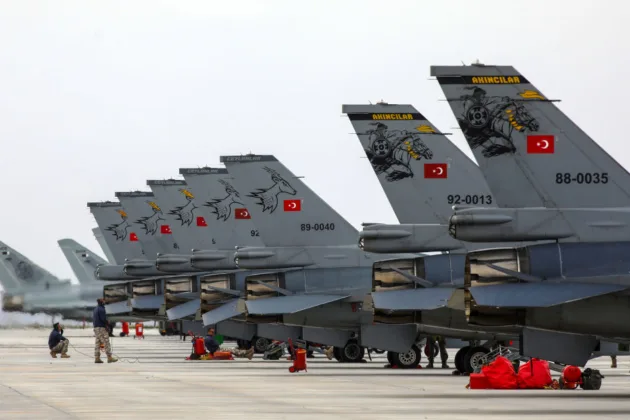
In Makkah on August 7, Saudi Arabia, Pakistan and Turkey signed the landmark Makkah Joint Defence Agreement, establishing a formal mutual defence pact explicitly reminiscent of a NATO-style collective security architecture. The foundational core of the agreement declares that an armed attack against any one of the three member states is to be regarded as an attack against all.
With a permanent secretariat now established in Riyadh and Pakistan set to hold the initial secretary-general post, this emerging bloc, officially named the Makkah Defence Alliance on August 31, is moving rapidly from political posturing to proper operations.
The first real-world test of this pact arrived almost immediately. Mid-September brought a punishing wave of Houthi drone and missile strikes targeting critical Saudi energy infrastructure, while drones launched from Iraq hit the East-West oil pipeline, which Riyadh shut down on September 11.
Yet, as the new Sunni security alliance anchored by a nuclear-armed state is expected to take action on Europe’s immediate flank, Brussels remains a passive spectator.
Consider the sheer absurdity of the dynamic. Saudi Arabia, profoundly disillusioned by years of shifting priorities and unreliable security guarantees from the West, and especially after the latest and ongoing Iran conflict, which began with US and Israeli strikes on February 28, has moved decisively to diversify its survival strategy.
Where does Riyadh turn? Not to European capitals, which possess neither the military projection nor the political spine to safeguard global energy corridors.
Instead, Saudi leadership forged an explicit collective defence pact with Pakistan – a deeply unstable state governed by corrupt elites, nourishing radicalism and possessing an expanding arsenal of nuclear warheads – alongside Turkey, an increasingly rogue NATO member that routinely plays both sides of every geopolitical divide.
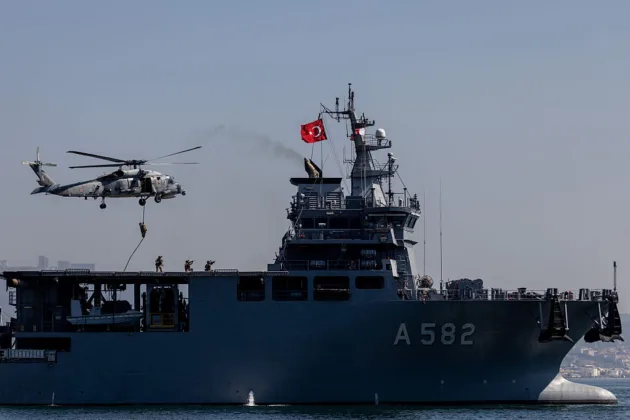
The implications are as glaring as they are catastrophic. Saudi Arabia is anchoring its regional security directly to Pakistani boots, Turkish drone technology and a tacit nuclear umbrella, bankrolled by Gulf wealth and quietly sheltered by Chinese strategic backing.
And what is the European Union’s answer? Total helplessness.
On the sidelines of the UN General Assembly in New York, High Representative Kaja Kallas openly begged reluctant EU member states for additional naval assets to rescue Operation Aspides in the Red Sea, after writing to their ministers on September 19.
Admitting that the maritime choke points of Bab el-Mandeb and the Strait of Hormuz face severe disruption, she lamented that the EU could not muster the “at least 10 ships” she said the mission needed to secure critical shipping lanes. The operation has six warships, according to Reuters.
The contrast is damning: While Middle Eastern powers forge hard-power pacts, Brussels cannot persuade its own members to send a handful of frigates to protect European trade.
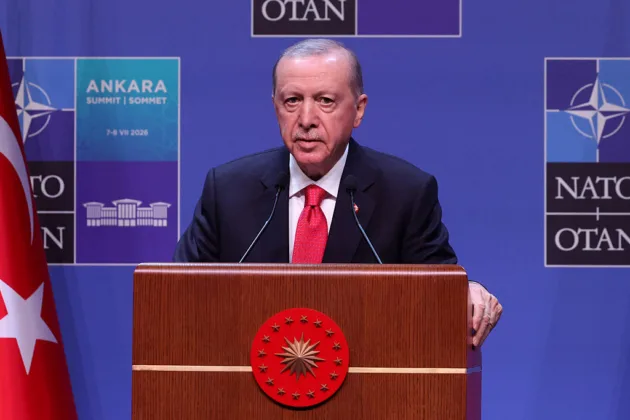
European leaders refuse to confront the glaring contradictions of this new reality. First, NATO member Turkey has embedded itself into an autonomous, non-Western military alliance whose strategic objectives could easily drag European nations into conflict.
If Ankara is bound to defend Islamabad or Riyadh in regional escalations, where does its commitment to Atlantic security begin and end? Brussels dares not even ask.
Second, and far more critically, this alliance exposes the fatal folly of Europe’s economic indulgence of Pakistan. For years, the European Commission has granted Islamabad duty-free market access under Generalised Scheme of Preferences Plus (GSP+) trade preferences, making it the scheme’s largest beneficiary, according to the Commission.
We were promised that this economic lifeline would foster human rights, regional stability and democratic moderation. Instead, European taxpayer-backed trade preferences bankroll a state that persecutes its own minorities at home while offering its military and nuclear deterrence umbrella to the highest bidder abroad.
European Commission President Ursula von der Leyen’s mechanism has created a dangerous strategic vacuum now filled by nuclear ambiguity and autocratic alliances. It is time for Brussels to face reality: Pakistan and Turkey should not enjoy European economic privileges while their militaries construct non-Western power blocs.
But under the current European leadership, Brussels will do what it always does: Pay the bill, absorb the shockwaves and pretend soft power still matters in a world governed by iron and blood.