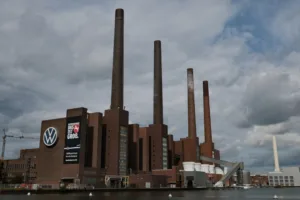




German carmaker Volkswagen is planning to freeze salaries across its workforce worldwide through 2030 as part of a restructuring campaign to curb rising operational costs, according to internal management documents reported by Süddeutsche Zeitung on October 19.
The strategic blueprint, titled “Group Target Picture” and prepared for executive international management, outlines an overhaul of Volkswagen’s collective bargaining strategy.
Under the proposed guidelines, in force since the start of October according to the group’s world works council, central budgets allocated for wage increases would be suspended, leaving pay at its 2026 level and resulting in a six-year pay freeze for many of the group’s 660,000 employees globally.
Labour representatives estimate that capping nominal wages through 2030 could translate to a real-income drop of approximately 10 per cent per worker once inflation is factored in.
The pay freeze forms part of a broader corporate realignment designed to streamline labour expenses amid declining margins, weak demand in China and growing international competition. Operating profit fell 11.6 per cent to €5.9 billion in the first half of 2026 and the margin slipped to 3.8 per cent.
The internal document instructs negotiators to pare back variable compensation, performance bonuses, special allowances and corporate perks.
Volkswagen’s management is seeking increases in worker productivity, greater scheduling flexibility and a reduction in overtime payouts.
The proposals follow a package approved by the supervisory board on September 4, targeting the loss of about 50,000 jobs worldwide by 2030, primarily across non-production and administrative roles. Chief executive Oliver Blume has said around half would fall in Germany.
Key German manufacturing sites including Emden, Hanover, Zwickau and Audi’s Neckarsulm plant face long-term reviews, with the group saying it cannot guarantee competitive workloads there from 2031.
There are still roughly 275,000 workers for Volkswagen in Germany, about 130,000 of them on the company’s in-house collective agreement, but many jobs have already been cut and plants have been closed amid severe company losses.
Volkswagen is facing its most severe restructuring since the 2015 “Dieselgate” scandal as CEO Oliver Blume proposes a €60 billion cost-slashing programme and refuses to rule out closing German plants. https://t.co/UFUdRpvE2r
— Brussels Signal (@brusselssignal) February 17, 2026
While the framework permits regional flexibility to account for local labour regulations across subsidiary brands, Volkswagen’s executive board expects every division and market to deliver “proportionate” labour cost reductions.
The revelations have escalated tensions between Volkswagen’s executive leadership and powerful labour representatives ahead of upcoming collective bargaining negotiations, expected to open at the end of November.
The group’s European and world works council condemned the initiative, labelling a multi-year wage freeze “absurd” and unacceptable. Industriegewerkschaft Metall (IG Metall) is seeking a 5 per cent rise over 12 months, after staff on the in-house deal gave up a 5.5 per cent increase in 2024.
IG Metall regional chief Thorsten Gröger had previously warned of potential industrial action, with warning strikes legally permissible from January 1, 2027 following the cancellation of longstanding company-wide agreements, 10 of which Volkswagen terminated in early October.
In response to queries regarding the internal documents, a spokesperson for Volkswagen declined to comment on “speculation”, stating that collective bargaining negotiations remain the appropriate venue for internal discussions between management and the works council.
The row comes as Brussels reopens the rules shaping the sector’s next decade. The European Commission has proposed softening the 2035 target for new cars from a 100 per cent cut in fleet CO2 emissions to 90 per cent, a text MEPs are due to vote on in Strasbourg on November 23.
Europe’s mass-market carmakers face “enormous pressure” from Chinese rivals and market shifts, Volkswagen CEO Oliver Blume says, calling for flexible regulations and incentives to support local production. https://t.co/8VGA6G22Ix
— Brussels Signal (@brusselssignal) October 15, 2026