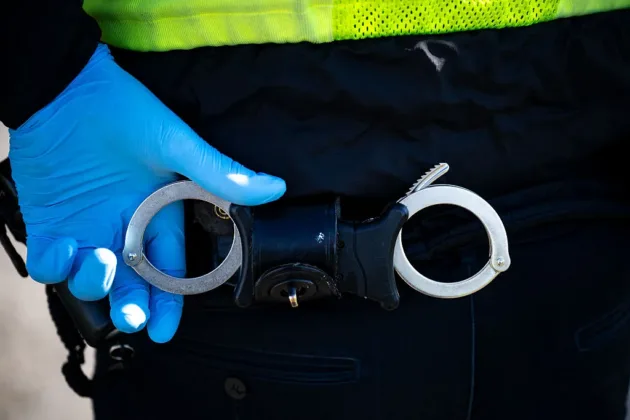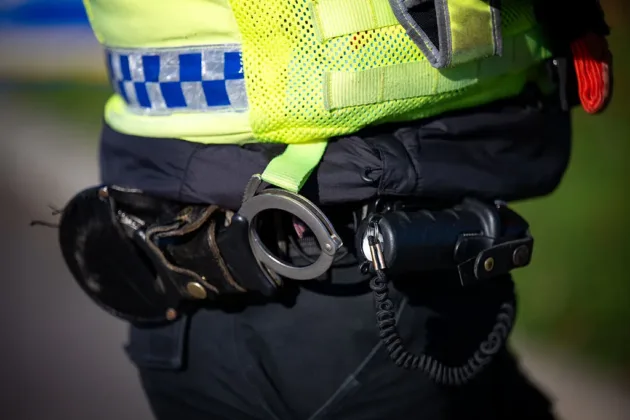
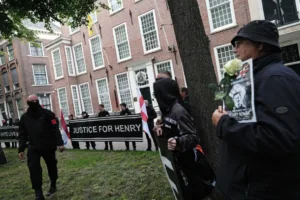

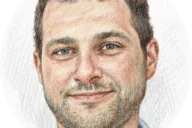
The family of Henry Nowak, the 18-year-old student who died in handcuffs after being fatally stabbed in Southampton, have accused police of misleading and manipulating them in the months following his murder.
In interviews published by The Telegraph and broadcast by ITV News for an upcoming documentary, Dear Henry: Our Fight for Justice, Nowak’s relatives disclosed that Hampshire Constabulary and oversight bodies repeatedly provided false reassurances about how officers managed the dying teenager.
The family only discovered the full reality on the first day of the criminal trial, when body-worn camera footage of Nowak’s final moments was screened in open court.
“In the last year, our world has changed twice,” his stepmother, Katie Nowak, told ITV News.
“The first time was the night that we were told that Henry had died. And the second time was when we watched that video.”
His father, Mark Nowak, accused the force of “a lack of truth and integrity throughout”, stating that relatives had been kept in the dark to protect police reputations.
Henry’s family said they feld “hoodwinked by the police after he was killed.
Distressing body-worn camera footage released by Hampshire Police has sparked widespread outrage after showing officers completely misreading the situation and ignoring pleas by the fatally wounded Henry Nowak for help. https://t.co/lODGUEILWm
— Brussels Signal (@brusselssignal) June 2, 2026
Nowak was attacked in December 2025 by 23-year-old Vickrum Digwa outside a residential area in Southampton.
Digwa, who inflicted fatal chest wounds using an eight-inch (21-centimetre) ceremonial dagger (kirpan), was convicted of murder at Winchester Crown Court and sentenced to life imprisonment with a minimum term of 21 years.
His mother, Kiran Kaur, was sentenced to three years for assisting an offender after removing the weapon from the scene.
According to body-worn video and courtroom transcripts, attending officers treated Nowak as an active suspect rather than a wounded victim.
When police arrived, Digwa falsely claimed he had acted in self-defence following a racial assault.
Officers immediately pinned Nowak to the ground and forced his hands behind his back.
Nowak told officers nine times that he could not breathe and four times that he had been stabbed.
One officer dismissed his pleas, replying: “Don’t think you have, mate.”
Instead of receiving immediate medical triage, Nowak was cautioned for assault and placed under arrest.
It took approximately eight minutes before officers checked beneath his clothing, discovered the severe stab wounds, and removed the handcuffs to begin cardiopulmonary resuscitation.
Nowak lost consciousness and was pronounced dead shortly afterwards.
Digwa was not handcuffed at the scene.
The family’s latest statements focus on how authorities handled the aftermath of the killing.
Relatives stated that officers initially suggested to them that Henry had been the aggressor, before claiming that first aid had been administered to him immediately upon arrival.
The family also disclosed that in April 2026, the Independent Office for Police Conduct (IOPC) sent them a formal letter stating that “no concerns were identified” regarding officer actions on the night of the attack.
It was only after the public release of the bodycam recordings in court that the IOPC reversed its stance, placing two attending officers under an active gross misconduct investigation to determine whether racial assumptions influenced their decision to arrest the victim rather than treat him.
Family members also alleged that in the immediate hours following the murder, officers questioned them directly regarding Henry’s political opinions and their own views, following the false racial allegations advanced by the attacker.
“I did think at the time, it’s a really strange question. You’ve just been told your son’s been murdered and then they asked that”, Henry’s mother said.
His stepmother noted, “I do feel that we have been failed multiple times. I fear that we may have been manipulated in our darkest hours. And I fear that some decisions were made to try and protect the police and their reputation rather than help us as a family.”
Last week, Home Secretary Shabana Mahmood announced an independent review into the circumstances surrounding Nowak’s murder and the statutory handling of the case.
Alongside the IOPC gross misconduct probe, the actions of the responding officers and the delays in administering emergency aid will be subject to a jury inquest.
COMMENT: What killed Nowak: One murderer and all the malignancy of collective self-hate, writes @ConradMBlack https://t.co/LUITRWJe9l
— Brussels Signal (@brusselssignal) June 5, 2026