



Poland’s permanent representative to the United Nations, Krzysztof Szczerski, has resigned after the government moved to seize control of the Constitutional Tribunal (TK) with the help of riot police.
He is the third Polish ambassador to quit in four days. Jakub Kumoch, the envoy to China, stood down on October 30 and Paweł Soloch, the ambassador to Romania, followed on October 31.
Foreign ministry spokesman Maciej Wewiór announced on November 2 that foreign minister Radosław Sikorski had granted Szczerski’s request to cut short his mission. He would leave New York before the end of the month, Wewiór said.
Szczerski has not publicly explained his decision. Kumoch and Soloch made clear, though, that they were protesting against the ousting of the tribunal’s chief justice, Bogdan Święczkowski.
Soloch said the unlawful attempt to take over the court left him unable to keep serving. Kumoch called it a matter of conscience and told President Karol Nawrocki he had been instructed to deliver a diplomatic note that, in his view, misrepresented events in Warsaw.
All three served under former president Andrzej Duda. Sikorski accused the presidential palace of pushing them to quit and mocked them by contrasting them with ambassadors who resigned over martial law in 1981.
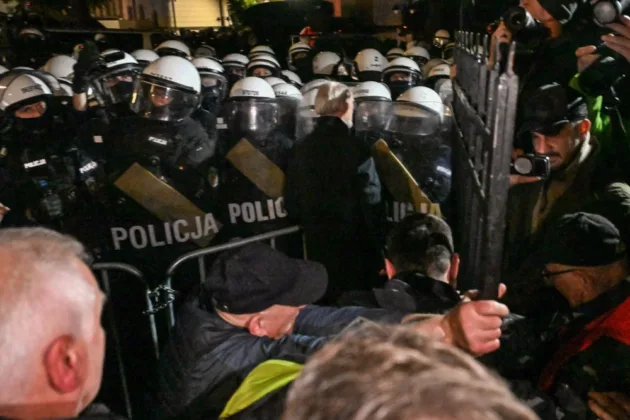
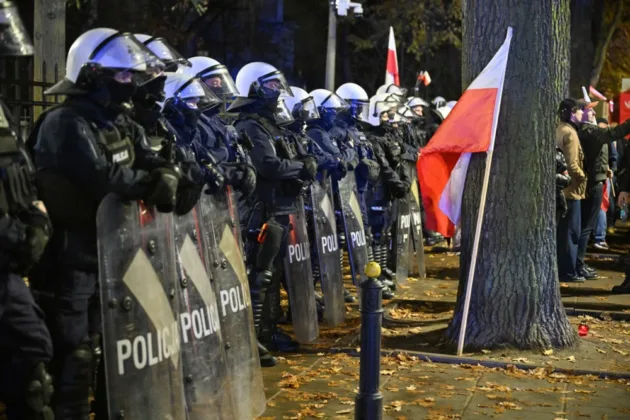
The crisis erupted on the evening of October 30, when riot police sealed off the TK at the request of justice minister and prosecutor general Waldemar Żurek. Judges elected by the ruling majority then entered the building while Święczkowski was kept out.
One of them, Anna Korwin-Piotrowska, whom Nawrocki has refused to swear in, declared Święczkowski and his deputy suspended for a month and took charge of the court.
Święczkowski and the First President of the Supreme Court, Zbigniew Kapiński, called it a coup d’état. Nawrocki, who turned his plane back mid-flight to Senegal, described a forcible takeover of a constitutional organ of the State.
Even some critics of the court as constituted under Law and Justice (PiS) questioned the operation. Law professor Marcin Matczak, a former Tusk ally, said there was no legal basis for suspending Święczkowski.
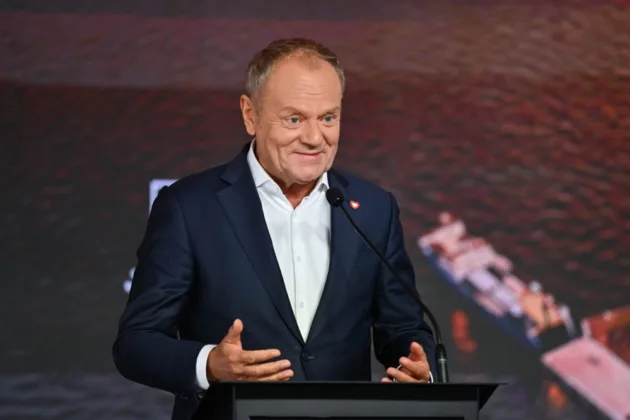
Prime Minister Donald Tusk said the move was needed to restore the rule of law and ruled out any compromise.
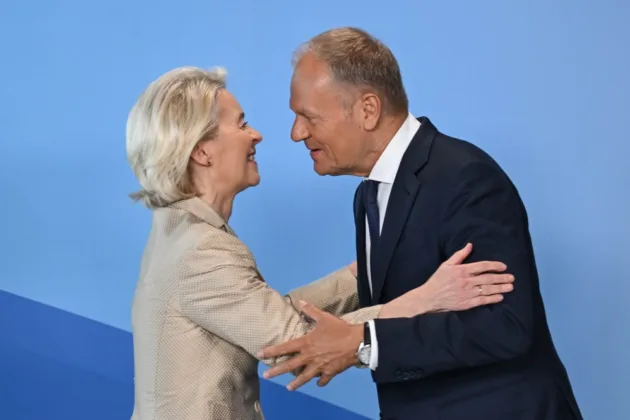
Brussels sided with the government within hours. A European Commission spokesperson said the election of the eight judges “lies within the constitutional power of the Sejm”, the lower house of parliament.
The EC froze billions in EU funds over PiS’s judicial reforms, and an EU court ruling in December 2025 declared the tribunal illegitimate. In February 2024, weeks after Tusk returned to power, European Commission President Ursula von der Leyen released up to €137 billion.
US ambassador to Poland Tom Rose struck a different tone, calling the events “very serious indeed”.