


China has imposed export controls on 10 American companies in the defence, aerospace and rare-earth sectors, retaliating against Washington’s decision to expand a blacklist of Chinese firms it accuses of aiding the country’s military.
The measures were announced by China’s Commerce Ministry, which said domestic exporters would be barred from supplying “dual-use” goods to the listed firms. Dual-use items are products that can serve both civilian and military purposes.
The ministry said the step answered an “egregious” expansion by the US government of its so-called Chinese military enterprise list. It added that the controls were intended to safeguard national security and uphold China’s non-proliferation commitments.
The restrictions would also reach beyond Chinese exporters to any individual or organisation, in any country, transferring Chinese-made dual-use goods to the named entities.
Separately, China’s Finance Ministry barred government agencies from buying products from 46 American firms, among them units of the defence giants Lockheed Martin and Raytheon. US-funded businesses operating in China would be exempt from the procurement ban.
The 10 firms facing export controls included the rare-earth producers MP Materials and USA Rare Earth, the drone makers Teal Drones and Red Cat Holdings, and the military vehicle builder Oshkosh Defense. Ball Aerospace & Technologies and L3Harris Maritime Services were also on the list.
The targeting of rare-earth suppliers highlighted Beijing’s grip on a sector that has alarmed Western governments. China processes most of the world’s rare earths, and the EU has pushed through its Critical Raw Materials Act to reduce its dependence on Chinese supplies for defence and green technology.
The clampdown followed a move earlier this month by the Pentagon, which added several large Chinese companies to a list of businesses it says are linked to China’s military. The carmaker BYD and the technology groups Alibaba and Baidu were among the latest additions, a step that would bar them from US defence contracts.
Baidu rejected the claim, describing as “totally baseless” any suggestion that it was a military company.
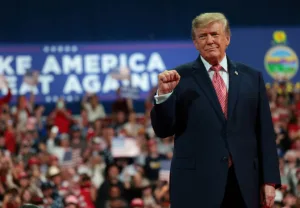
The escalation came barely a month after US President Donald Trump visited Beijing for a summit with Chinese President Xi Jinping aimed at stabilising relations between the world’s two largest economies. Both sides had agreed to work towards lower tariffs, though friction over technology and defence had since resurfaced.
Analysts cautioned that the latest measures appeared largely symbolic. They noted that most of the targeted American firms had little or no business in China.